



PL-CataSorb2000 Fully Automatic Chemisorption Analyzer
Designed for surface-chemistry studies of catalysts and functional materials, the PL-CataSorb2000 integrates gas-path switching, sample pretreatment, temperature programming, signal acquisition and data analysis into one unified workflow—making active-site characterization more efficient, standardized and reproducible.
Applications
- Thermal Catalysis
- Industrial Catalysis
- Photocatalysis
- Photothermal Catalysis
- Plasmonics
Key Features
For researchers, the key questions are whether peak temperatures are accurate and whether the results can be reproduced. Laboratory managers also need methods to be executed consistently, experiments to require less supervision and results to remain traceable. Photocatalysis and photothermal-catalysis groups face one more question: can equally reliable quantitative measurements be made under photoactivation?
PL-CataSorb2000 addresses all three requirements on one platform. Near-bed temperature measurement and linear temperature programming protect data quality; 30-second tube replacement, a 15-channel gas circuit and full-process software reduce repetitive operations; and expandable photothermal and low-temperature modules extend surface studies from the thermally treated state to the photoactivated state.
Technical Specifications
| Specification | Performance / Configuration |
|---|---|
| Sample Loading | 0.1–1 g |
| Temperature Range | Room temperature to 1200 °C; linear programmed heating across the full range |
| Standard Heating Rate | 1–50 °C/min, adjustable; higher heating rates depend on the final configuration and method |
| Gas Connections | 5 carrier-gas channels + 5 analysis-gas channels + 5 reserved-gas channels |
| Mass-Flow Control | Three high-precision MFCs; standard range 0–50 mL/min; other ranges available |
| Sample Tube | Standard Ø6 mm OD × Ø4 mm ID × 300 mm straight tube; compatible with multiple tube specifications |
| Line and Valve Heating | 120 °C |
| Detection and Expansion | Series-connected TCD; dedicated gas interfaces reserved for MS and IR |
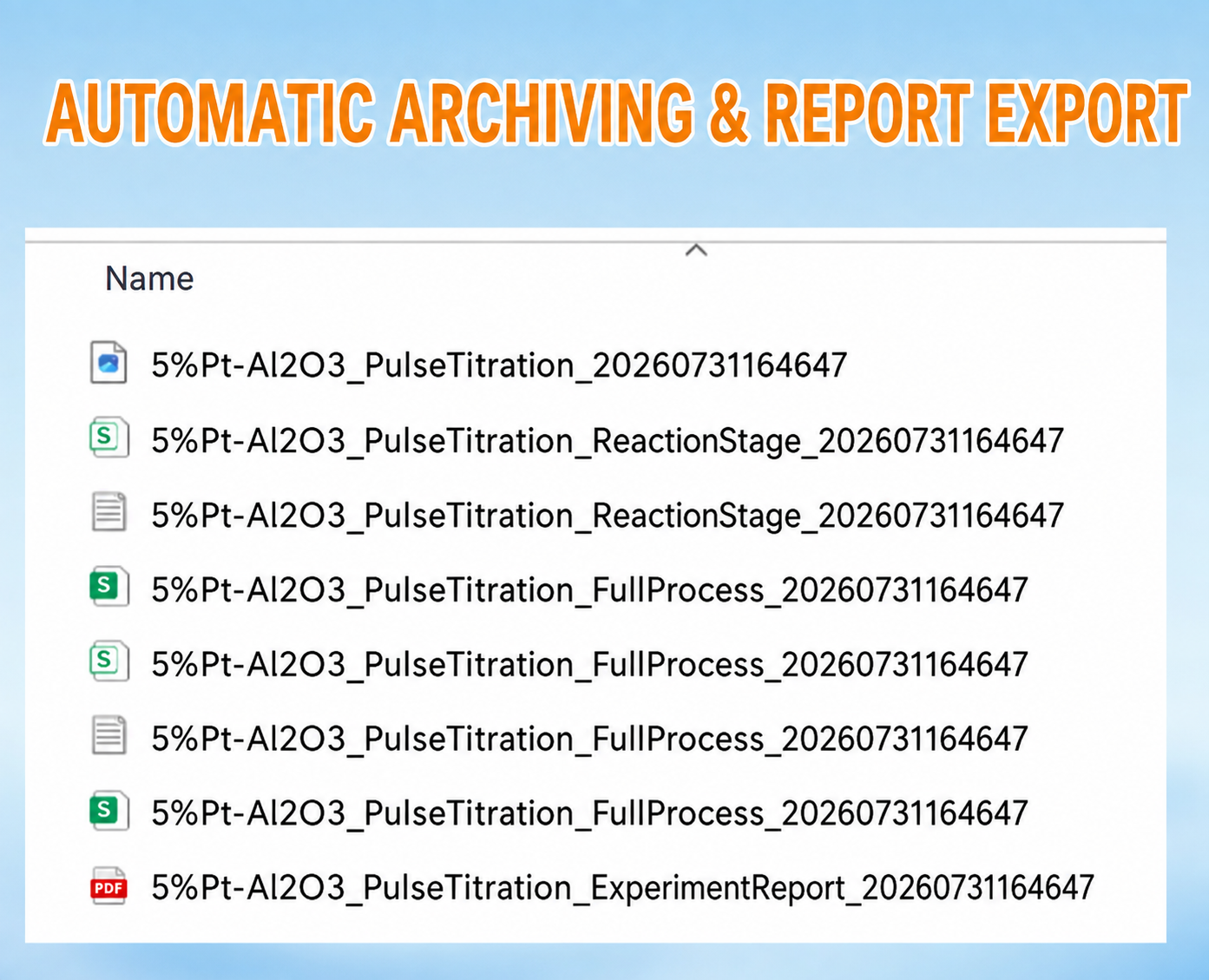
| Software Output | TXT, CSV, XLSX and JPG; experiment reports support PDF and DOCX/DOC |
Featured Functions
1. One Platform, Multiple Uses: Expandable Photothermal and Low-Temperature Modules
To address both thermal and light-driven surface processes, PL-CataSorb2000 uses interchangeable reaction modules. In addition to conventional chemisorption, the system can be flexibly expanded for photothermal and low-temperature experiments.
The photothermal module incorporates PerfectLight’s core patented technology and flexible light-source control. It supports adsorption and desorption studies under irradiation and enables new methodological investigations, including photoinduced adsorption/desorption action spectra and thermal-versus-photothermal isothermal differential energy-contribution spectra.
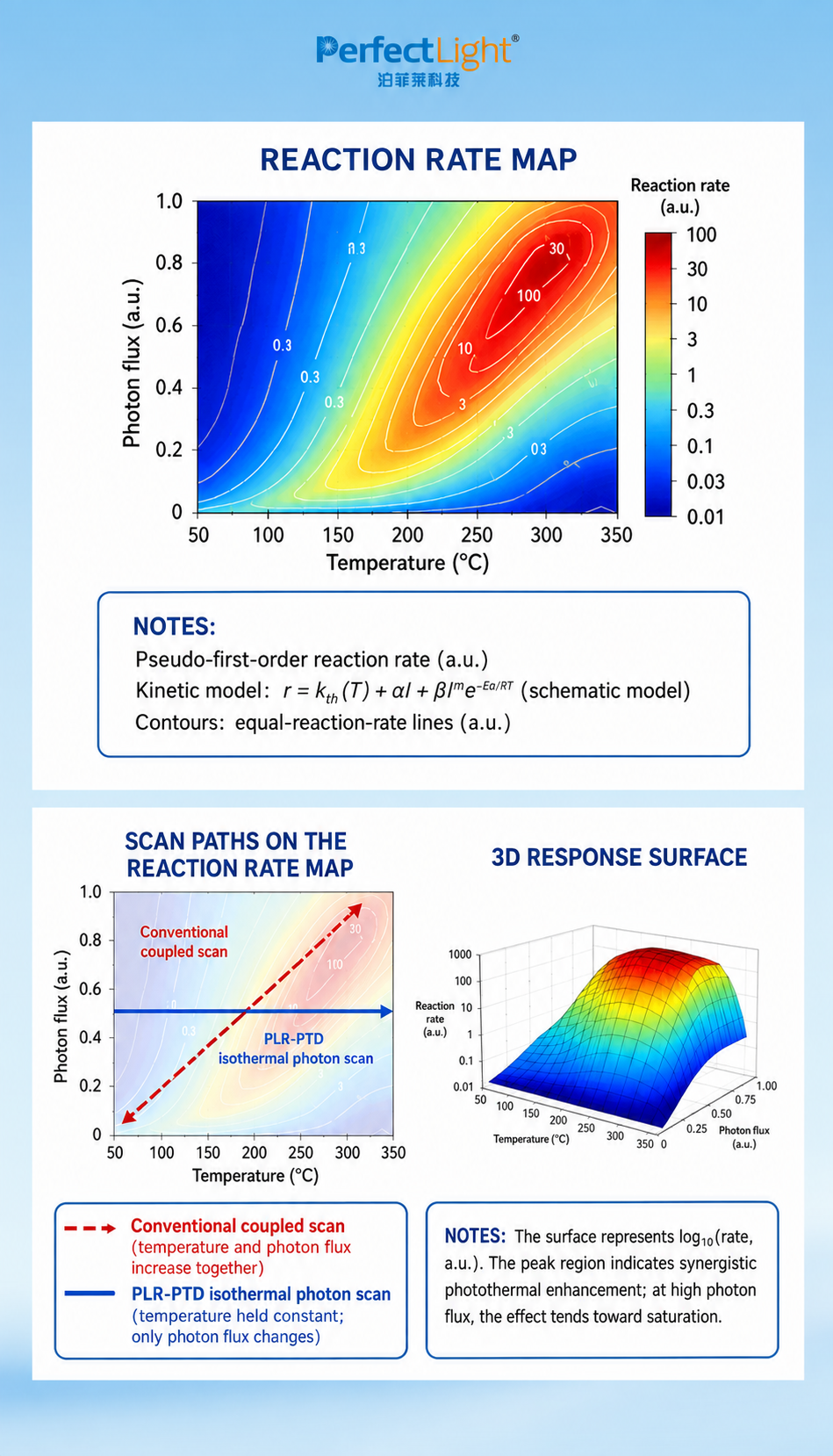
The low-temperature module reaches −40 °C and supports linear programmed heating from a low-temperature starting point. It requires no liquid nitrogen, improving safety and reducing operating cost while keeping the heating process stable and controllable.
2. Reliable Data: Measured Peak-Temperature RSD as Low as 0.56%
PL-CataSorb2000 reduces potential error at four critical stages—sample loading, temperature measurement, programmed heating and signal detection—to support dependable results.
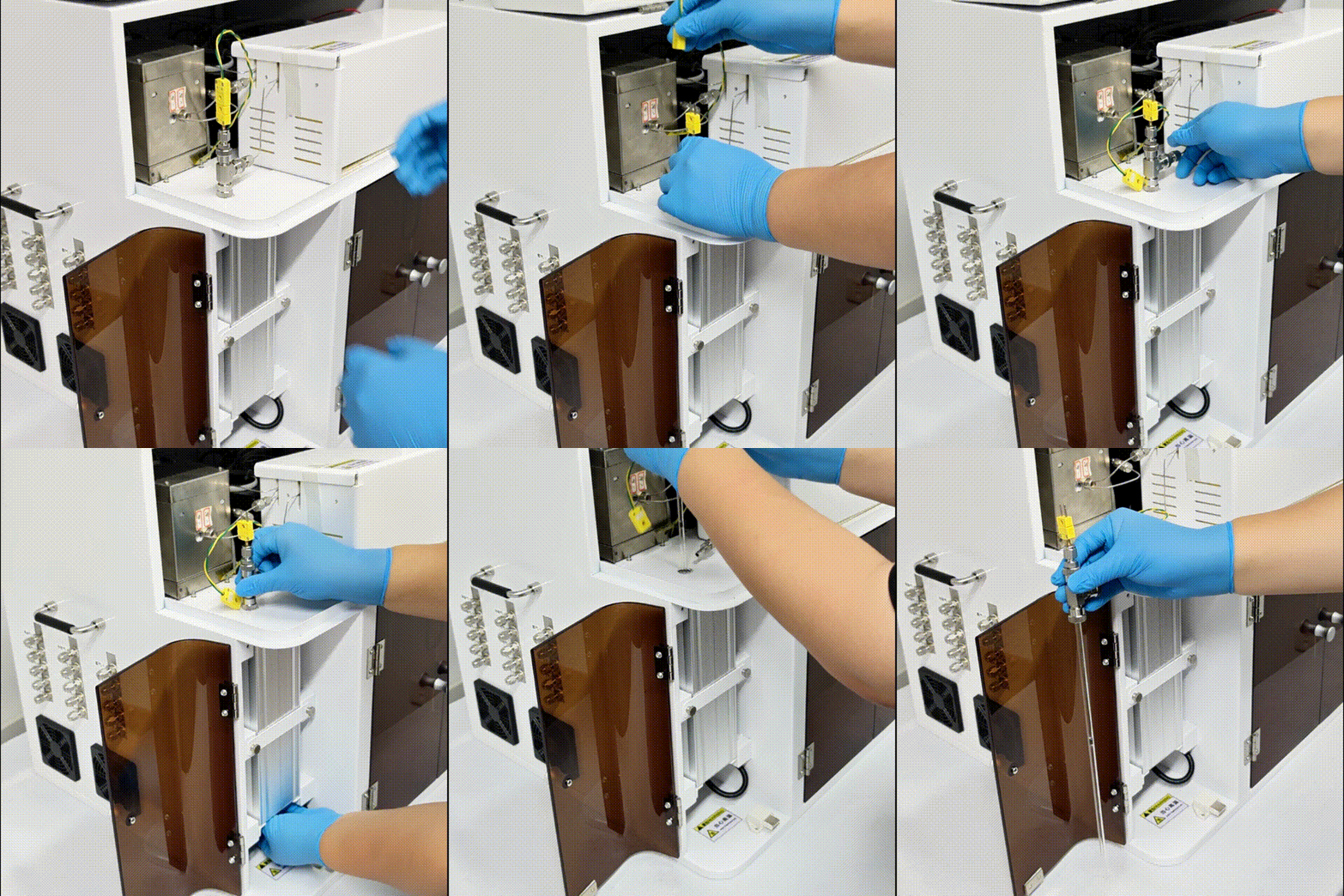
Sample Loading: Straight Quick-Connect Tube, Replaced in 30 Seconds
The straight reaction tube and metal quick-connect fitting allow the tube to be replaced within 30 seconds, reducing variation during sample loading.
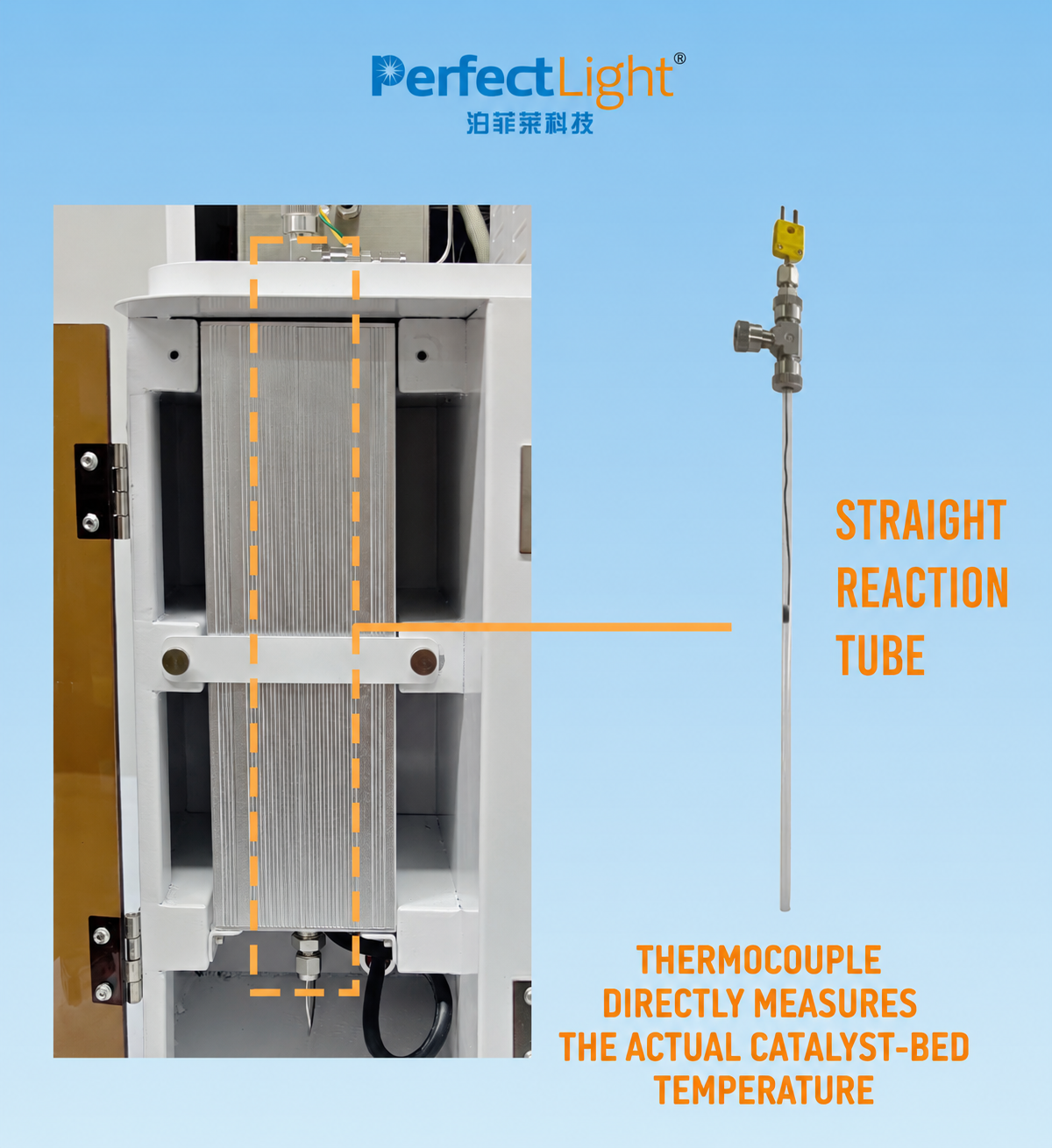
Temperature Measurement: Thermocouple Inserted Directly into the Catalyst Bed
The dedicated structure allows the thermocouple to extend directly into the catalyst bed, standardizing the bed and measurement positions for near-bed temperature detection. This reduces measurement deviation caused by tube replacement and changes in bed or thermocouple position. The reaction tube accommodates powders, granules and other sample forms.
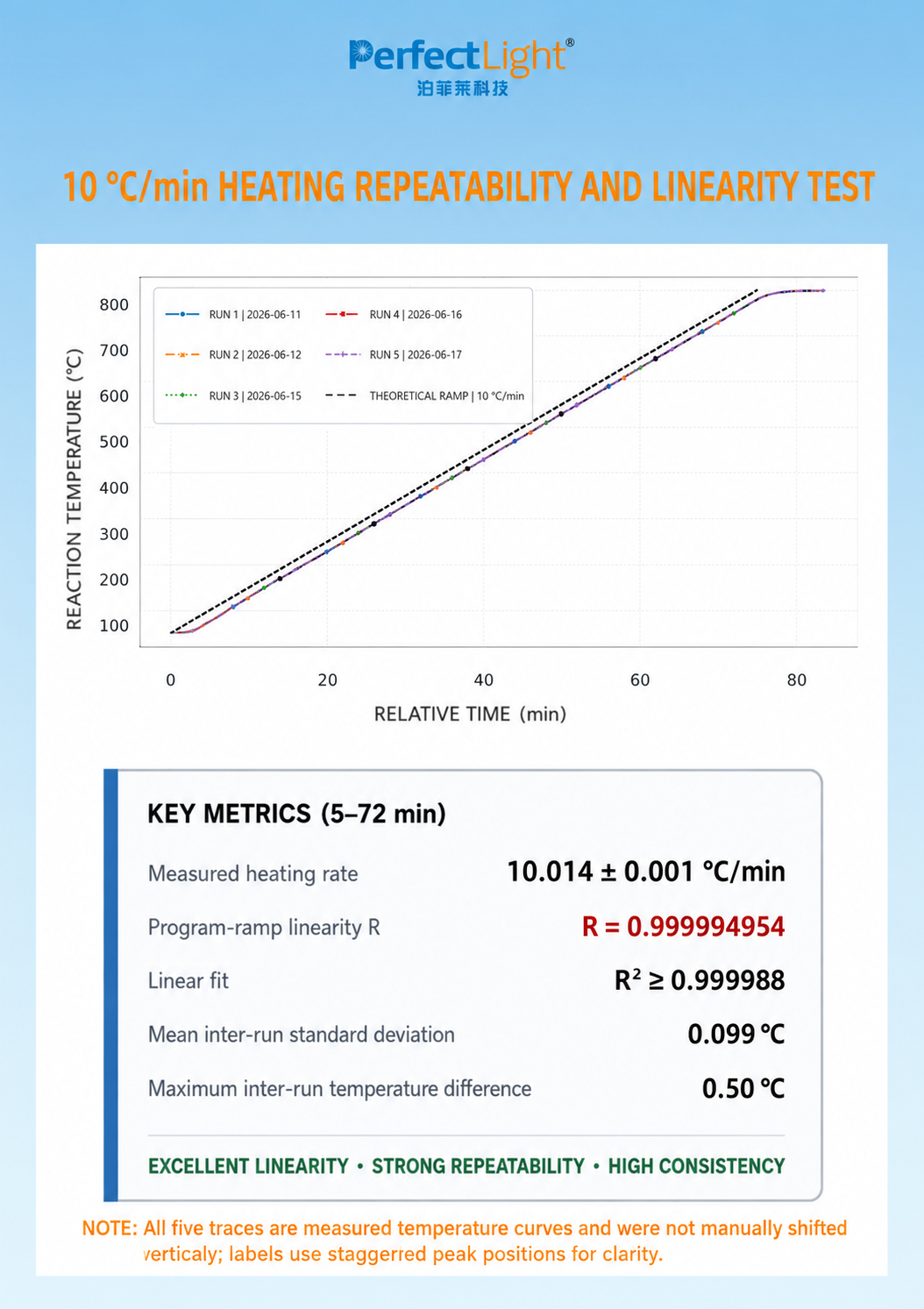
Programmed Heating: Full-Range Linear Ramp, R = 0.999994
The system supports programmed heating from room temperature to 1200 °C, with a standard adjustable heating rate of 1–50 °C/min. More importantly, set temperature, measured temperature and acquisition time remain linearly correlated. In a measured 10 °C/min test (5–72 min statistical interval), the linear fit reached R² ≥ 0.999988, the mean inter-run standard deviation was 0.099 °C and the maximum temperature difference was 0.50 °C. The measured curve follows the programmed ramp consistently, allowing peak temperature to be read where the peak actually occurs.
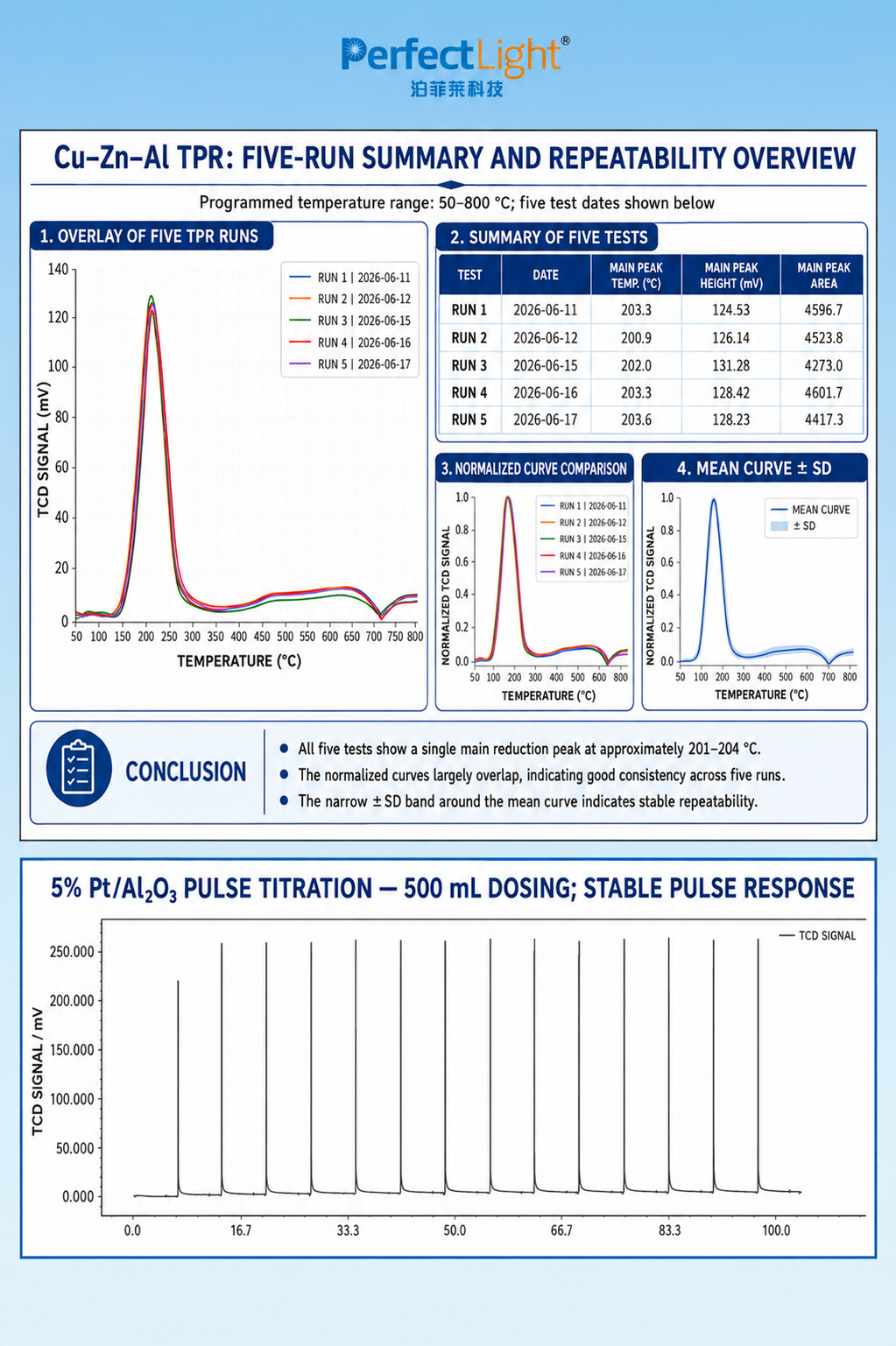
Signal Detection: Stable Response with Five-Run RSD as Low as 0.56%
Performance is reported using curves, raw data and clearly defined statistical criteria. Stage-specific measured results are summarized below:
- TPR repeatability: Five tests were completed on the same Cu–Zn–Al sample. The main reduction peaks were concentrated at approximately 201–204 °C; the RSD of the main-peak temperature was 0.56%, and the RSD of the main-peak area was 3.10%.
- Pulse repeatability: Five pulse-titration tests were completed on 5% Pt–Al₂O₃ under identical sample, gas-path, temperature and pulse-program conditions. The RSD of steady-state peak height was 1.24%, and the RSD of the fixed 60-second positive-response integral A₆₀ was 0.84%.
These results demonstrate good inter-day repeatability for the stated samples, methods and test period. The data apply only to the corresponding samples and test conditions and do not constitute a general performance guarantee for other samples or methods.
3. Automated Workflow: Continuous Operation from Method Import to Report Export
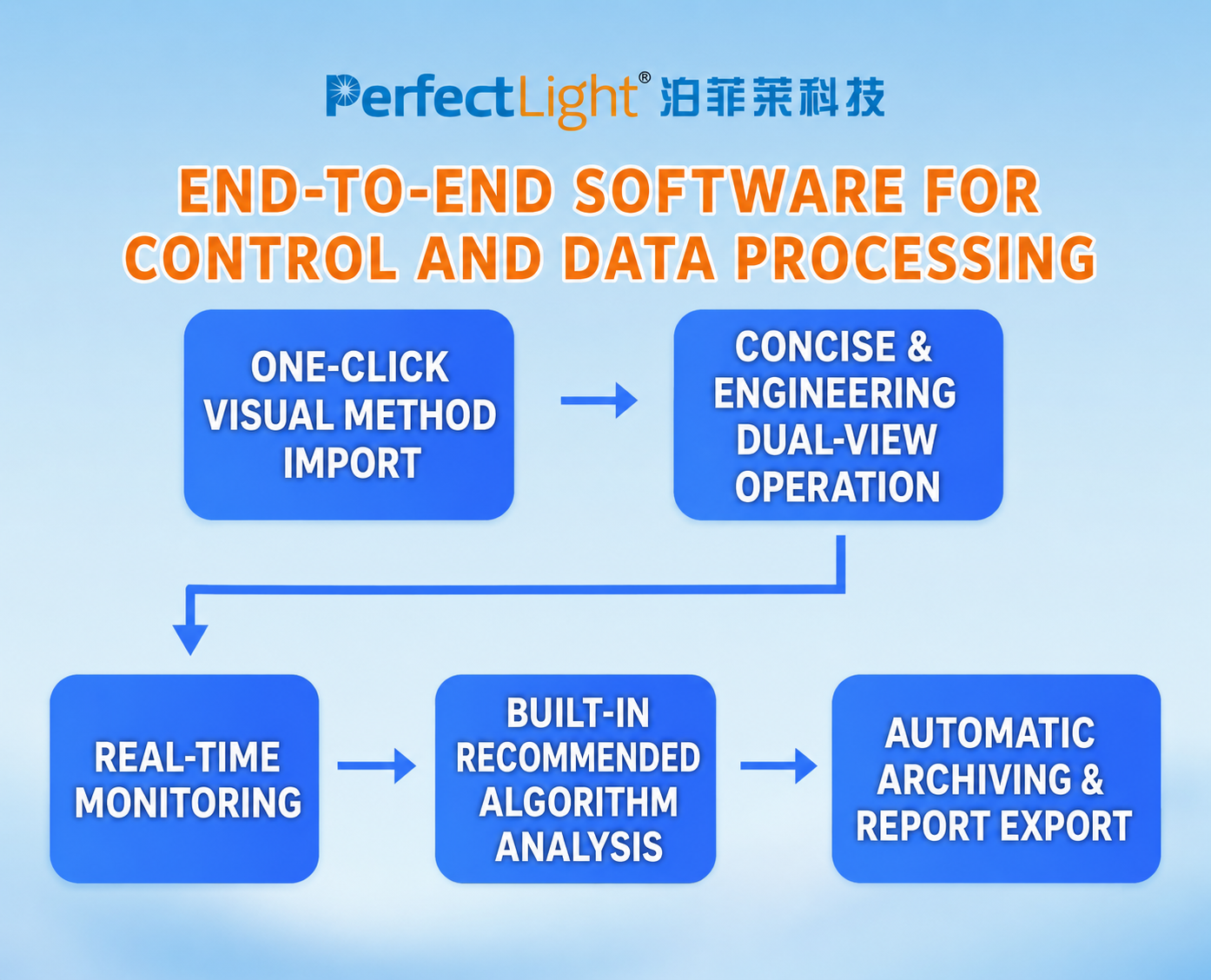
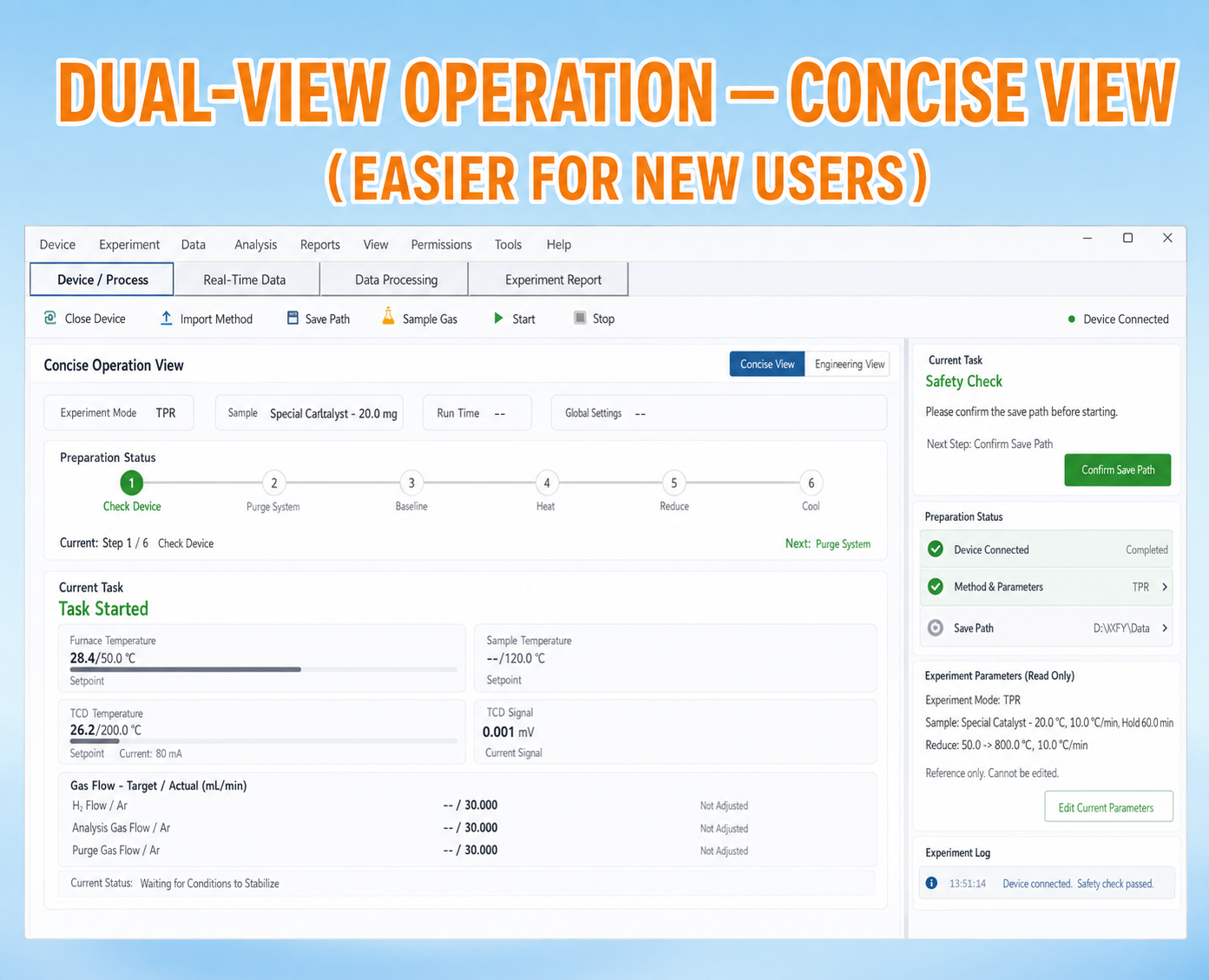
In conventional chemisorption experiments, method verification, long periods of supervision and post-test data organization are often distributed across multiple steps. PL-CataSorb2000 connects method import, experiment execution, real-time monitoring, data analysis and report export in one executable, visible and traceable workflow.
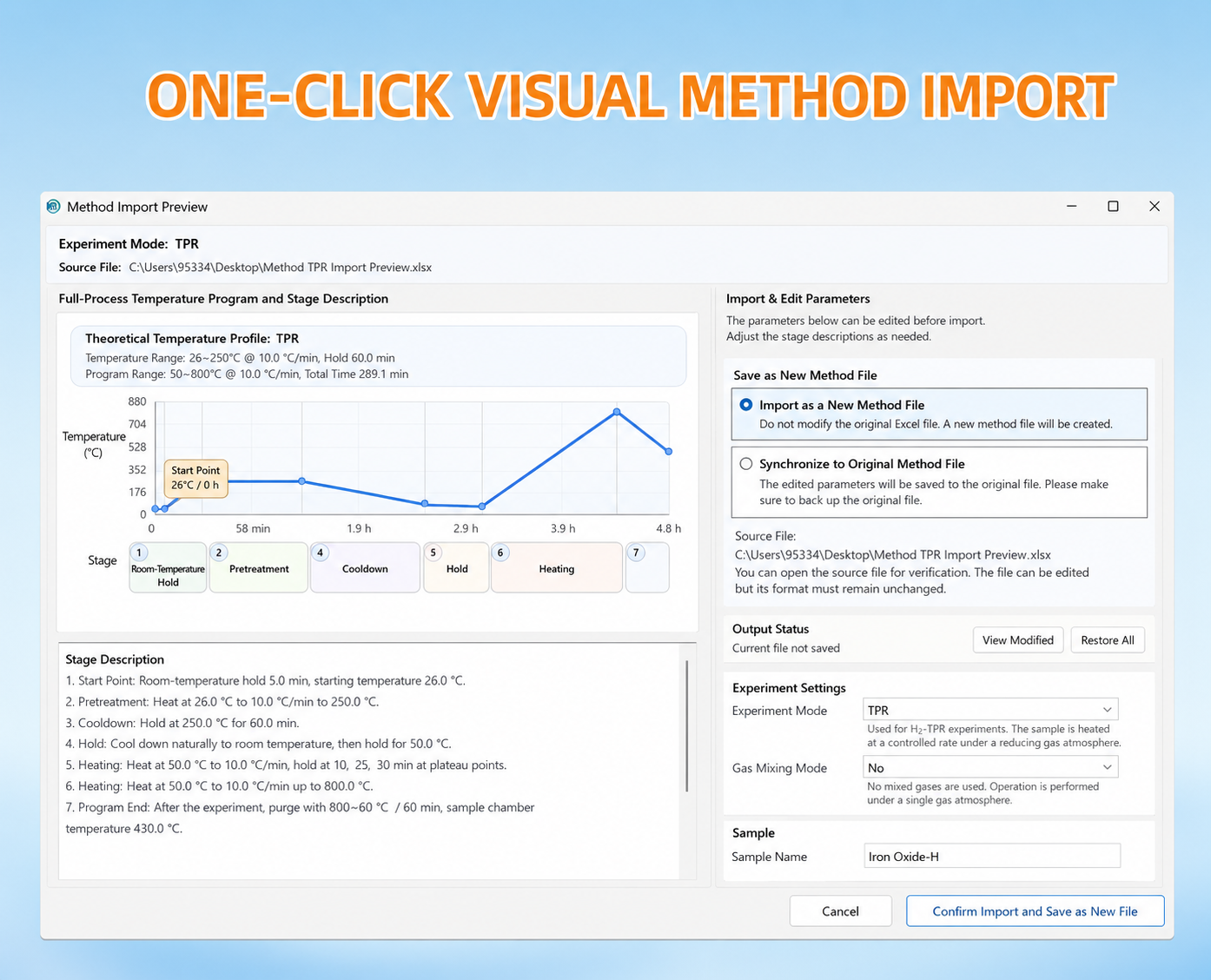
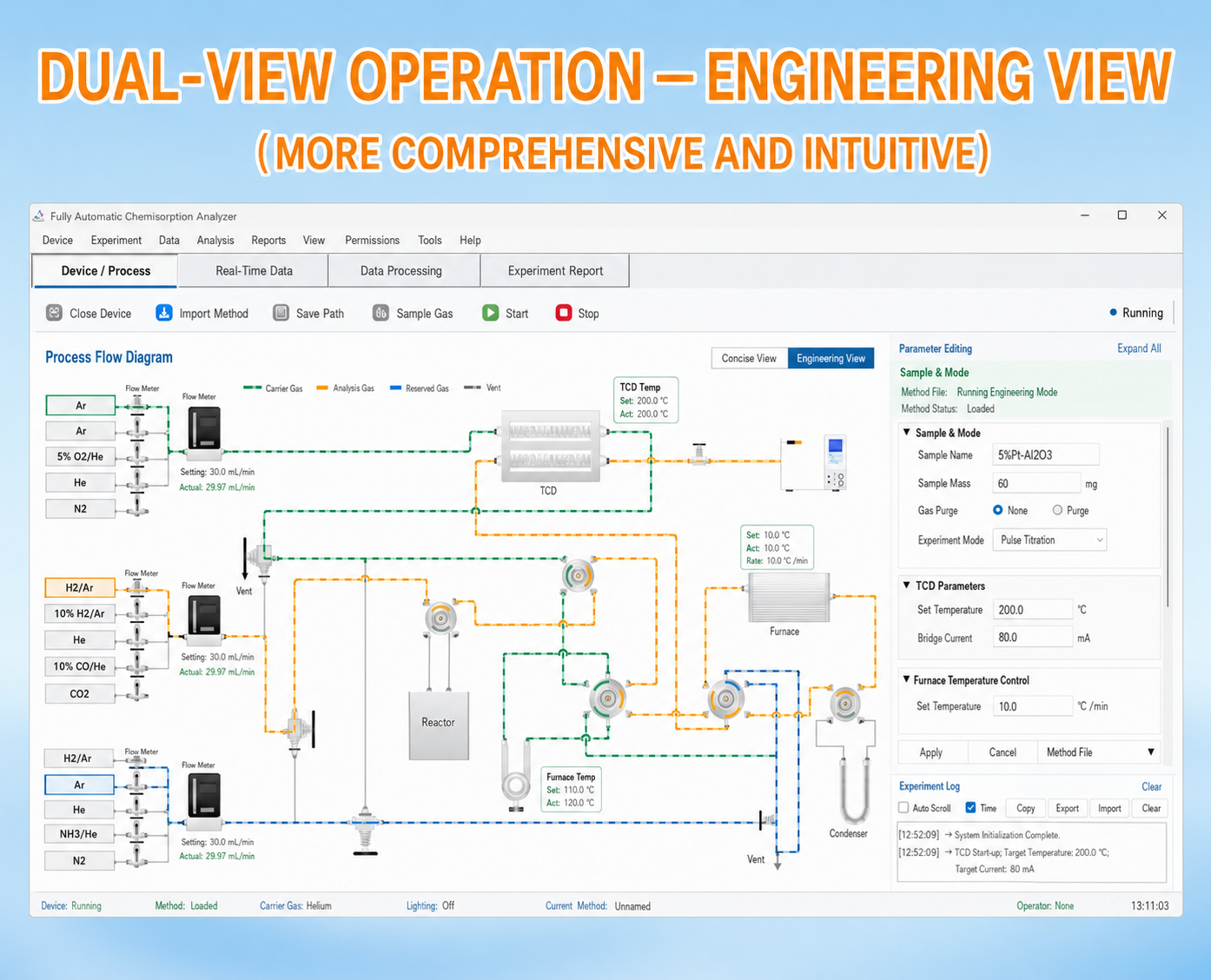
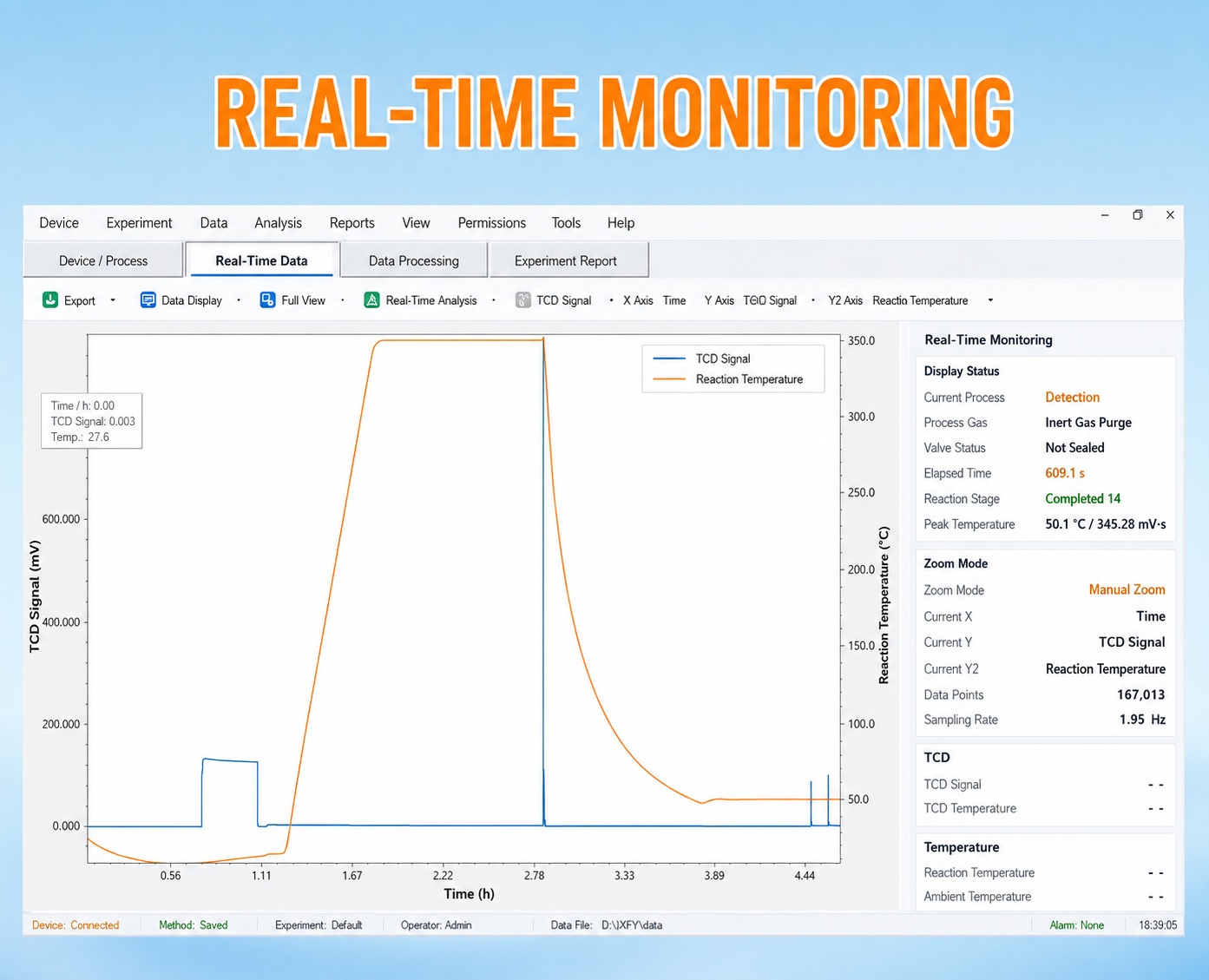
After a validated Excel method is imported, the software displays the temperature program, stage descriptions and key parameters and can start the experiment with one click. During operation, temperature, flow, valve position and TCD signal are displayed synchronously, while the engineering view retains the complete gas circuit, parameters and log records. After the experiment, routine data can be processed with one click; manual correction and peak fitting are also available, followed by automatic data archiving and report export.

4. Stable Platform: One-Click Switching Across 15 Gas Channels with Full-Path Temperature Control
PL-CataSorb2000 integrates the gas paths required by multiple experiment types on one platform, eliminating repeated reconnection when methods change.
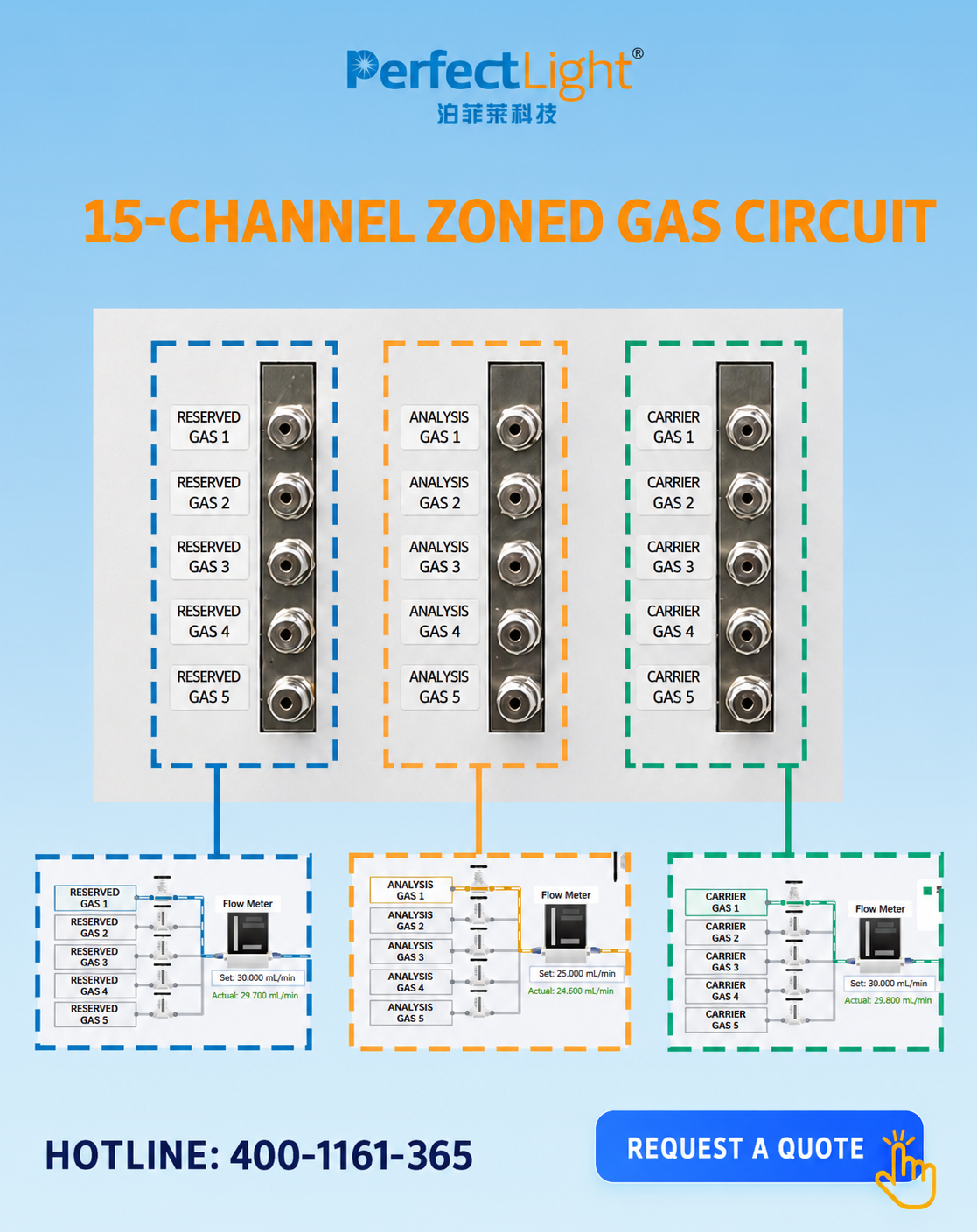
15-Channel Zoned Gas Circuit
The 15-channel gas circuit comprises five carrier-gas channels, five analysis-gas channels and five reserved-gas channels, together with three high-precision mass-flow controllers. Frequently used gases can remain connected and be called automatically by the method, enabling flexible switching among temperature-programmed tests, pulse titration and multi-atmosphere reactions without repeated gas-line reconnection. Dedicated MS and IR interfaces are reserved for online component identification and mechanistic studies.
120 °C Full-Path Heating
Internal valves and tubing are heated to 120 °C throughout the flow path. This reduces gas adsorption, retention and cold-spot effects, helping the gas stream reach the sample and detector more consistently.
Series-Connected TCD and 24 V Low-Voltage Modular Furnace
The series-connected TCD records reduction, oxidation, desorption and pulse processes by comparing thermal-conductivity changes before and after the gas passes through the reaction zone. The 24 V low-voltage modular furnace is designed for safe, dependable operation and can be removed and replaced within one minute for maintenance, reducing downtime.


