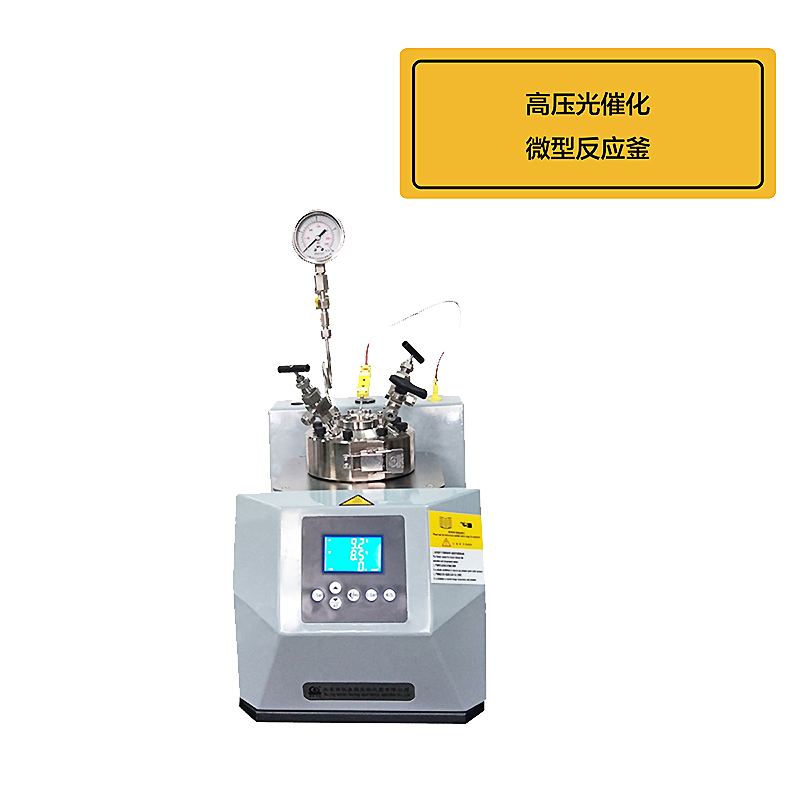
The PerfectLight PLR-SYTC photothermal-synergistic solar simulator reactor is specifically designed for gas–solid phase photo/photothermal catalytic experiments. It can monitor reaction pressure and the bulk temperature of the catalyst in real time via pressure and temperature sensors. The unit features a built-in electric heating element for heating. Temperature control is achieved by thermocouples and a temperature controller in feedback mode, providing high control accuracy so you can precisely explore the synergy of light and heat on an integrated, safe, and reliable platform.
The PLR-SYTC photothermal-synergistic solar simulator reactor mainly consists of the reaction vessel and a controller, with the heating element built into the reaction vessel.

• Photothermal reactions simulating changes in daylight illumination
• Photothermally driven catalytic energy compensation calculations
This unit is targeted at gas–solid photothermal catalytic applications and offers the following core functions and features:
No.1 Simulates natural sunlight
Equipped with a high-uniformity xenon lamp light source (e.g.: PLS-SME400E H1 xenon lamp source), supporting PC software control. Combined with an integrating optic and attenuation filters, it realizes accurate full-spectrum simulation from UV to IR and supports simulation of natural light intensity changes within 7 hours. This ensures experimental conditions more closely match real solar illumination, helping researchers fully explore the thermal effect of infrared light and photothermal synergy mechanisms.
No.2 Precise temperature control and energy consumption monitoring
The unit contains a built-in electric heating element with a control range from room temperature to 400℃. Temperature measurement accuracy reaches ±0.1℃. Combined with thermocouples and a PID intelligent temperature control system, it achieves stable temperature control within ±0.5℃. The system also provides real-time calculation of electrical energy consumption, supporting full-process energy tracking and efficiency analysis for photothermal synergy mechanism studies and process optimization, providing reliable data support.
No.3 Dual-mode intelligent control
Supports both "electrical control" and "light control" operating modes, and allows automatic/manual switching according to experimental needs. Whether constant-temperature reactions, programmed heating ramps, or light-intensity–temperature linked control, settings can be flexibly configured via an intuitive PC interface to meet diverse experimental needs from basic research to scale-up.
No.4 Full PC control
The software interface is intuitive and supports real-time monitoring and recording of light intensity and temperature parameters. It features a 10-segment program temperature control function, allowing temperature and time settings for each segment. The system uses dual-mode control with electrical and light control modes to meet different experimental requirements and supports manual/automatic mode switching.

No.5 Modular gas path design and high-pressure safety structure
Uses high-pressure metal quick-connect gas fittings, supporting rapid switching between flow-phase and closed-phase reactions. The reaction vessel is made of 304 stainless steel, and the light window is high-transmittance JGS1 quartz glass (transmittance >97%). The vessel is pressure-resistant up to 0.15 MPa and includes sampling and pressure gauge interfaces. It is compatible with various gas detection devices and offers strong extensibility.
No.6 Customizable reaction volume and user-friendly assembly design
The standard reactor volume is 50 mL, with customization options for 25/100/200 mL sizes. It is supplied with a dedicated sample holder and a thermally conductive gel trough to ensure uniform temperature across the catalyst bed.
| Temperature control range: room temperature ~ 400℃; | Temperature measurement accuracy: ±0.1℃; |
| Design working pressure (gauge): 0~0.15 MPa; | Reactor volume: 50 mL (customizable to 25, 100 and 200 mL); |
| Vessel material: 304 stainless steel; | Light window material: diameter: Ф47.5 mm, imported JGS1 quartz glass, transmittance >97%; |
| High-pressure quick-connect gas fittings: with gas inlet and vacuum capability; | Equipped with a manual sample inlet and a high-precision mechanical pressure gauge system structure. |