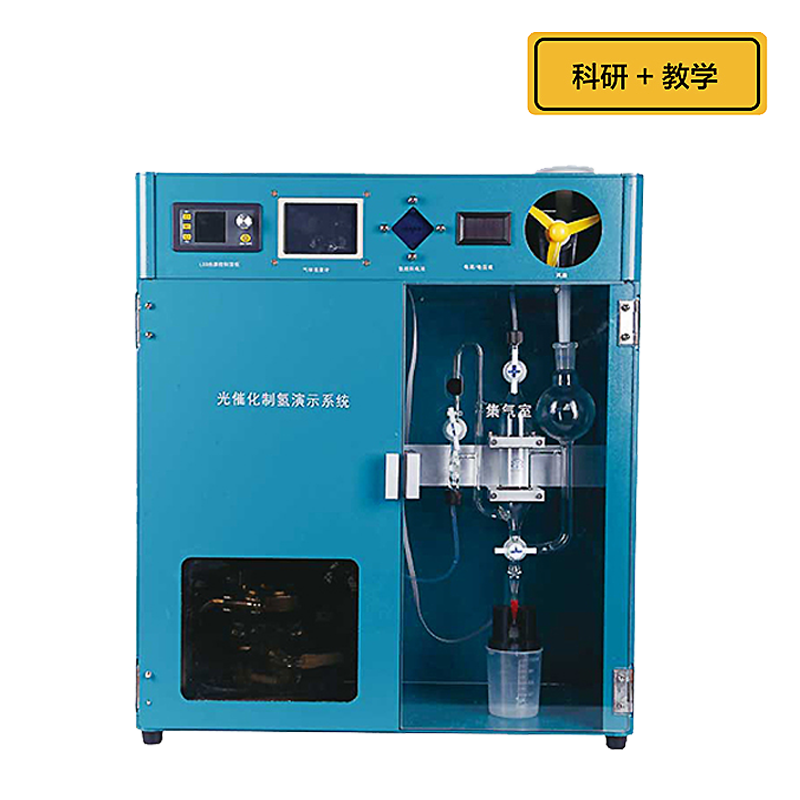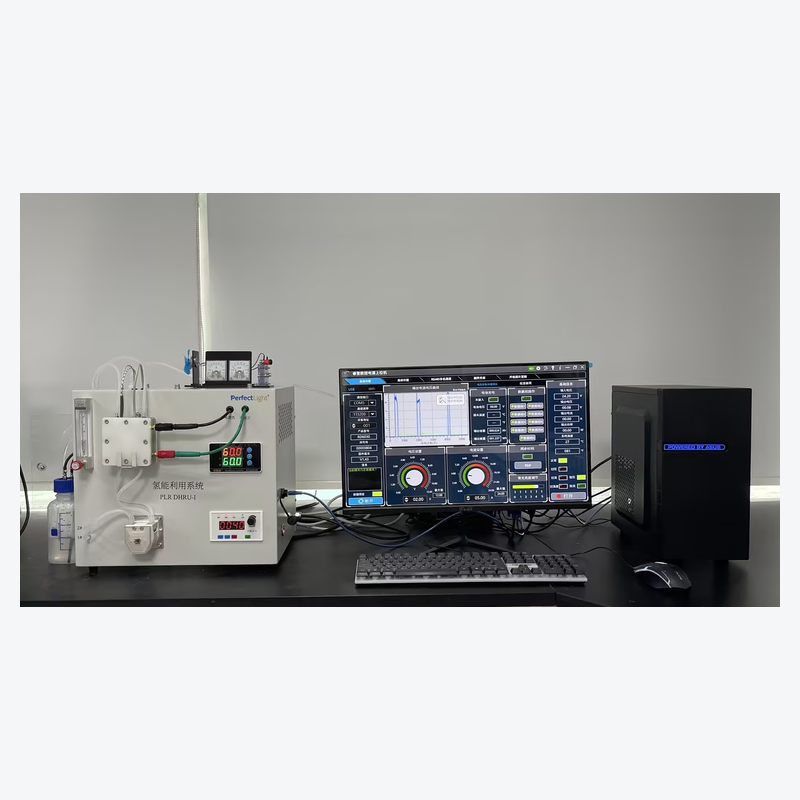
The AC088 hydrogen energy demonstration system is an electrochemical teaching and research demonstration platform that integrates water electrolysis for hydrogen production, hydrogen energy conversion and utilisation, and software-based data monitoring. Composed of a water electrolysis hydrogen production unit, a hydrogen energy conversion and utilisation unit and system software, it links “hydrogen production → hydrogen use → energy conversion → data recording” into an observable, operable experimental workflow. The standard configuration includes a reactor module, a hydrogen energy demonstration module and a system integration module.
Water electrolysis hydrogen production unit: electrolyser dimensions 90 × 90 × 32 mm; electrolyte 1 M or 30 wt% KOH; electrodes of nickel foam or carbon paper, dimensions 50 × 50 × 0.4 mm; anion exchange membrane. The bipolar plate is a corrosion-resistant titanium plate with electrolyte flow channels on its surface, and the outer frame is ABS engineering plastic; liquid inlet and outlet are both 4 mm, and the electrode spacing is about 1 mm.
Hydrogen energy conversion and demonstration unit: fuel cell hydrogen consumption 14–21 mL/min, inlet pressure below 40 kPa, output current 0–0.8 A; fitted with a current/voltage meter and a fan demonstration load.
Material delivery and power supply: dual-channel peristaltic pump liquid delivery 16–140 mL/min with driver; acid- and alkali-resistant storage tanks 500 mL × 2; system power input 220 V, output 0–12 V / 0–18 A.
Temperature and data: the temperature control and display range stated in the documentation is 10–85 °C; the thermostat itself covers -50–120 °C, and the heating rod only heats (it does not cool). Voltage, current, electrolyte flow rate and temperature can be adjusted or displayed; hydrogen flow can be monitored at high current. The software supports on-line connection, voltage/current setting, output control, and saving and exporting of working curves.
Gas handling and environment: the system supports gas-liquid separation and drying, as well as hydrogen measurement, collection or discharge. The stated ambient conditions are 5–60 °C and 20–70% RH.
Suitable for university hydrogen energy course experiments, undergraduate principle demonstrations, graduate basic experiments and introductory research, preliminary testing in research institutions, small-scale validation in enterprises, and hydrogen energy outreach.
The operating temperature of the whole system must not exceed 90 °C. When using KOH electrolyte and hydrogen, operation must be carried out by qualified personnel in accordance with the equipment instructions, with proper protection and ventilation, reliable grounding, and away from open flames and static electricity; the tightness of the gas circuit and connections must be checked.