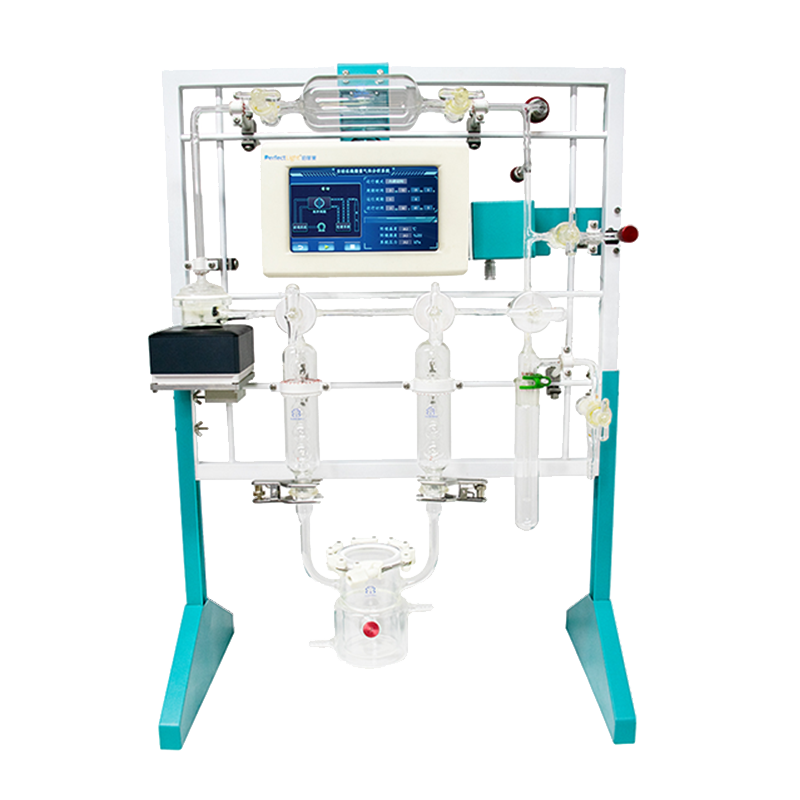
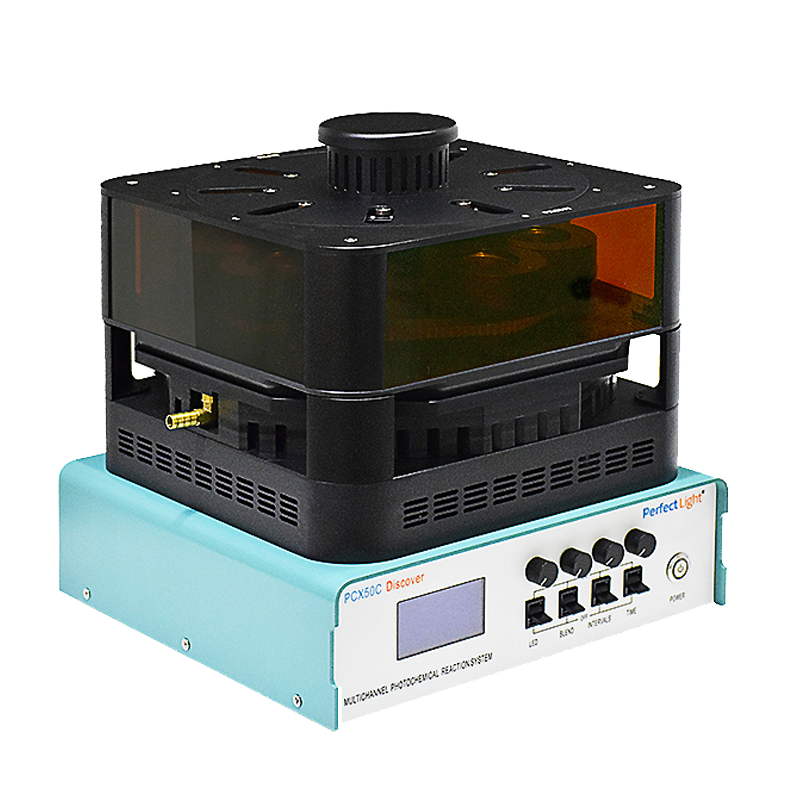
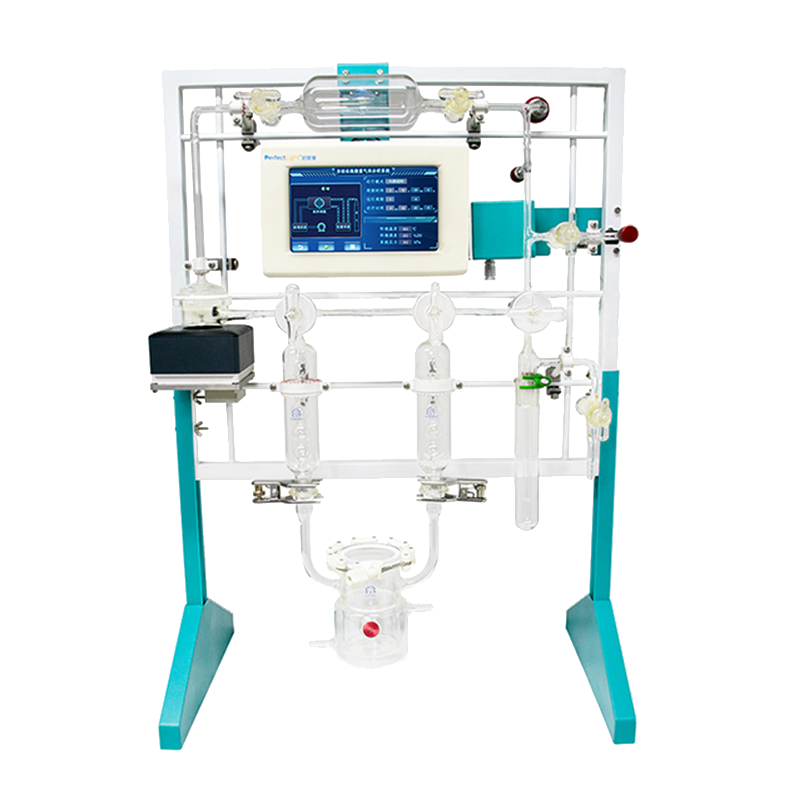
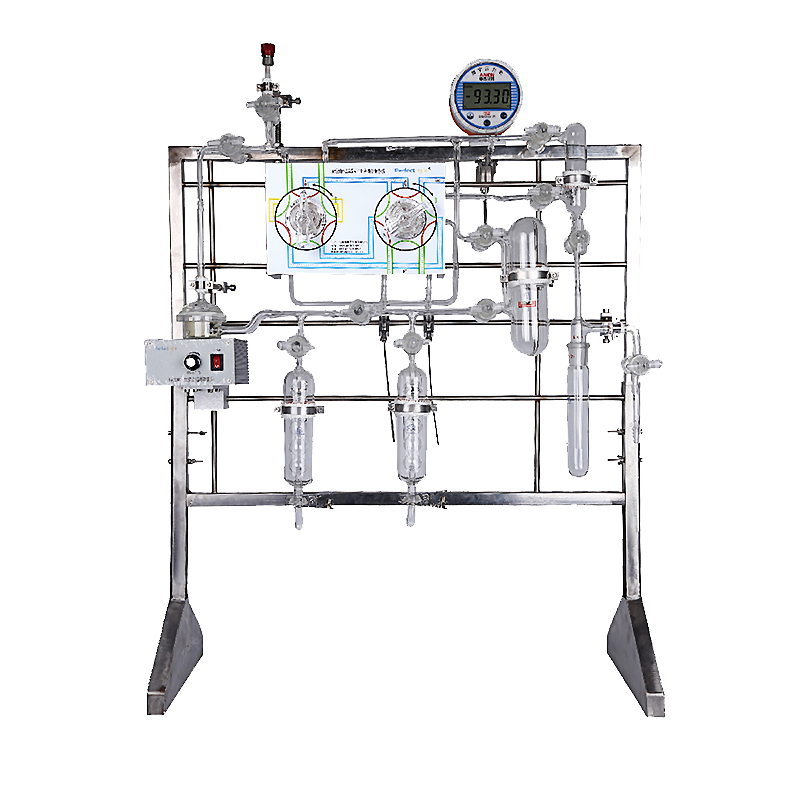
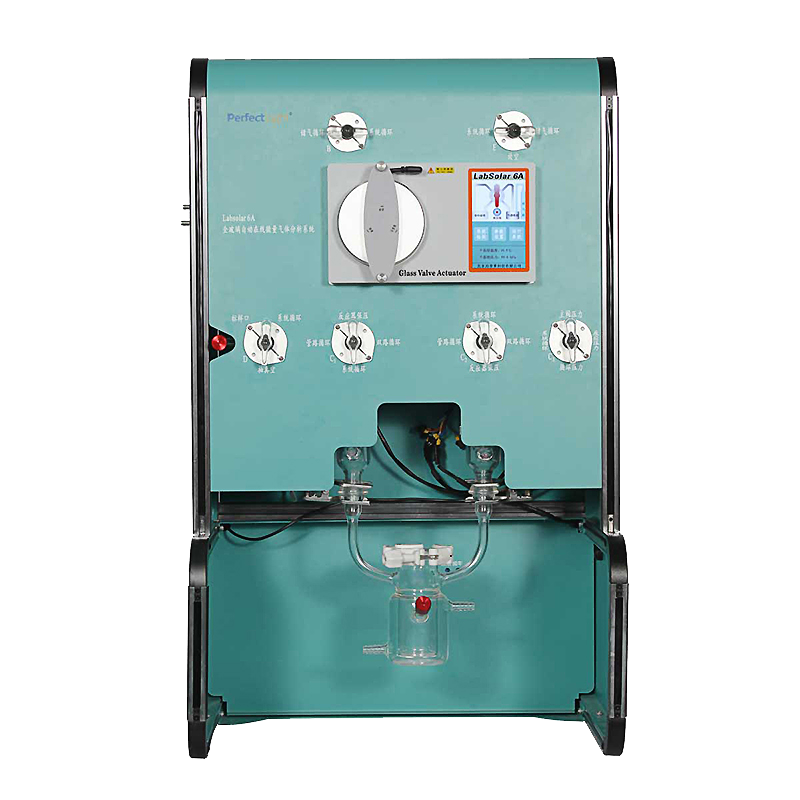
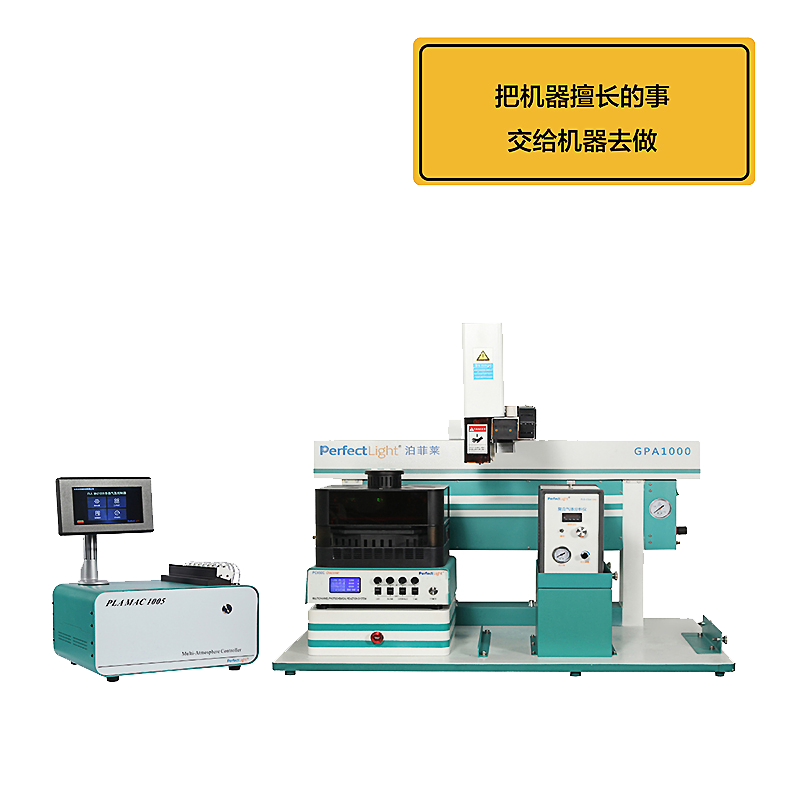
The Labsolar IV-AI automatic on-line trace gas analysis system builds on Perfectlight’s long experience in gas-tight glass reaction systems. Based on the closed glass pipeline of the Labsolar IIIAG on-line photocatalytic analysis system, it adds a software control module that enables automatic, timed on-line analysis under controlled gas-tightness conditions.
The system supports photocatalytic water splitting under negative pressure, photocatalytic CO2 reduction under atmospheric and slightly negative pressure, and photocatalytic activity testing under controlled temperature and pressure.
The Labsolar IV-AI adopts a modular design consisting of a software and control unit, a full-glass circulation pipeline, an automatic sampling module, a gas circulation module and a customisable reactor.
Product Advantages
- Easy-to-operate software and control unit with a user-friendly, human-centred design.
- Fully automatic sampling module — non-chromatographic sampling shortens the circulation pipeline and improves gas circulation efficiency.
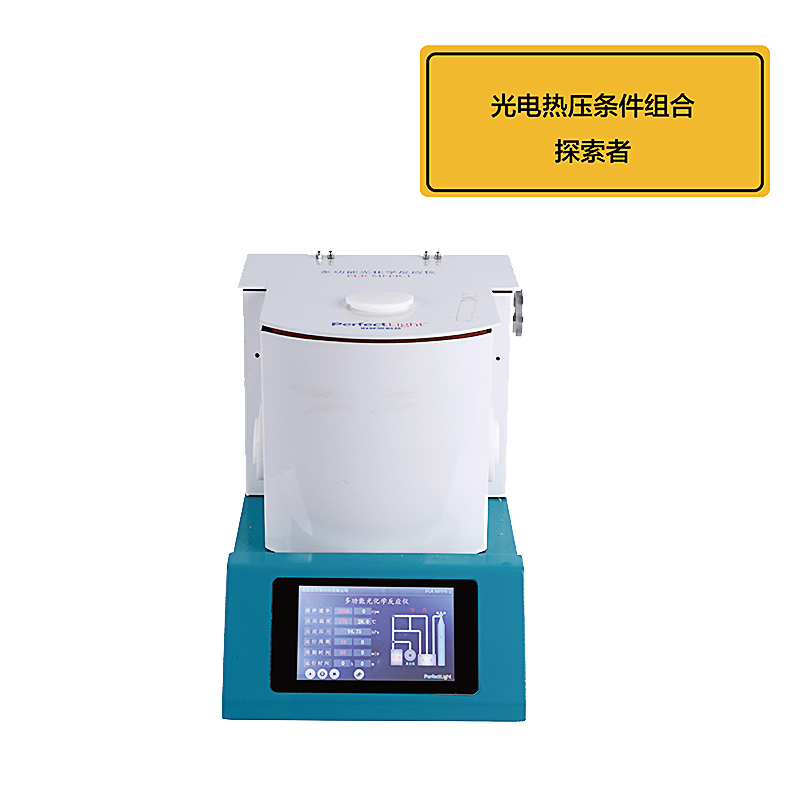
- Reactors of different volumes can be customised; by changing the reactor type, gas-solid phase and gas-liquid-solid phase photocatalytic, photoelectrocatalytic and photothermal catalytic reactions can all be carried out.
- Open design with a height-adjustable metal frame, allowing the glass pipeline height to be set according to experimental requirements.
Applications
- Photocatalytic / photoelectrocatalytic water splitting for hydrogen and oxygen
- Photocatalytic / photoelectrocatalytic overall water splitting
- Photocatalytic / photoelectrocatalytic CO2 reduction
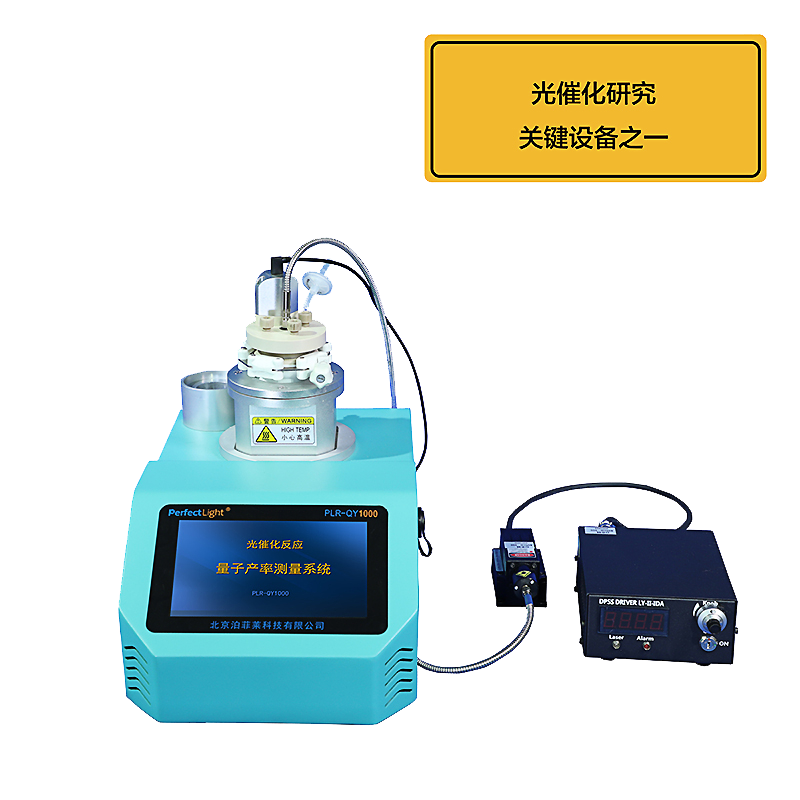
- Photocatalytic quantum efficiency measurement
- Photothermal catalysis (negative-pressure and atmospheric systems)
- Electrocatalytic HER, OER and CO2RR
Control Unit Specifications
- Software module: 32-bit control software with a 7-inch LCD touch screen, displaying internal pressure, ambient temperature and humidity in real time; after the sampling period and number of cycles are set, it automatically controls the sampling module, the gas chromatograph and the vacuum pump.
- Automatic sampling module: integrated inside the system; non-chromatographic sampling shortens the circulation pipeline and improves gas circulation efficiency, with high chromatograph compatibility.
- Fully automatic carrier-gas loading: precisely controls the carrier-gas volume to promote gas circulation and effectively avoids the air interference caused by syringe injection of carrier gas.
- Vacuum pump: pumping speed 6 L/s; started and stopped automatically by the control software in intermittent operation with low noise; fitted with a one-way solenoid valve to prevent oil back-suction.
Gas Circulation Specifications
- Gas mixing time: H2 and O2 < 10 min; CH4 and CO < 30 min
- Standard-curve linearity: R2 > 0.999 for H2 in the range 100 µL–10 mL
- Repeatability: RSD < 3% for four consecutive injections at the same concentration
- Passive magnetic high-speed circulation system: three adjustable drive speeds, up to 7000 r/min, providing strong circulation; no electrical wiring inside the pipeline, so there is no risk of hydrogen explosion and no interference from electrolytic hydrogen evolution.
- Sampling mode: automatic on-line sampling; the quantitative loop is located in the system’s built-in automatic sampling module, with non-chromatographic sampling.
- Circulation pipeline: the narrowest section has an inner diameter of 3 mm — not a small-bore chromatographic line — giving low gas resistance.
Detection Specifications
- Permissible carrier-gas pressure: ≤ 0.35 MPa, compatible with complex gas chromatograph configurations
- Detection range: trace gases such as H2, O2, CH4 and CO
- Detection limit (µmol): H2 0.1; O2 0.2; CH4 / CO 0.1