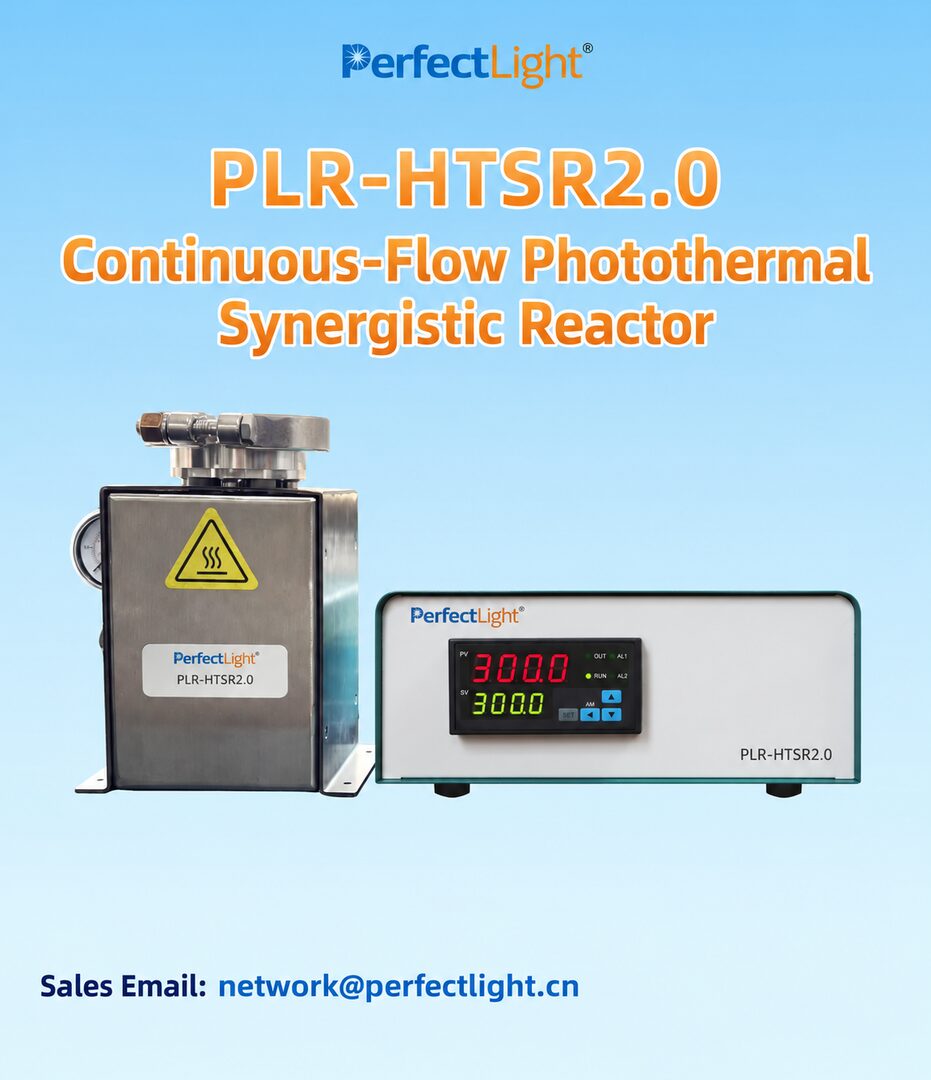
The fixed-bed reactor lets reactants pass through the catalyst bed in continuous flow; bed temperature, space velocity, and atmosphere can all be precisely controlled, making it a classic configuration for evaluating catalyst activity and stability. Compared with batch autoclaves, it is closer to industrial continuous processes, and the data is easier to extrapolate to scale-up. The rapid-heating multi-field fixed-bed reaction device upgrades the heating rate and multi-field coupling on this basis, letting researchers perform kinetic scans over a wider temperature range.
| Module | Function | Key Metrics |
|---|---|---|
| Heating & temperature measurement | Reach and stabilize the target temperature quickly | Heating/cooling rate, uniform-temperature zone length |
| Multi-field coupling | Superimpose light, electric, or plasma fields | Field uniformity, non-interference |
| Online sampling | Send outlet gas to chromatograph or mass spectrometer | Dead volume, response speed |
The rapid-heating multi-field fixed-bed reaction device compresses the traditional fixed bed's minutes-long heating into seconds through zoned heating and online temperature measurement, especially suitable for studying temperature-sensitive reaction turning points.
Free consultation: Want to upgrade your fixed bed into a rapid-heating multi-field platform? Tell Perfectlight your reaction temperature range and coupling-field needs, and we will equip you with the rapid-heating multi-field fixed-bed reaction device and online detection.
Tel: 400-1161-365 / 010-62128921 Perfectlight Official Website
It integrates rapid temperature ramping, multi-field (light/electric/plasma) coupling, and a fixed-bed flow reactor, serving as a core platform for thermal catalysis and photothermal synergy research.
Thermal catalytic hydrogenation, photothermal synergy experiments that separate light and heat contributions, and Joule-heating catalysis needing extremely fast temperature changes.
Connect online detection at the outlet—pair it with a Gas Chromatograph or the μGAS1001 Micro-Gas Reaction Evaluation System to achieve real-time product quantification.
This article does not constitute a performance commitment; specific technical parameters are subject to the actual product documentation and mutual confirmation.
tion."}}]}