Gas-solid photothermal catalysis is increasingly evaluated under continuous gas feed rather than only at ambient temperature and pressure. In these studies, irradiation, temperature and gas flow are all part of the reaction design, so reactor configuration can directly influence experimental interpretation.
The PLR-HTSR2.0 Continuous-Flow Photothermal Synergistic Reactor is designed for gas-solid photocatalytic and photothermal research, including CO2 reduction, VOC degradation, nitrogen fixation and sulfur fixation.
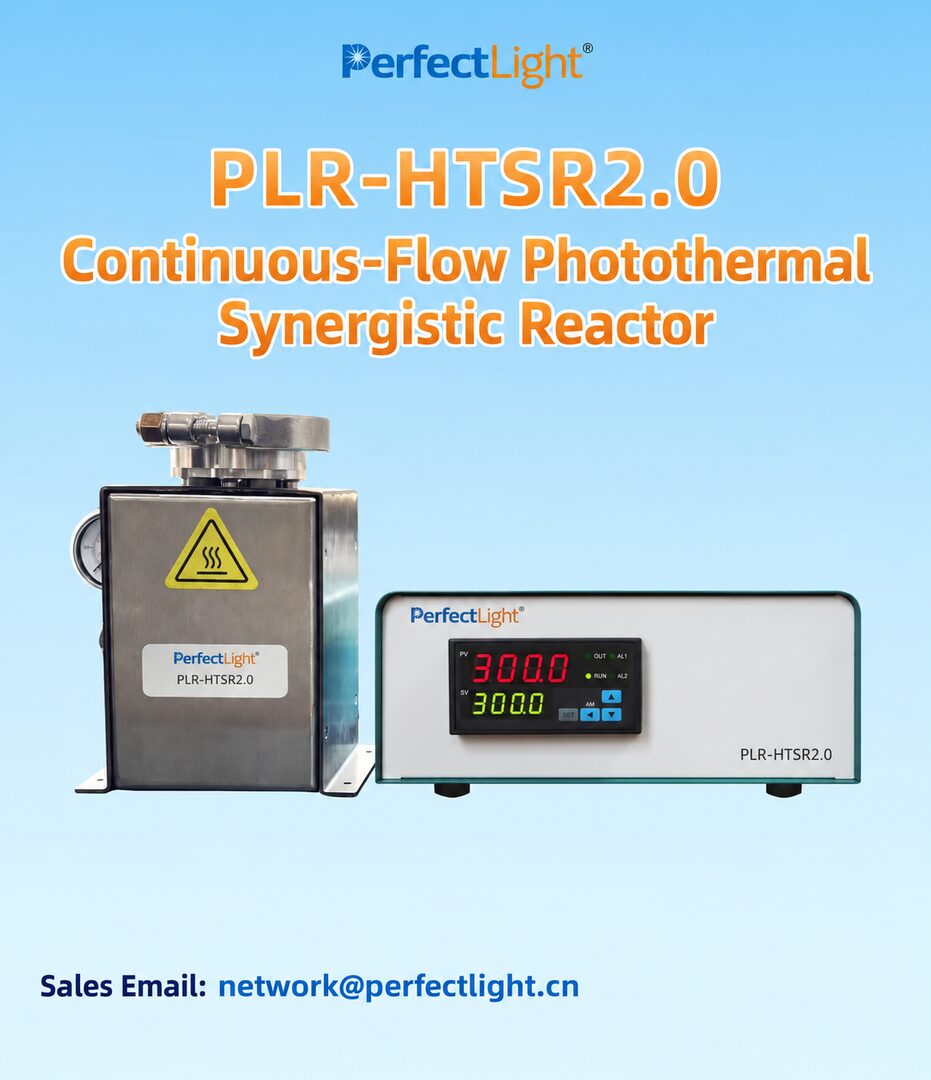
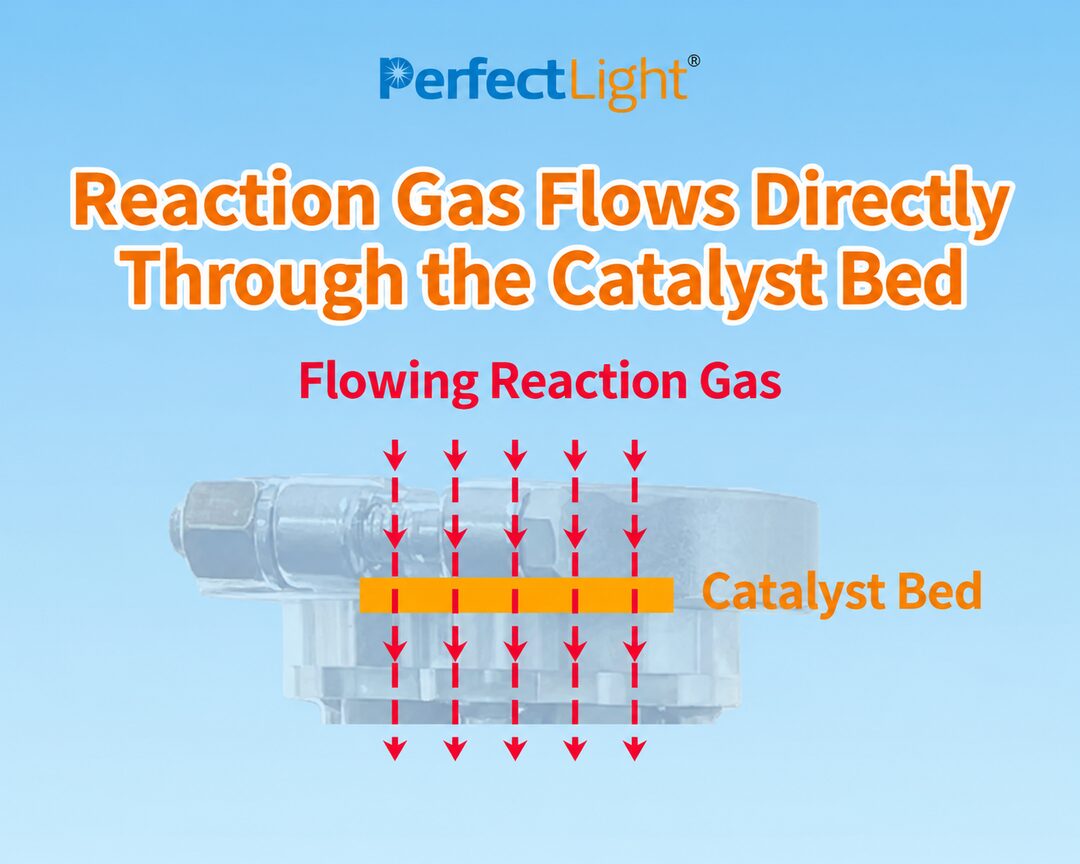
The reactor adopts a flow-through configuration in which reaction gas continuously passes downward through the catalyst bed, placing the catalyst in the required gas path. Outlet gas can be directed continuously to downstream GC or MS analysis, supporting stability studies, kinetic investigation and continuous product evaluation.
The temperature-control range is from room temperature to 500 °C, with a temperature detection accuracy of ±1 °C. This supports low-temperature activity testing as well as screening under medium- and high-temperature photothermal or thermocatalytic conditions in the same reactor.
The design working pressure is 0–1.0 MPa (gauge). Pressure can be monitored during continuous gas-feed experiments, enabling comparison of reaction behavior under different pressure conditions for gas-solid reactions, hydrogenation and CO2 conversion studies.
A Φ30 mm sapphire optical window introduces external irradiation to the catalyst bed while meeting the structural requirements of high-temperature and pressurized operation. With built-in heating and catalyst bulk-temperature monitoring, the same reactor can be used for illuminated and dark controls, heating-only conditions, and photothermal synergistic studies.
Holding the catalyst-bed and reactor structure constant while adjusting illumination and temperature helps reduce additional structural variables in comparative experiments. The reactor also supports 10-segment programmable temperature control for experiments that require a defined temperature profile.

Standard Φ3 mm gas-line fittings allow the reactor to connect to existing gas supply, flow-control and downstream analytical equipment. A typical configuration is: gas source → flow control → reactor → downstream analysis. Laboratories with established gas handling, light sources and analytical instruments can incorporate the reactor as the reaction unit in an existing setup.
| Parameter | Specification |
|---|---|
| Temperature-control range | Room temperature to 500 °C |
| Temperature detection accuracy | ±1 °C |
| Design working pressure | 0–1.0 MPa (gauge) |
| Reactor volume | 50 mL |
| Gas capacity | 22 mL |
| Maximum liquid filling volume | Approximately 6.5 mL |
| Reactor material | 304 stainless steel |
| Optical window | Φ30 mm sapphire; transmittance >90% |
As gas-solid photothermal catalysis expands from material-performance evaluation to continuous-flow conditions, gas–bed contact, temperature distribution and light–heat input become part of the experimental design. More controlled investigation of these factors can help researchers interpret the reaction process and its influence on catalytic performance.
Explore PerfectLight photothermal catalysis systems and photothermal catalysis solutions on the PerfectLight international website.
Sales Email: network@perfectlight.cn