For equilibrium-limited photocatalytic reactions (such as certain hydrogenation and reduction), raising pressure shifts equilibrium toward products and improves conversion. High pressure also gives gas-phase reactants higher solubility and contact efficiency.
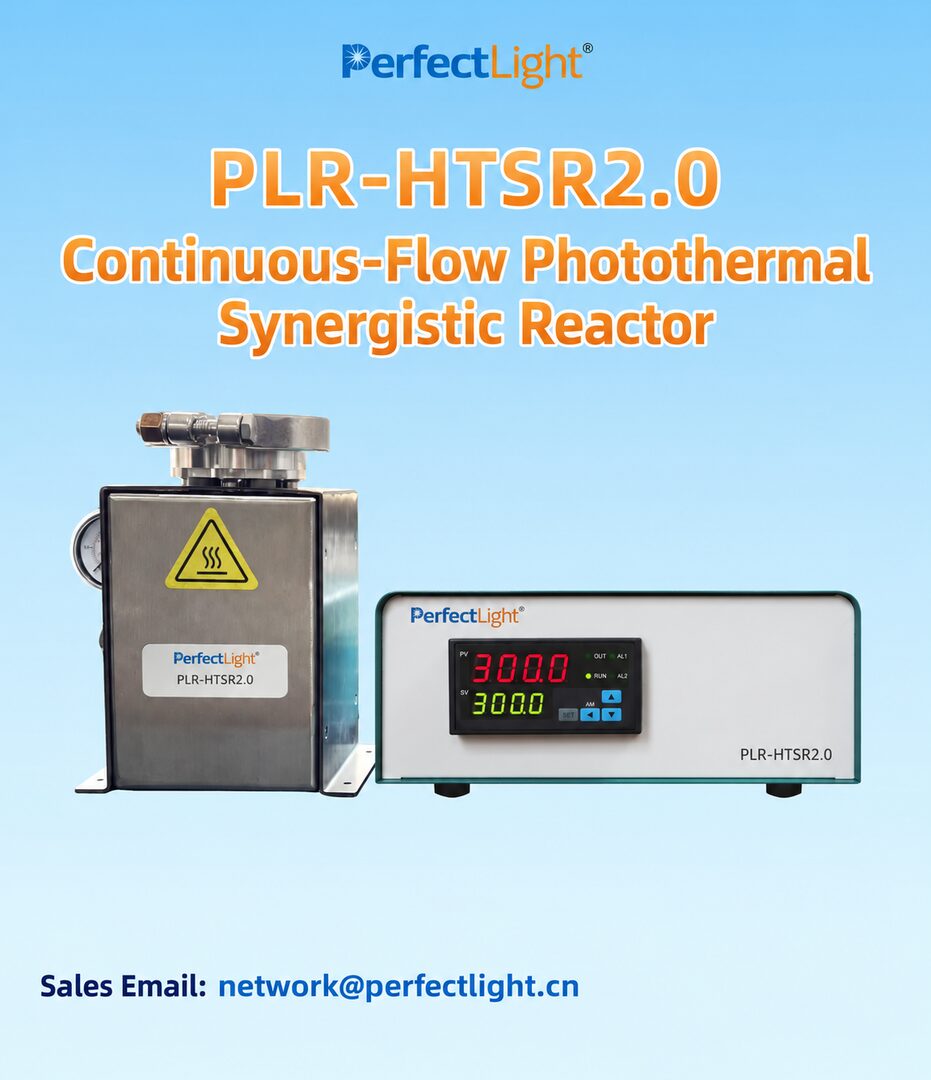
The LightChem Series High-Pressure Photochemical Reactor integrates a pressure-resistant vessel, illumination window, and stirring/temperature measurement, suited to gas-phase or liquid–solid high-pressure photoreactions. Researchers can examine activity curves with conditions under controllable pressure.
Under high pressure, any leak is dangerous. The setup must meet design pressure, be leak-checked regularly, ramp temperature and pressure stepwise, and monitor hot spots. Gas systems (e.g., hydrogen) must be properly inertized and ventilated.
Record pressure, temperature, and conversion/selectivity under illumination, and attach catalyst characterization to separate the pressure effect from the light effect, avoiding misattributing the pressure contribution to light.
Free consultation: Hesitant to start high-pressure photocatalysis? Perfectlight's LightChem Series High-Pressure Photochemical Reactor turns pressure resistance, leak-checking, and temperature measurement into standardized modules—ready to run experiments on arrival.
Tel: 400-1161-365 / 010-62128921 Perfectlight Official Website
For equilibrium-limited reactions, pressure shifts equilibrium toward products and increases gas solubility and contact efficiency, raising conversion.
It integrates a pressure-resistant vessel, illumination window, and stirring/temperature measurement for controllable-pressure gas or liquid–solid photoreactions.
Meet design pressure, leak-check regularly, ramp stepwise, monitor hot spots, and properly inertize/ventilate flammable gases like hydrogen.
This article does not constitute a performance commitment; specific technical parameters are subject to the actual product documentation and mutual confirmation.
}}]}