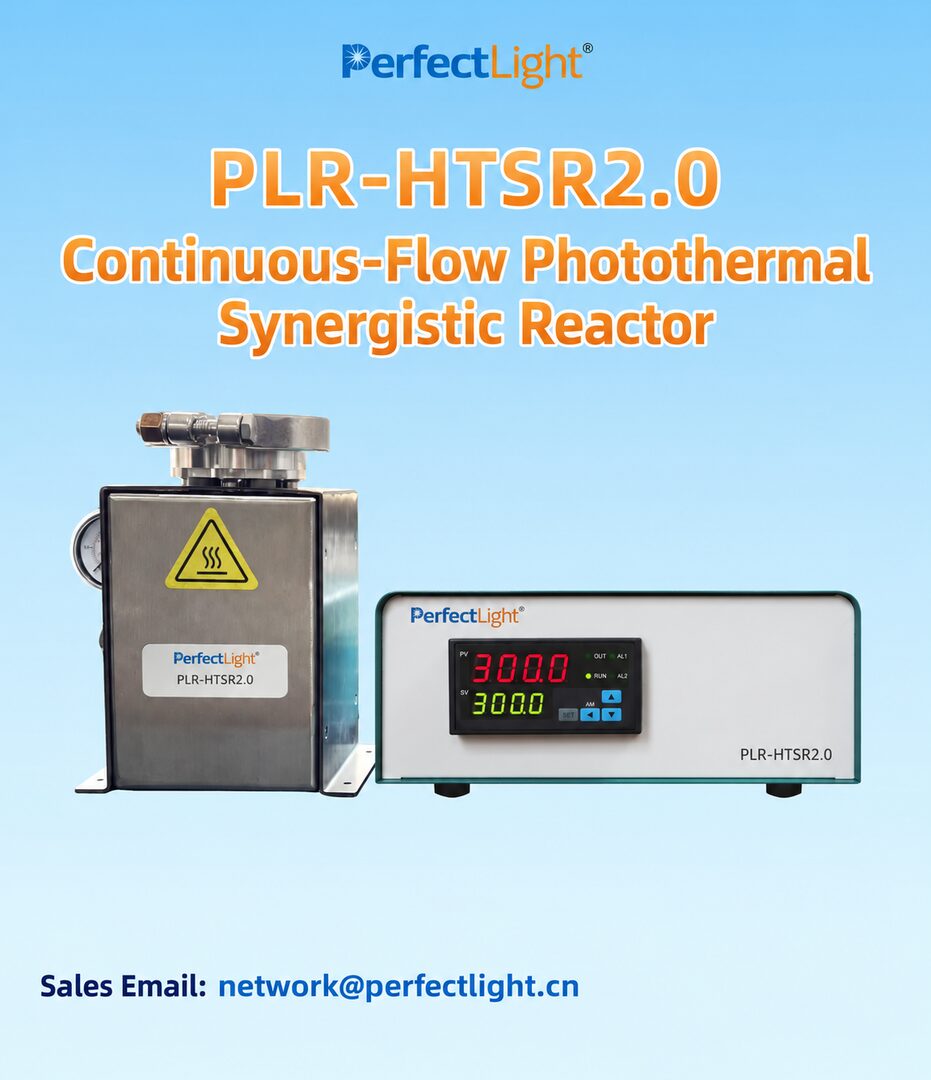
Many photocatalytic reactions must run under pressure, sealed, or observable conditions—such as high-pressure photocatalysis and liquid–solid synthesis. An open beaker cannot meet these needs, so the photochemical reactor becomes the standard for advanced experiments.
One type is pressure-rated, such as the LightChem Series High-Pressure Photochemical Reactor, which tolerates high pressure and suits gas-phase or liquid–solid high-pressure reactions. The other is observation-type, such as the LC-D Sapphire Photoelectrochemical Reactor, using a sapphire window to watch the reaction directly while balancing light transmission and pressure resistance.
A photoreaction must let light in. The sapphire window offers excellent transmission, high pressure resistance, and corrosion resistance—an ideal window material for photoelectrochemical reactors. The design must ensure the light path faces the reaction zone, avoiding obstruction by the vessel wall.
Free consultation: Want to run photocatalysis under high pressure or watch the reaction proceed? Perfectlight's LightChem Series High-Pressure Photochemical Reactor and LC-D Sapphire Photoelectrochemical Reactor equip you with pressure resistance and visibility in one package.
Tel: 400-1161-365 / 010-62128921 Perfectlight Official Website
It enables photocatalysis under pressurized, sealed, or observable conditions—such as high-pressure photocatalysis and liquid–solid synthesis—that an open beaker cannot provide.
Pressure-rated reactors like the LightChem Series High-Pressure Photochemical Reactor, and observation-type reactors like the LC-D Sapphire Photoelectrochemical Reactor with a viewing window.
Sapphire offers wide transmission, high pressure resistance, and corrosion resistance, making it an ideal window for photoelectrochemical reactors.
This article does not constitute a performance commitment; specific technical parameters are subject to the actual product documentation and mutual confirmation.
}}]}