Catalytic oxidation converts VOCs into CO2 and water at relatively low temperature, with lower energy consumption than direct incineration; photochemical and plasma routes can start at room temperature and pressure, suitable for low-concentration, high-volume scenarios. Lab evaluation requires stable feeding and sensitive product detection.
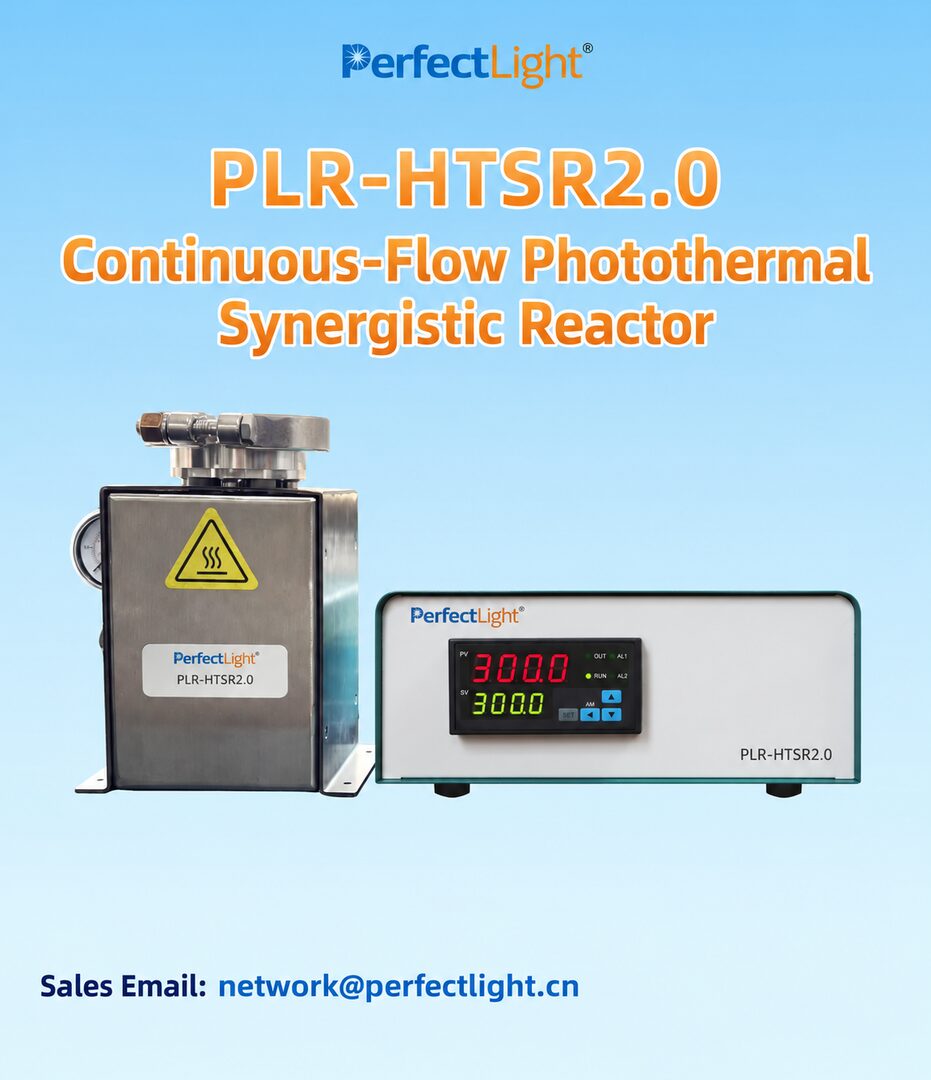
Load the catalyst into the rapid-heating multi-field fixed-bed reaction device; VOC standard gas enters the bed after dilution, and the outlet connects to an FID or chromatograph to detect residual concentration. A heating program can plot the light-off temperature (T50/T90), a core metric of catalyst performance.
The PLR-MPPT-X Plasma-Induced Photocatalytic Activity Test Platform combines a plasma field with photocatalysis, activating refractory VOCs at room temperature. During evaluation, focus on energy efficiency (electricity consumed per unit VOC degraded) and by-product ozone control.
Free consultation: Lacking a stable platform for VOC degradation evaluation? Perfectlight's rapid-heating multi-field fixed-bed reaction device and plasma platform cover degradation research from room temperature to high temperature, helping you measure the light-off curve accurately.
Tel: 400-1161-365 / 010-62128921 Perfectlight Official Website
Catalytic oxidation at low temperature (low energy vs incineration), and photo/plasma routes that start at room temperature for low-concentration, high-volume streams.
Load catalyst, dilute VOC standard gas into the bed, detect residual concentration at the outlet by FID or chromatograph, and plot the light-off temperature.
Energy efficiency per unit VOC degraded and by-product ozone control, with end-of-line treatment when needed.
This article does not constitute a performance commitment; specific technical parameters are subject to the actual product documentation and mutual confirmation.
}}]}