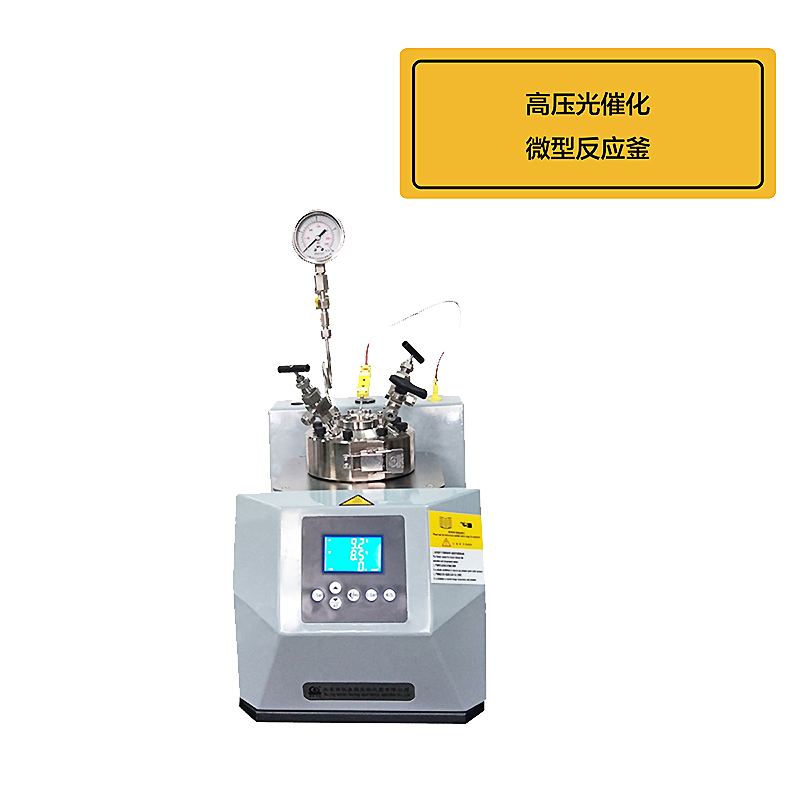
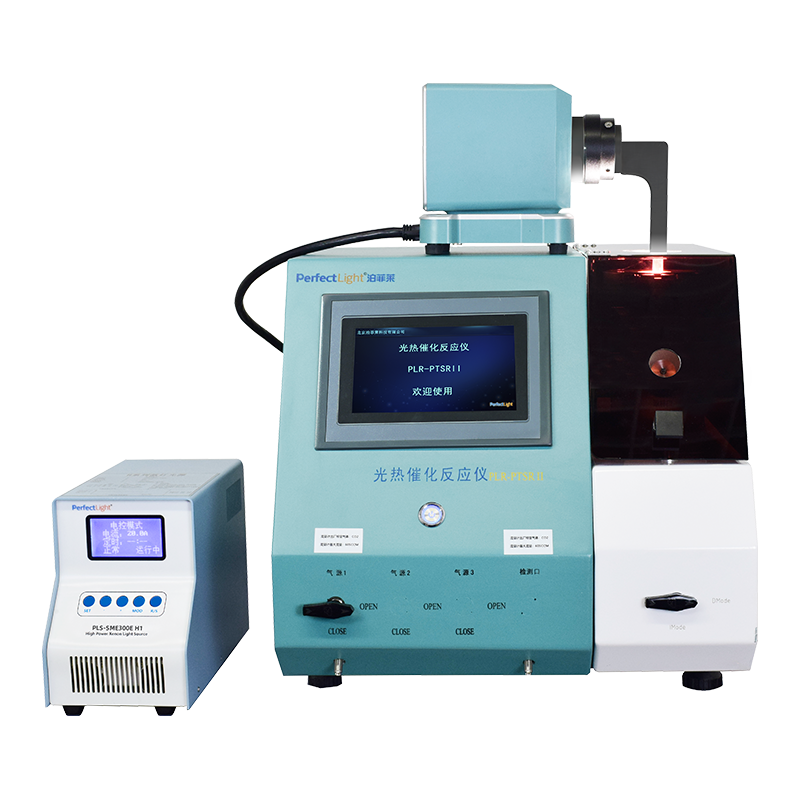
To balance "high pressure resistance" and "interference resistance," the reaction unit adopts a double-sealed structure design of "metal outer tube + quartz inner liner."
The metal outer tube provides a pressure resistance of up to 6 MPa, ensuring the safety of the high-pressure hydrogenation reaction;
The quartz inner liner directly contacts the catalyst and reactant gases, isolating the reaction system from the stainless steel tube wall. This greatly reduces the risk of catalytic side reactions and carbon buildup caused by the tube wall at high temperatures, protects the catalyst from metal contamination, and ensures the authenticity of the data.

The Pofil thermal catalytic hydrogenation fixed-bed reactor constructs a precise temperature control network throughout the entire process:
Multi-stage gradient heating: The gas preheating unit temperature can reach over 300℃, the reaction heating furnace operating temperature can exceed 800℃ and supports three-stage temperature control, with a heating zone of 30 cm and a constant temperature zone of 10 cm, ensuring isothermal distribution of the catalyst bed.

No dead-angle heat tracing and anti-condensation: The entire pipeline is equipped with approximately 180℃ heat tracing tape; the heat trap and back pressure valve both have independent temperature control (200℃), and the back pressure valve adjustment range can reach 5.5 MPa.


High-efficiency gas-liquid separation: Combining a high-pressure thermal separation system (heat trap) and a high-pressure cold separation system (cold trap), efficient separation of light components and heavy liquid phases (such as long-chain alkanes, water, etc.) is achieved, effectively preventing condensation and blockage of pipelines and valves.
In experimental environments with high temperature and pressure and containing H₂ and CO gases, safety is the top priority.
The device is equipped with a complete host computer software control system and incorporates an industrial-grade safety interlocking mechanism: It features multi-level alarm functions for over-temperature and over-pressure; It provides real-time monitoring and alarm for thermocouple anomalies; When a dangerous threshold is triggered, the system can automatically cut off the gas supply and release pressure, meeting the needs of researchers for long-term, high-pressure unattended operation.


The thermocatalytic hydrogenation fixed-bed reactor is equipped with a standard 4-channel high-precision gas mass flow controller (used for N₂, H₂, CO₂, CO calibration and mixing), ensuring highly stable flow field control and providing a guarantee for accurate assessment of catalyst activity.

• Fischer-Tropsch Synthesis: Long-term evaluation of catalysts for the conversion of syngas into liquid fuels, higher alcohols, and paraffins;
• Carbon Peaking/Carbon Neutralization Studies: CO₂ hydrogenation to methanol, green aviation kerosene (SAF), and light olefins;
• Methane Conversion: High-temperature reactions such as dry reforming (DRM) and partial oxidation of methane;
• Photothermal Co-catalysis: Can be used with relevant window components to expand in-situ reaction testing in photothermal co-catalytic hydrogenation processes.
| Functional Points | Characteristics |
|---|---|
| Reaction Parameters | Operating Temperature: 150 ~ 500℃; Operating Pressure: 4 MPa |
| Reaction Unit | 3-segment temperature control, temperature stability ±2℃, heating zone 30 cm, constant temperature zone 10 cm |
| Gas Metering Unit | 4-channel, mass flow controller, range 100 mL/min, control range 2 ~ 100%; control accuracy 1% F.S |
| Preheating Unit | Temperature control range 50 ~ 180℃, long-term temperature 150℃ |
| Post-treatment Unit | Hot hydrazine: 60 mL; 4 MPa/180℃ Cold hydrazine: 60 mL; 4 MPa/25℃ |
| Heating Cable | Temperature control range: 50~200℃, long-term maximum temperature 180℃, maximum temperature 250℃ |
| Control Unit | Uses host computer software to control MFC and heaters, enabling gas flow, temperature, and pressure monitoring, control, and recording |
• Fischer-Tropsch Synthesis: Long-term evaluation of catalysts for the conversion of syngas into liquid fuels, higher alcohols, and paraffins;
• Carbon Peaking/Carbon Neutralization Studies: CO₂ hydrogenation to methanol, green aviation kerosene (SAF), and light olefins;
• Methane Conversion: High-temperature reactions such as dry reforming (DRM) and partial oxidation of methane;
• Photothermal Co-catalysis: Can be used with relevant window components to expand in-situ reaction testing in photothermal co-catalytic hydrogenation processes.