In 2026, Angewandte Chemie International Edition published the work of Prof. Bu Xianhe's group at Nankai University on photocatalytic hydrogen evolution (first authors: Zhang Xinghao and Wang Yutong; corresponding authors: Zhang Jijie and Bu Xianhe; DOI: 10.1002/anie.1030114).
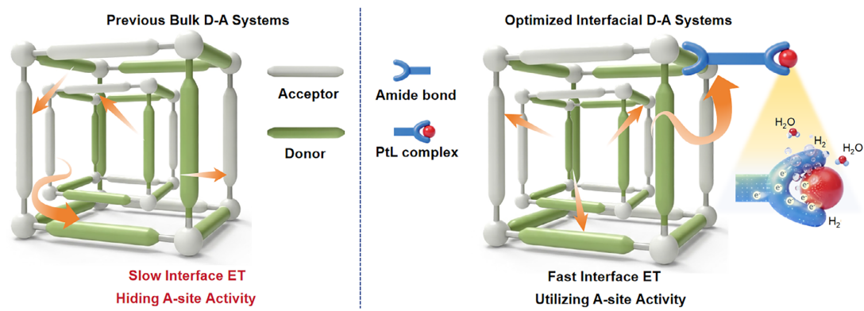
MOFs offer tunable pores and high surface area, making them attractive platforms for H2 production - but conventional MOF photocatalysts suffer from limited light absorption, severe bulk charge recombination and sluggish surface kinetics, with too few accessible active sites. Loading cocatalysts or building donor-acceptor (D-A) systems helps, yet large MOF particles still lose most photogenerated charges before they reach the surface.
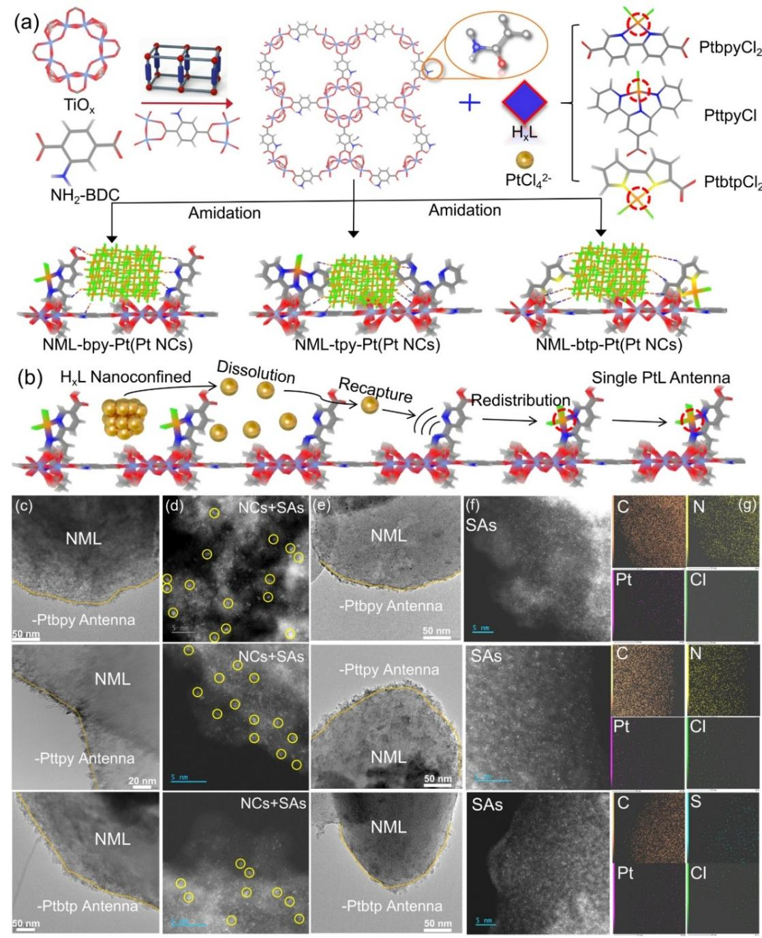
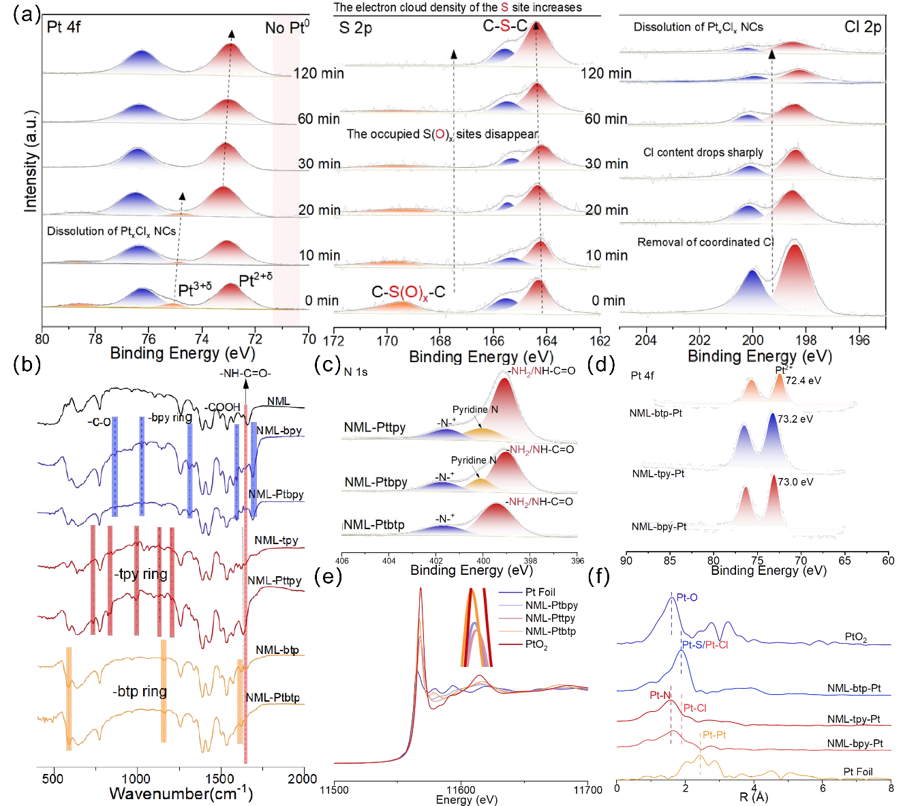
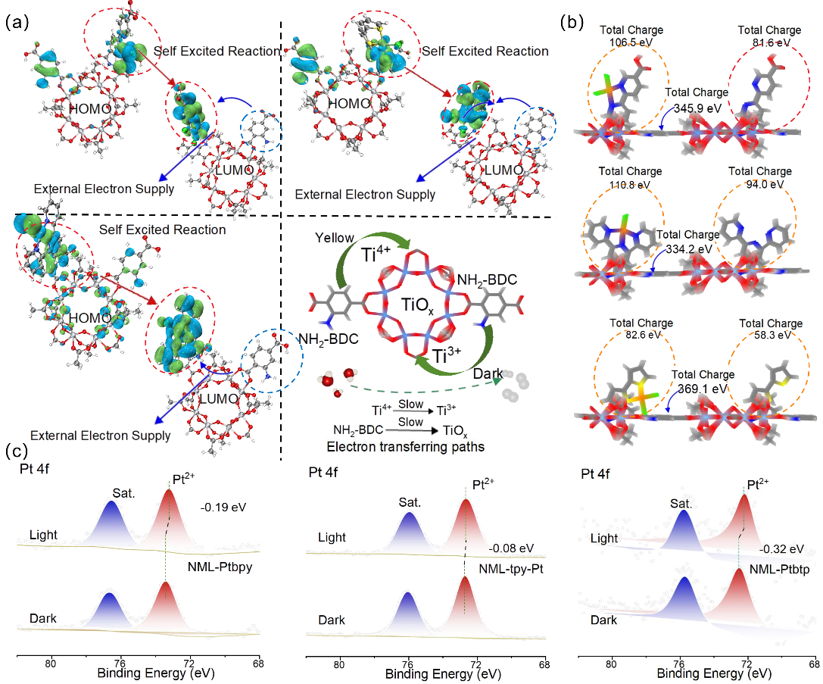
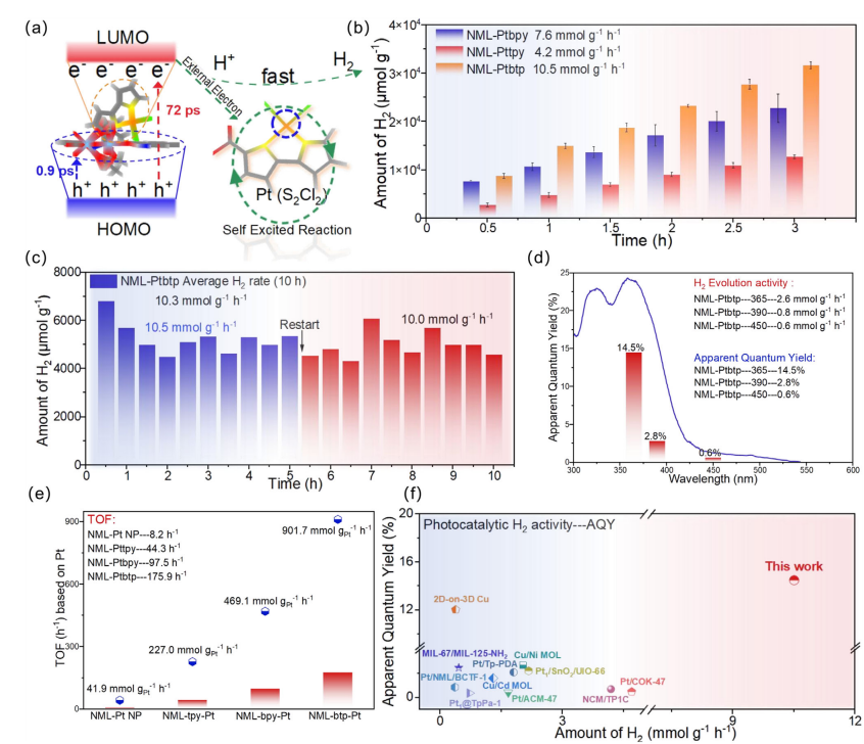
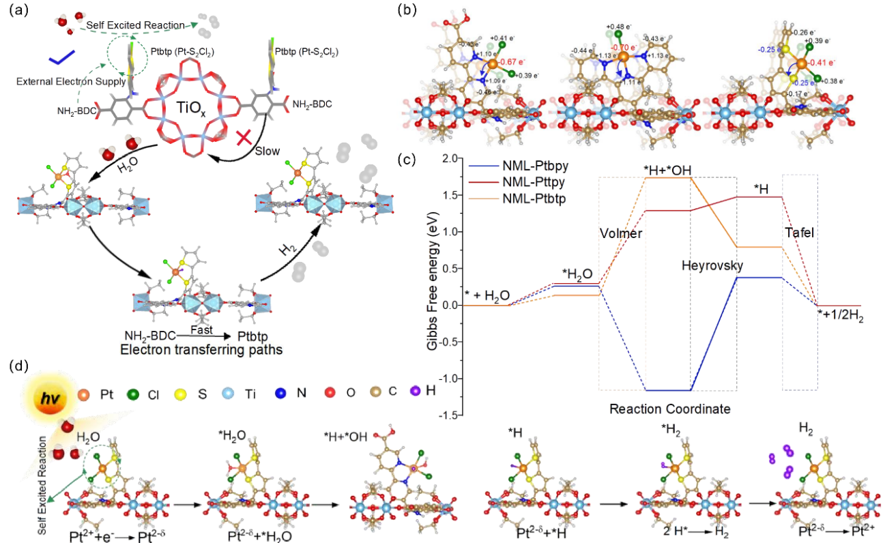
The team covalently anchored pyridine, terpyridine and thiophene-derivative ligands onto the NH2-MIL-125 (NML) surface via amide bonds, forming three Pt-based molecular complexes (PtL) with distinct coordination environments. The optimized Ptbtp complex acts as a molecular antenna-reactor: it harvests light, drives self-excitation within the MOF and simultaneously utilizes external charges, establishing a self-optimizing interfacial D-A system. In-situ experiments and theoretical simulations confirmed the mechanism.
H2 evolution was measured on the predecessor of the Perfectlight microGAS1001 Micro Gas Reaction Evaluation System, which integrates control, gas circulation, automatic sampling and reactor modules for trace-gas reactions such as overall water splitting and CO2 reduction.
Interfacial molecular engineering converts the MOF surface from a passive reaction zone into an active light-harvesting and charge-management interface, offering a general route to high-efficiency MOF photocatalysts.
Chinese report: 南开大学卜显和院士团队Angew:MOF自优化界面D-A系统.