In June 2026, Environmental Science Nano published the work of Prof. Tang Yiming's group at South China Normal University on organic-semiconductor photocatalytic water treatment (first authors: Yiming Tang and Yuxin Liao; corresponding authors: Yiming Tang and Yan Guo; DOI: 10.1039/d6en00331a).
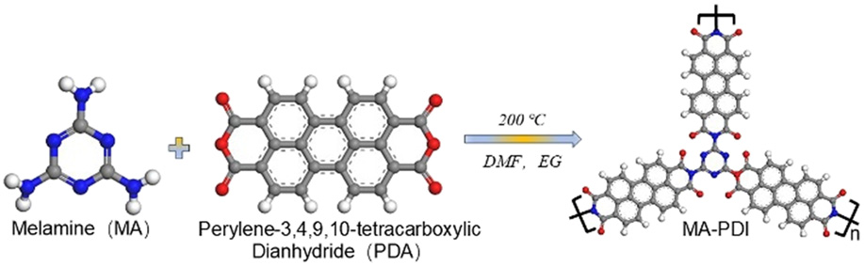
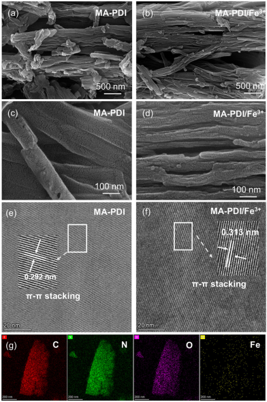
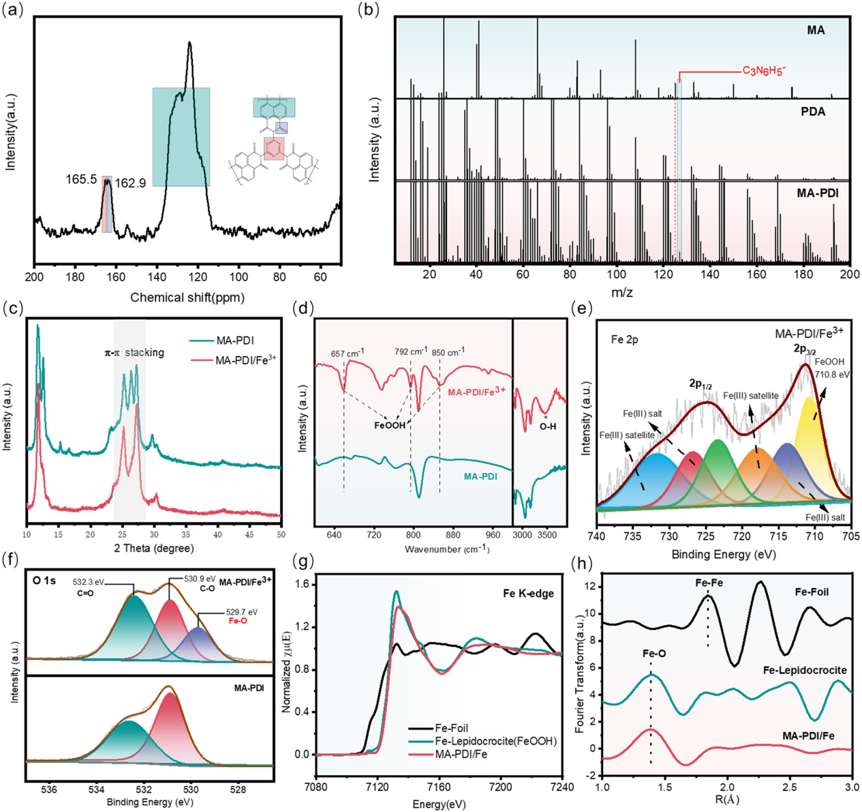
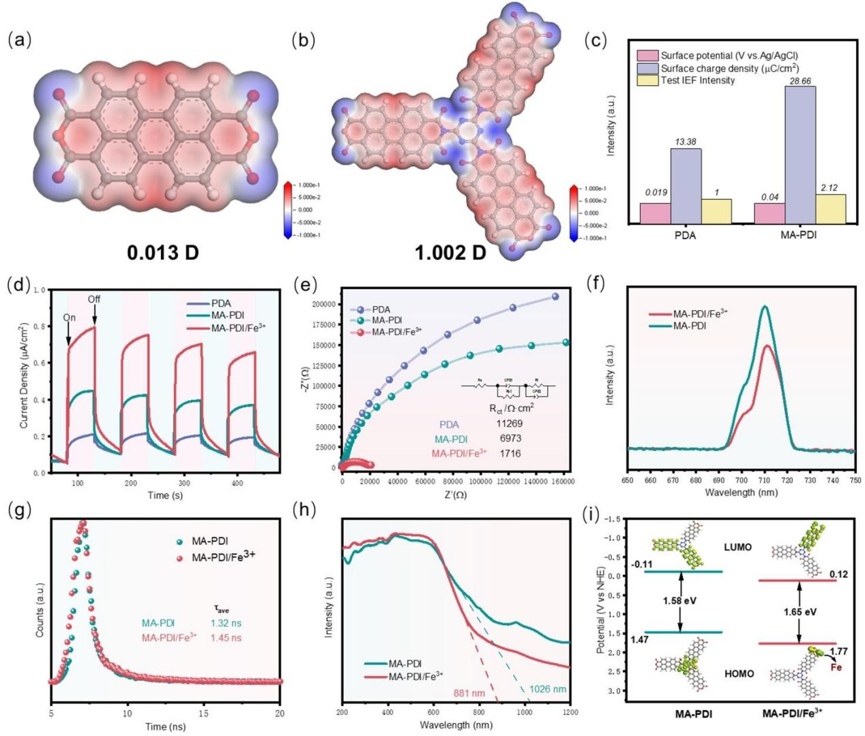
Deep mineralization of organic pollutants remains a central challenge: conventional photocatalysts lose most charges to recombination, and charge transfer is slow. Perylene diimide (PDI) organic semiconductors absorb visible light strongly and are structurally tunable, but their carriers recombine quickly. The team introduced triazine rings at the imide positions of PDI to build the MA-PDI polymer with an extended conjugated plane - an efficient electron reservoir.
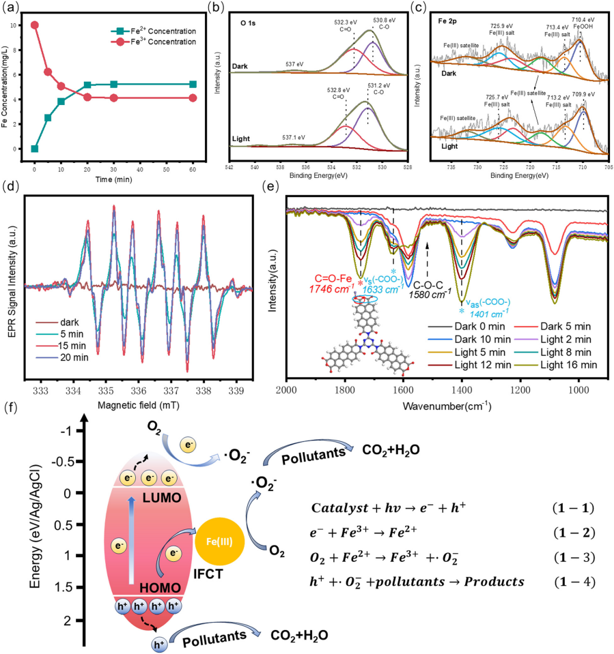
Fe(III) species were immobilized on MA-PDI by impregnation. Through the interfacial charge transfer (IFCT) effect, Fe(III) captures photogenerated electrons and strongly suppresses electron-hole recombination, leaving more oxidative holes for pollutant degradation.
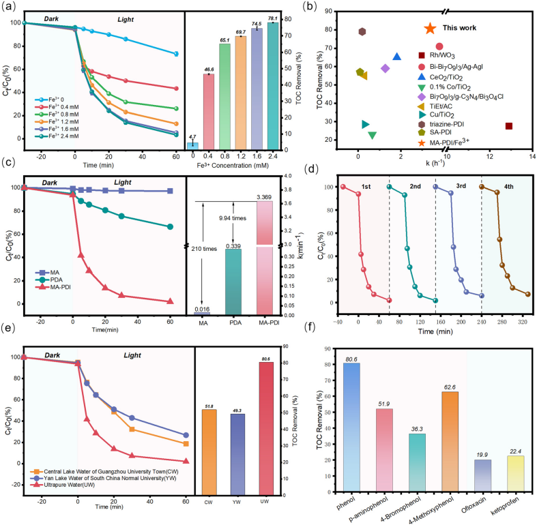
Under visible light, MA-PDI/Fe3+ achieves a phenol degradation rate constant of 3.369 h-1 and 80.6% total organic carbon (TOC) removal - evidence of deep mineralization rather than mere transformation of the parent compound.
Coupling a conjugated polymer electron reservoir with a molecular electron acceptor offers a metal-efficient strategy for advanced oxidation processes in water treatment.
Chinese report: Environmental Science Nano:华南师范大学唐一鸣团队在有机半导体光催化水处理领域的最新研究成果.