In March 2026, Nature Communications published a study by teams led by Prof. Ai Zhihui (Central China Normal University) and Prof. Zhang Lizhi (Shanghai Jiao Tong University) on photothermal wax refining with nanoscale zero-valent iron (nZVI). First author: Sun Yifei; DOI: 10.1038/s41467-026-71010-0.
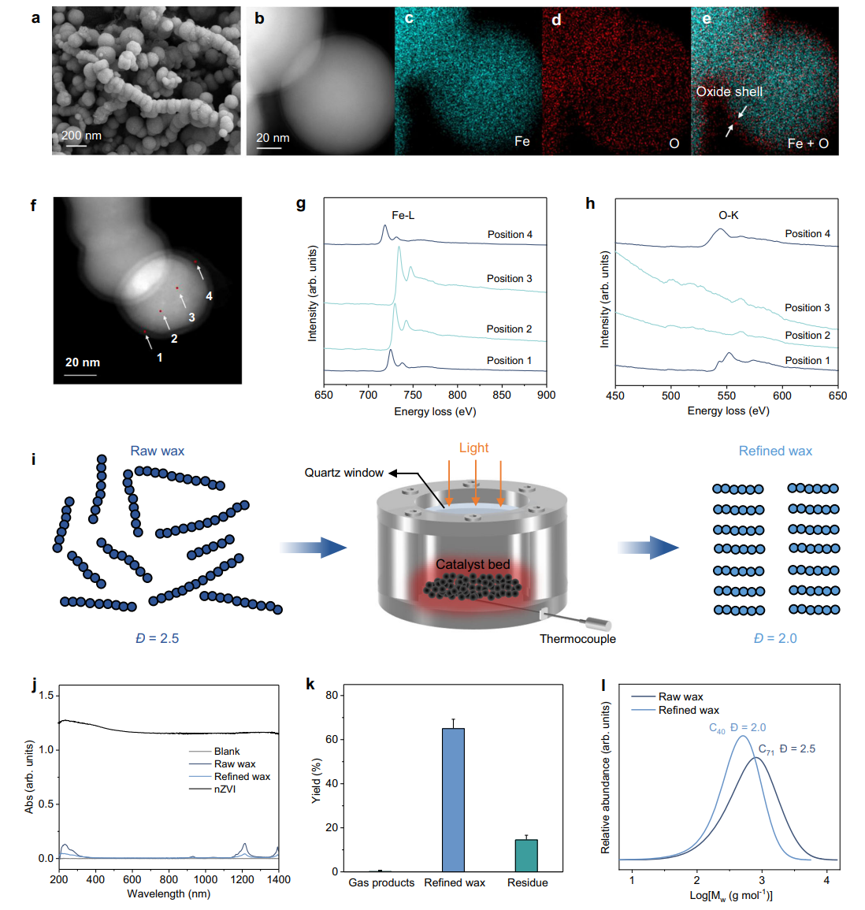
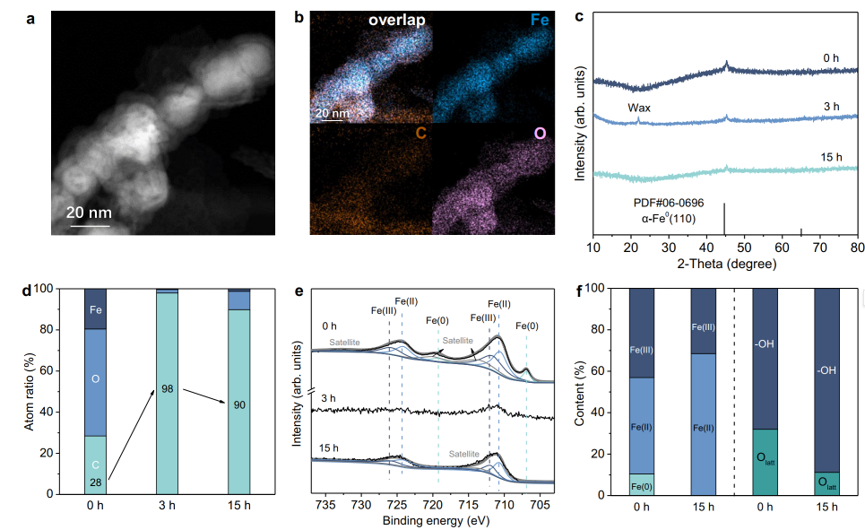
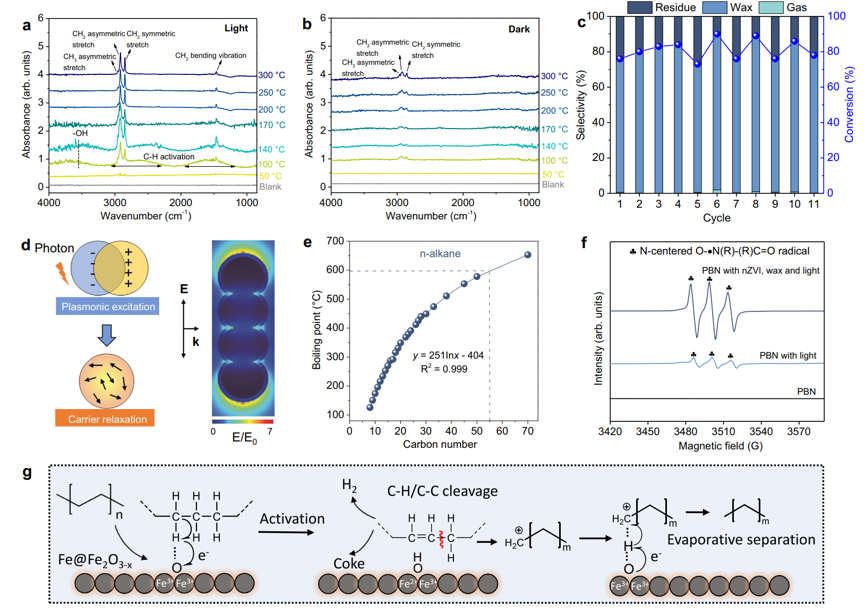
Rather than relying on energy-intensive fractionation, the team used sunlight as the sole energy source. At the iron-oxide/paraffin interface, photons activate C-H bonds to supply hydrogen while local hot spots mediate selective C-C cleavage through hydrogen-transfer hydrocracking and evaporation separation of fragmented paraffin - avoiding complex extraction and purification steps.
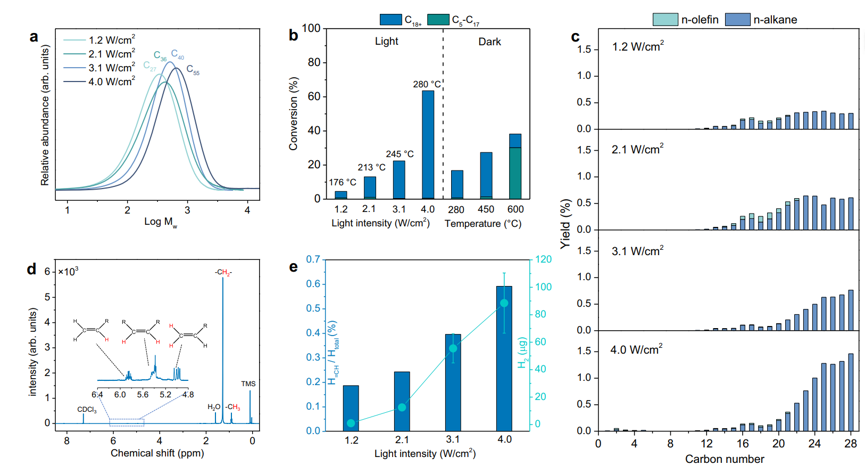
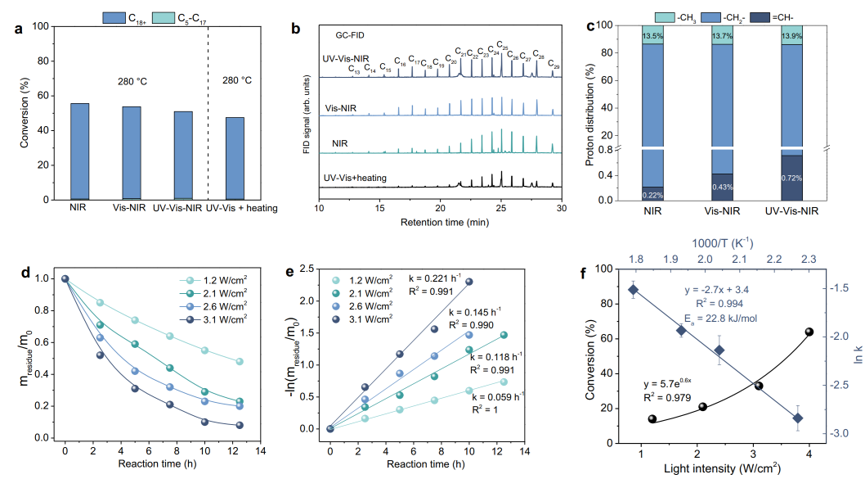
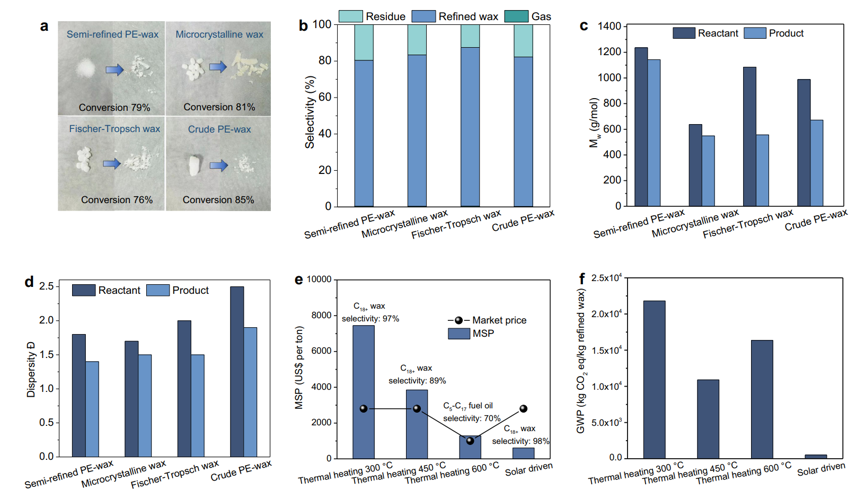
Under light intensities of 1.2-4.0 W/cm2, product wax carbon chains extended from C27 to C55 while C5-C17 non-wax hydrocarbons dropped from 17% to 1%. Rate constants rose from 0.059 to 0.221 h-1. In-situ DRIFTS showed C-H activation from 100 C and C-C cleavage above 200 C. Across semi-refined PE wax, microcrystalline wax, Fischer-Tropsch wax and crude PE wax, conversions exceeded 75% with 80%+ high-grade wax selectivity. Techno-economic analysis put the minimum selling price at USD 612/tonne, one third to one twelfth of the thermochemical route.
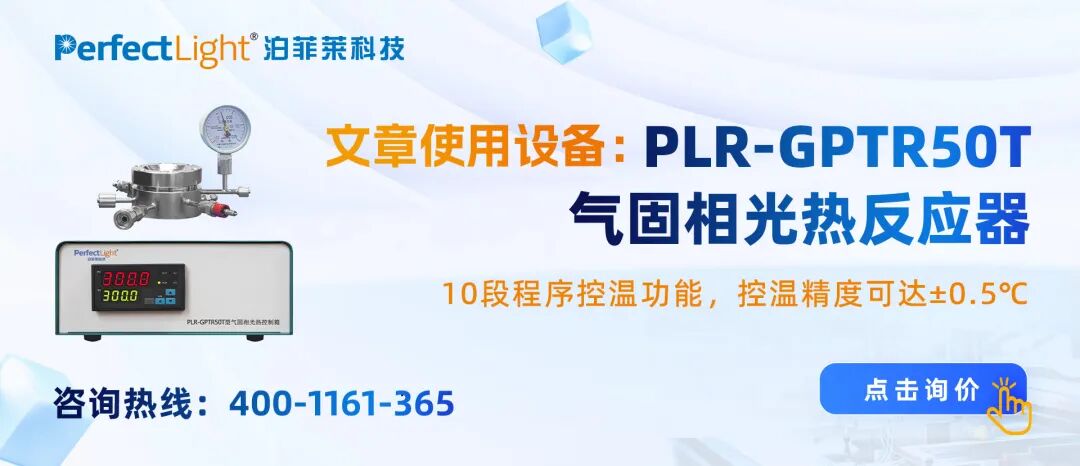
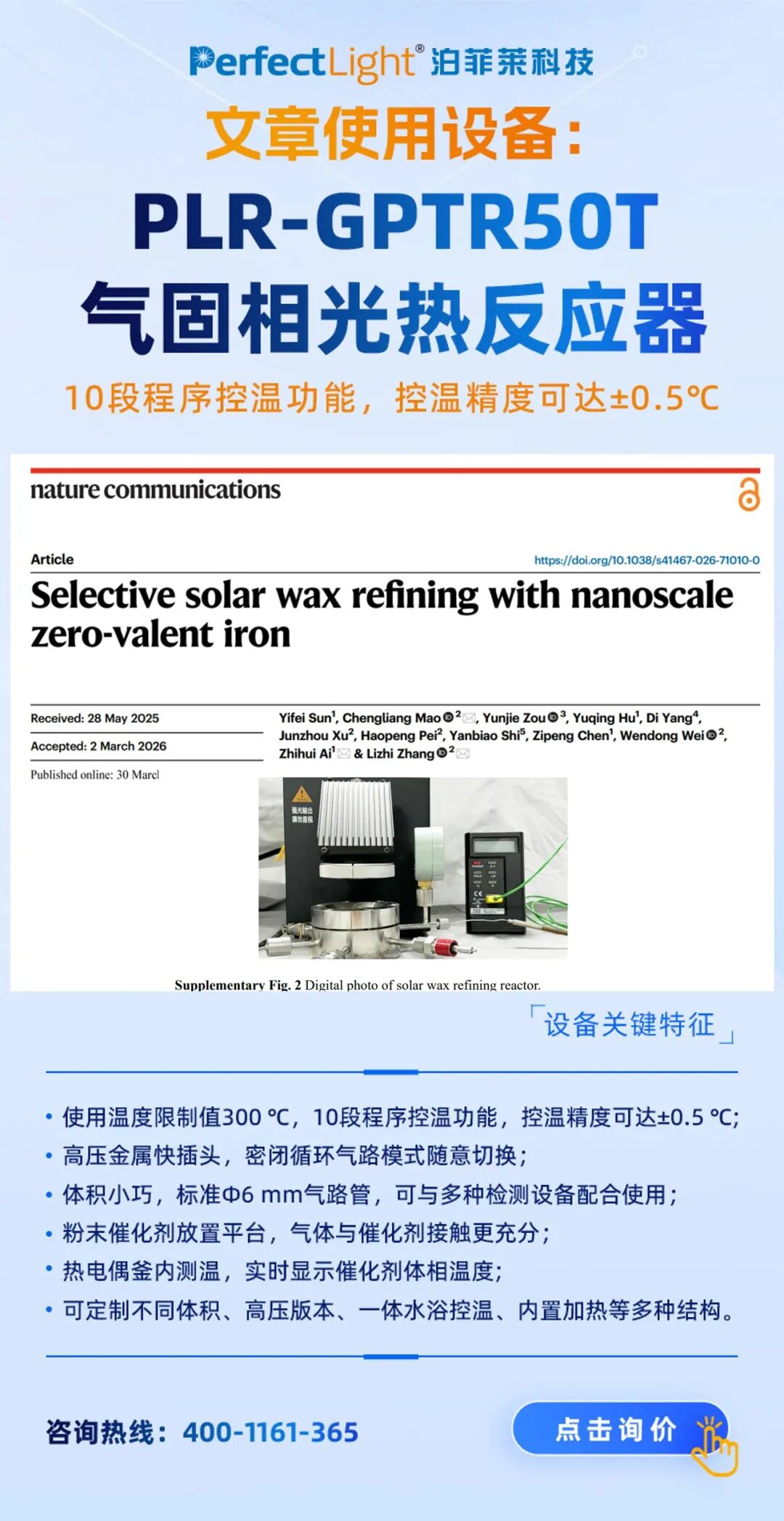
The experiments used the Perfectlight PLR-GPTR Series Gas-Solid Photothermal Reactor, designed for gas-solid photo/thermal catalysis with a flat, wide vessel for planar catalyst placement, dual pressure and temperature sensors, and a heated variant (PLR-GPTR50T) providing feedback-controlled local heating up to 300 C.
Chinese report: Nature Communications:光热驱动纳米零价铁选择性蜡精炼.