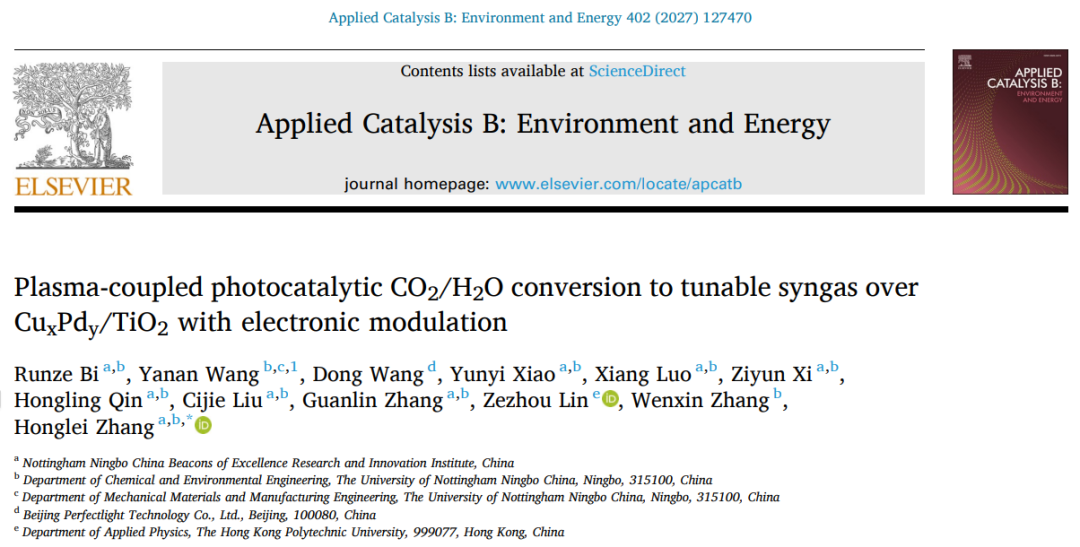
Recent work from Prof. Zhang Honglei's team at University of Nottingham Ningbo was published in Applied Catalysis B: Environment and Energy and Energy Materials. Both studies used the Perfectlight PLR-MPPT-X plasma-induced photocatalytic reactivity testing platform for their core experiments, one on multi-field performance comparison and the other on data-driven condition optimization.

Using CuxPdy/TiO2 catalysts in a DBD dielectric-barrier-discharge reactor with a 300 W xenon lamp and precision gas/humidity control, the team compared plasma-only, light-only and coupled plasma-light conditions for CO2/H2O conversion. Coupled operation raised CO2 conversion by 68% over plasma alone. Under optimized conditions, Cu11Pd1/TiO2 reached a CO evolution rate of 54.66 mmol g-1 h-1, and adjusting humidity, gas ratio and discharge power tuned the H2/CO molar ratio from 0.05:1 to 6.13:1.
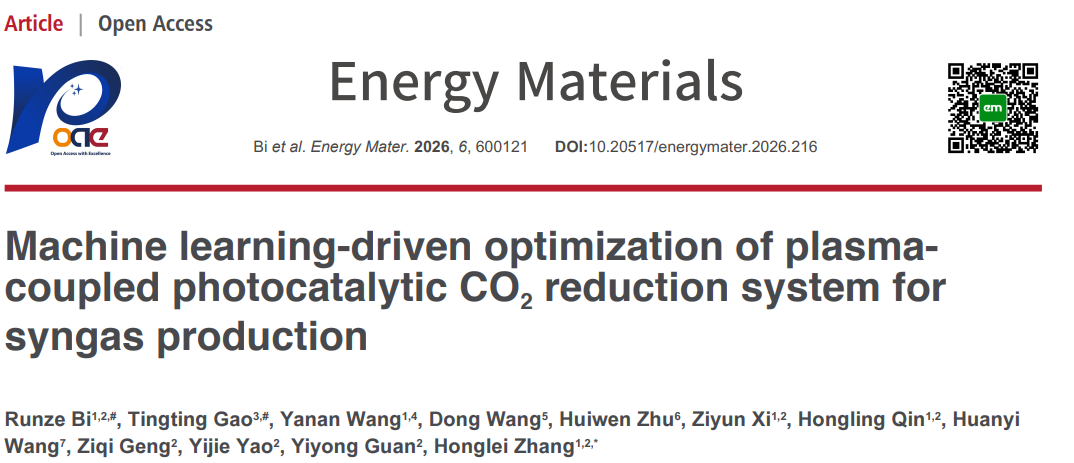
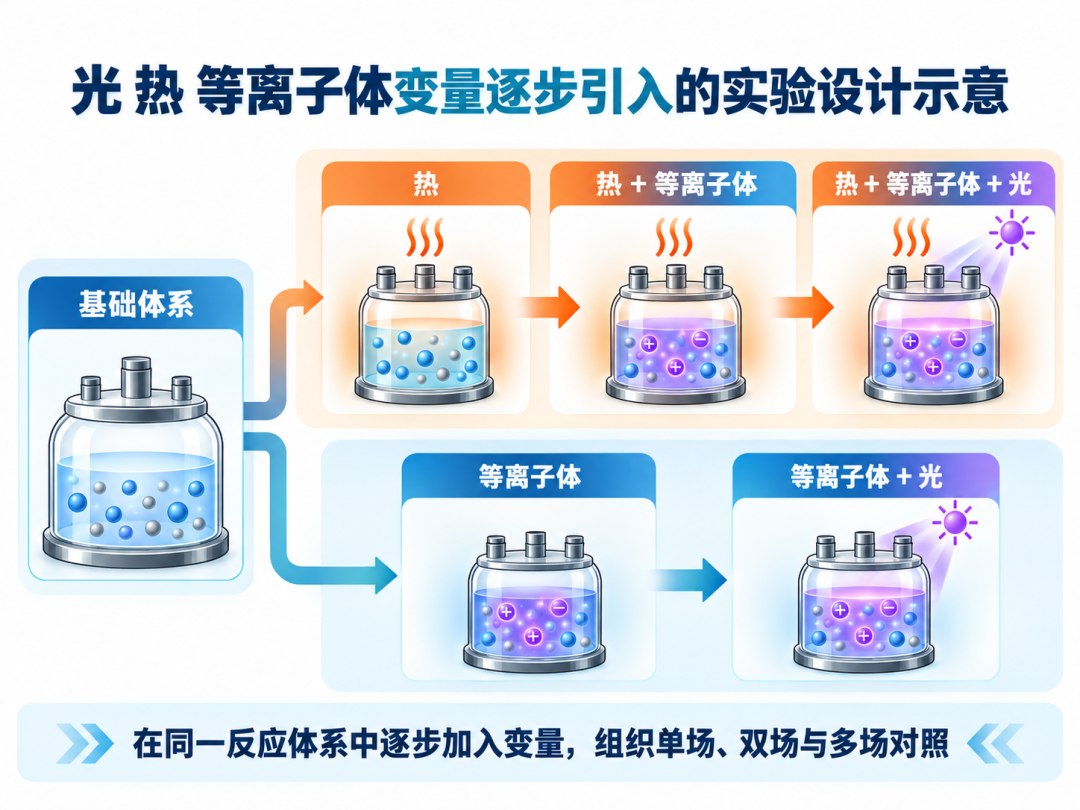

The second study varied discharge power, catalyst amount, gas flow, relative humidity and light intensity. The platform's parameter control and data logging supported 120 multi-parameter runs, recording CO2 conversion, CO yield and H2 yield to train ML models for target-oriented optimization.
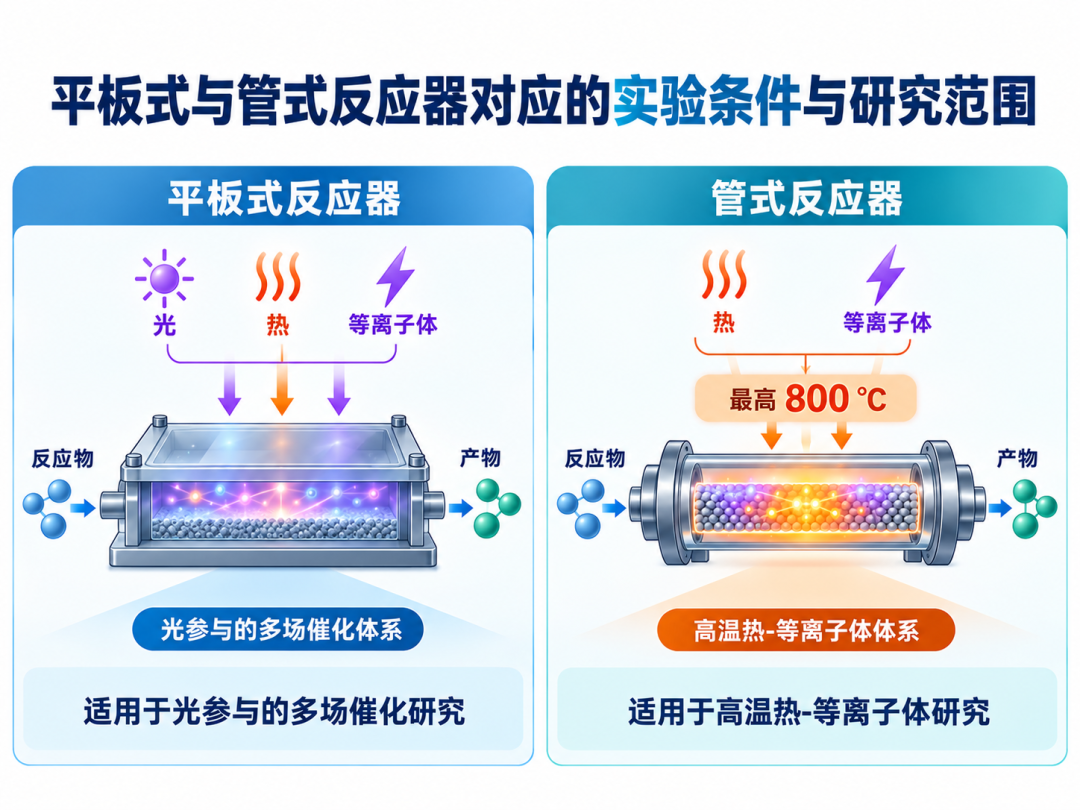
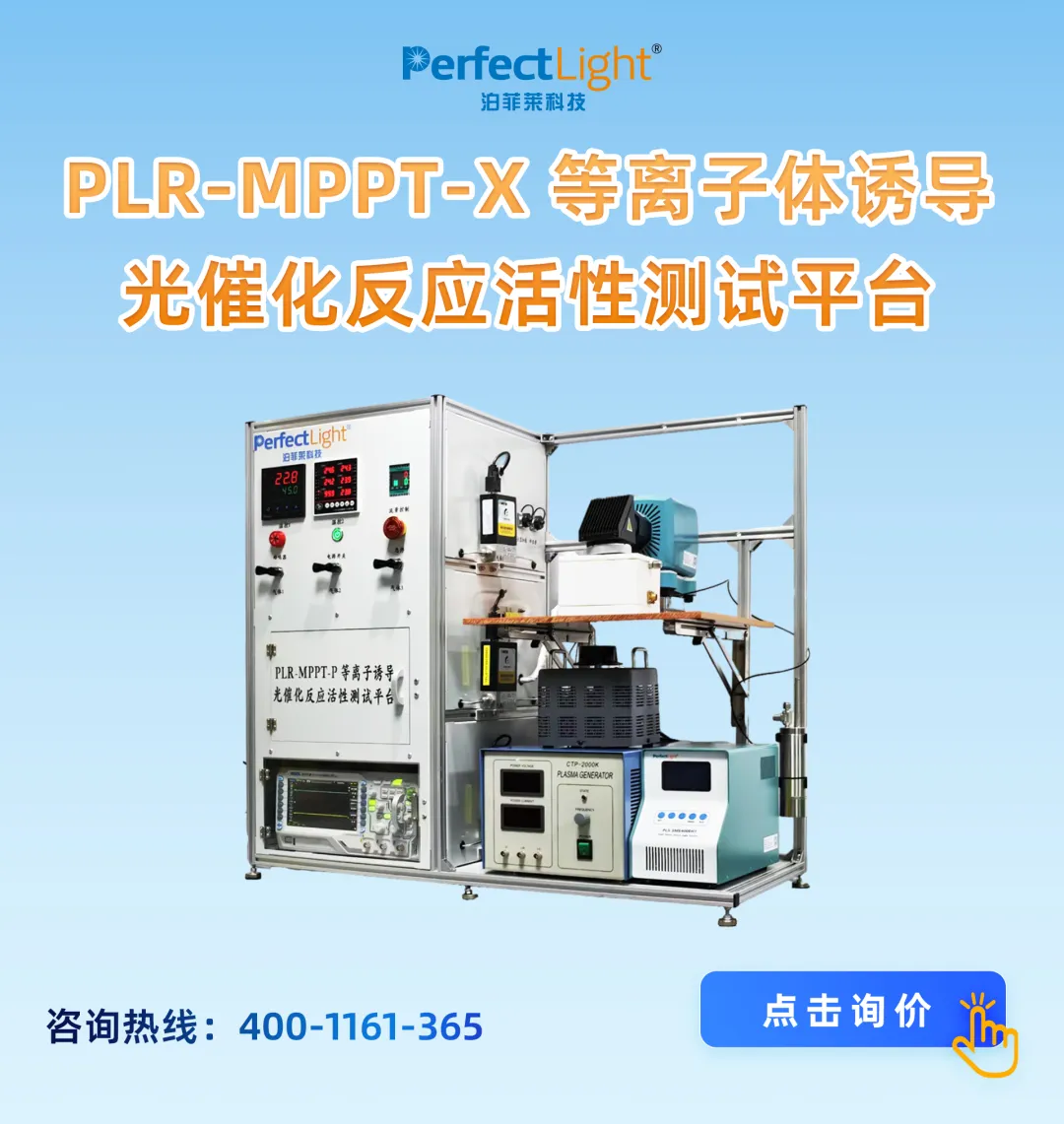
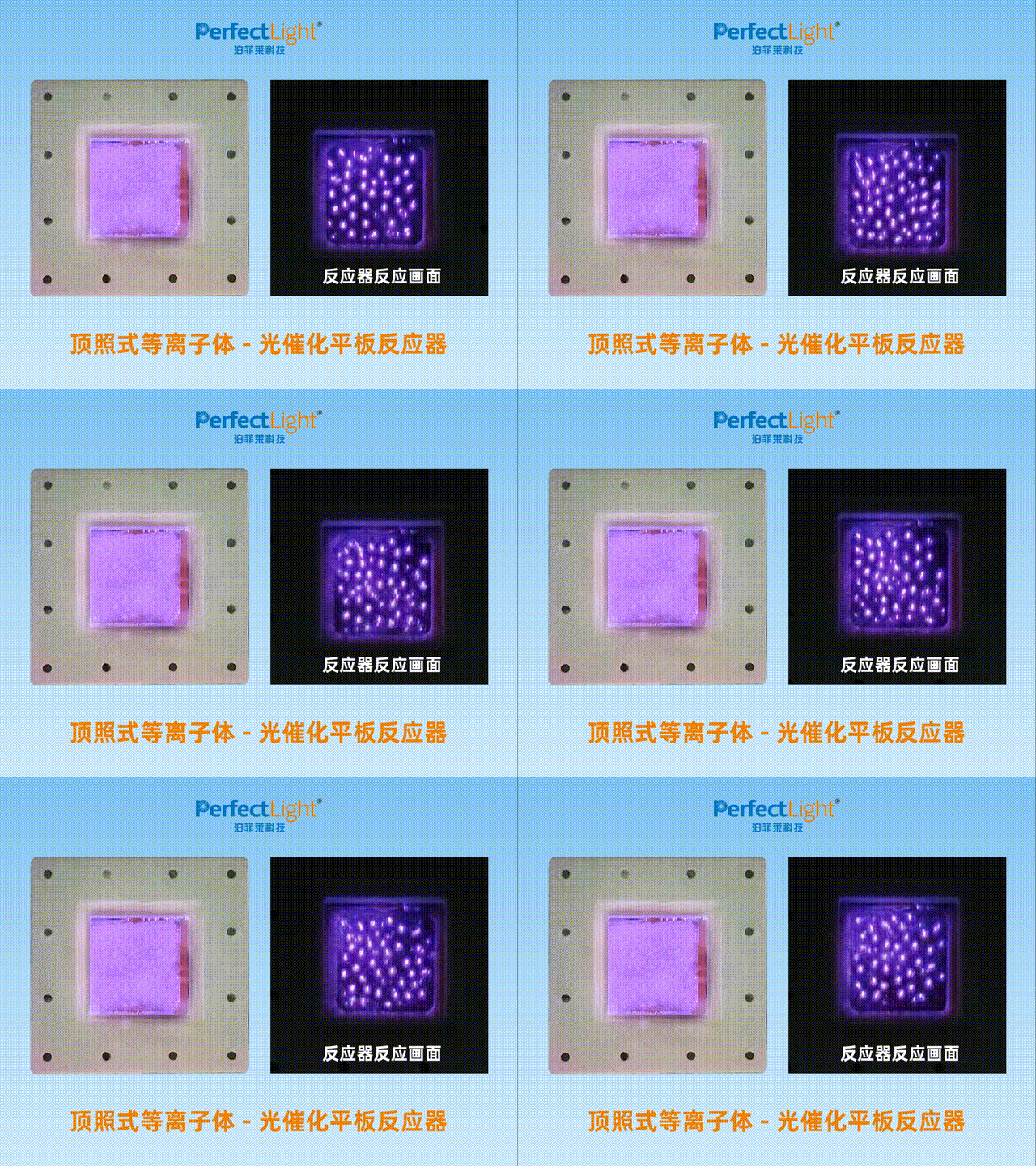
Both studies required controllable field parameters, stable operating conditions and traceable run data: capabilities built into the Perfectlight PLR-MPPT-X Platform. Light, heat and plasma can be combined freely; a flat-plate reactor supports photo-assisted experiments up to 250 C and a tubular reactor with heating supports thermal-plasma coupling up to 800 C. Precision mass-flow and humidity control, real-time discharge measurement (voltage, current, power and Lissajous figures) and automatic data export make the system adaptable to hydrogenation, VOC degradation, alkane conversion and other gas-solid catalysis studies.
Chinese report: 等离子体耦合光催化两项新进展.