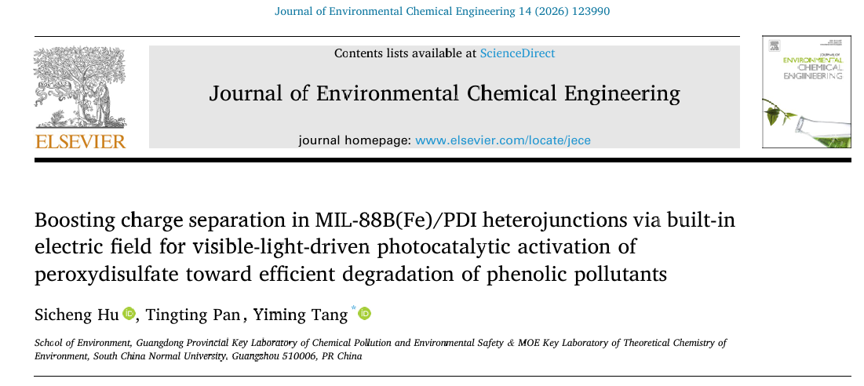
In June 2026, Journal of Environmental Chemical Engineering published work by Assoc. Prof. Tang Yiming's team at South China Normal University on organic-semiconductor photocatalytic water treatment. First author: Hu Sicheng; DOI: 10.1016/j.jece.2026.123990.
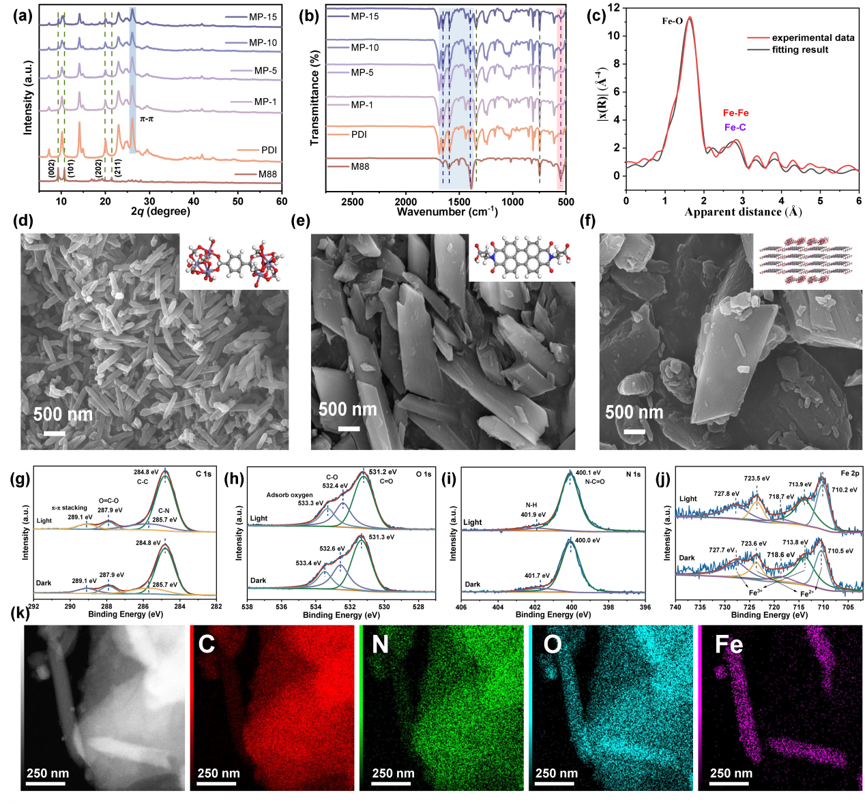
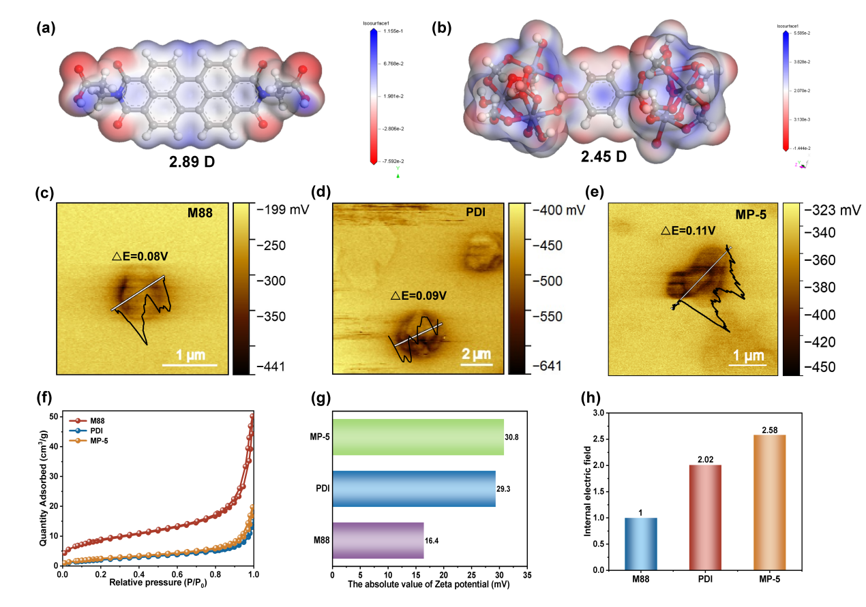
The MIL-88B(Fe)/PDI composite was prepared by electrostatic self-assembly. Complementary surface potentials and work-function differences formed a built-in electric field that, under the S-scheme mechanism, drove CB electrons of reductive PDI to recombine with holes of oxidative MIL-88B(Fe), leaving stronger redox carriers.
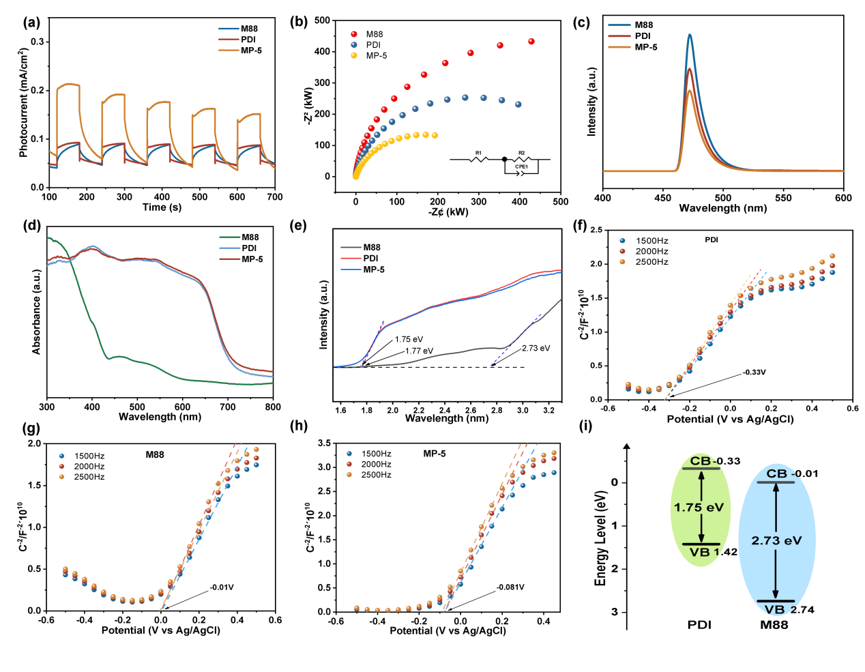
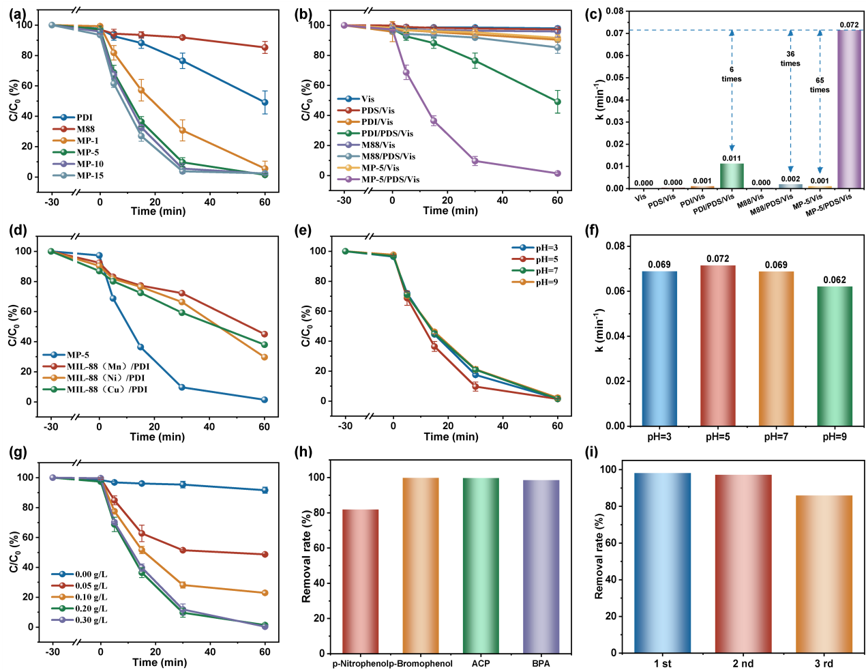
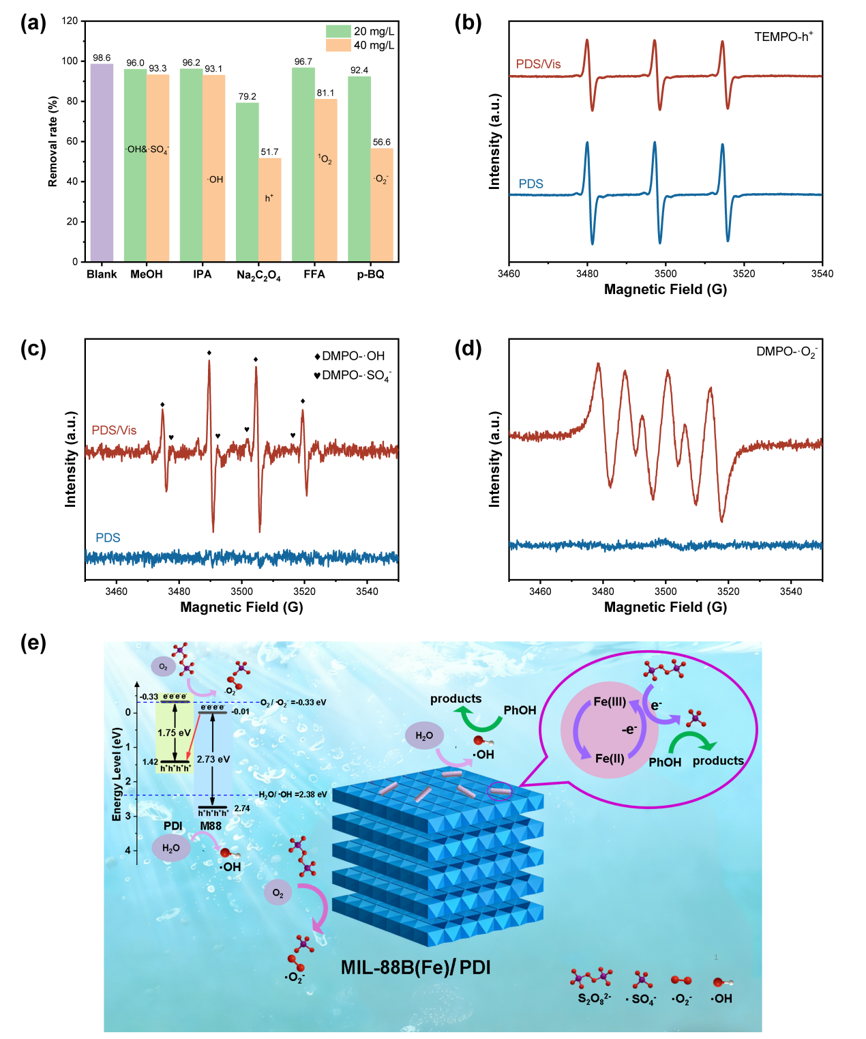
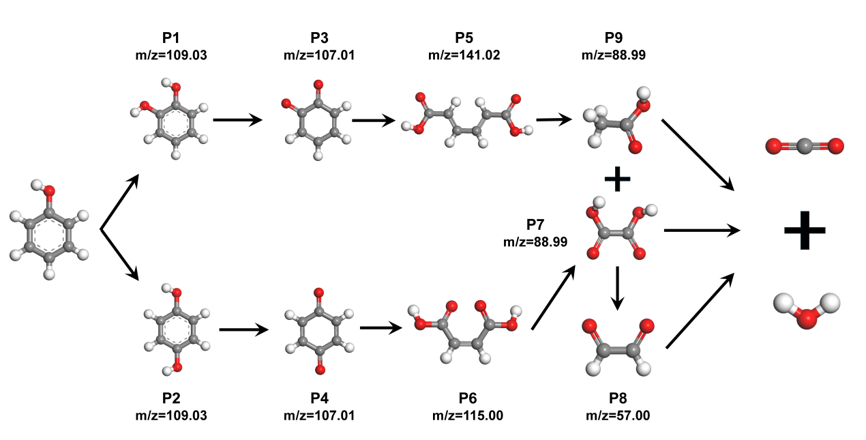
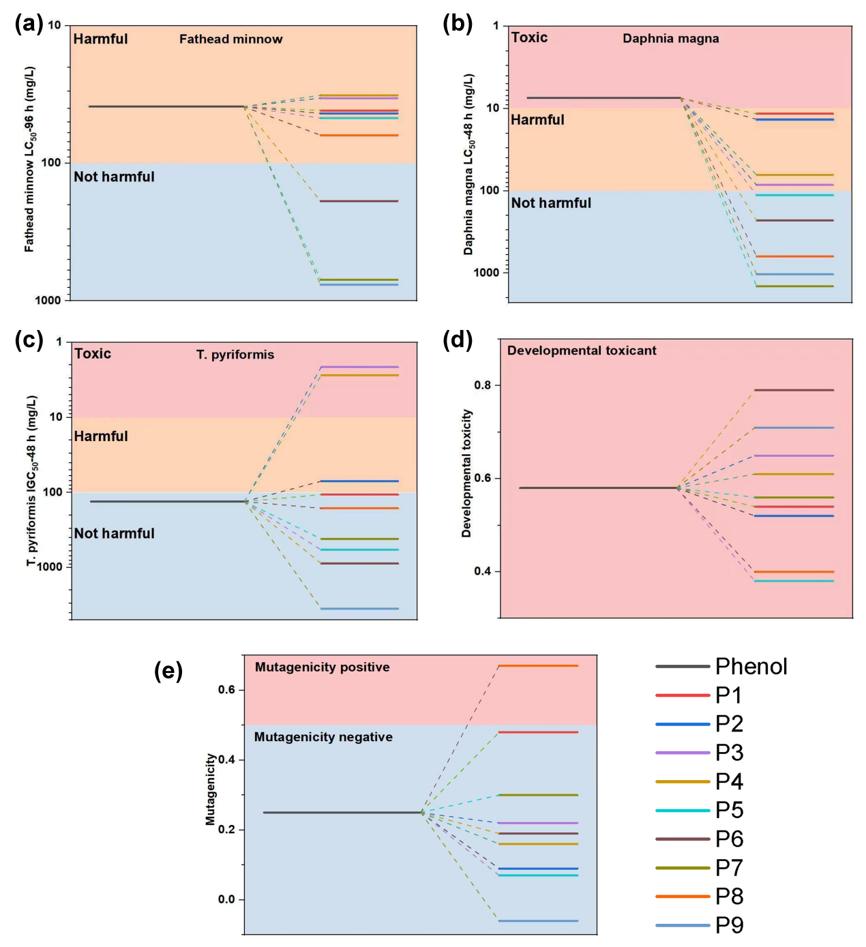
The optimized MP-5 composite (5% MIL-88B(Fe) in PDI) delivered the largest photocurrent (about 2-3 times M88 and PDI), smallest Nyquist arc and weakest PL emission. In phenol degradation, dark adsorption stayed below 7%; under visible light MP-5 reached over 96% removal, and the MP-5/PDS/Vis system exceeded 99% in 60 minutes. Quenching and EPR identified holes and superoxide as the dominant reactive species. LC-MS and T.E.S.T. mapping confirmed decreasing acute toxicity of most intermediates.
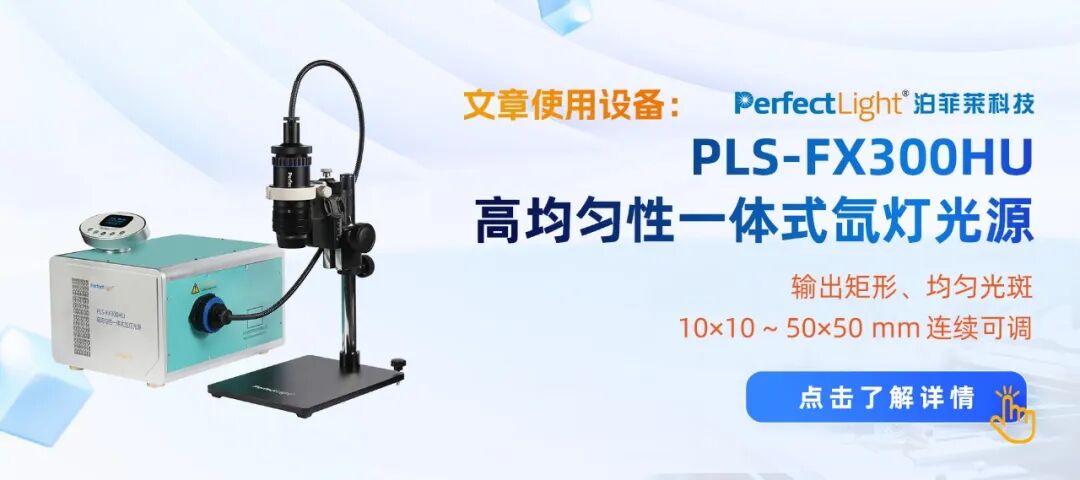
Visible-light irradiation used the Perfectlight PLS-FX300HU High-Homogeneity Integrated Xenon Lamp, with a continuously adjustable 10 x 10 to 50 x 50 mm rectangular spot and Class-A solar-simulator uniformity up to 20 x 20 mm, suited to photoelectrode testing and IPCE measurement.
Chinese report: JECE:内建电场增强MIL-88B(Fe)/PDI异质结电荷分离用于可见光驱动光催化活化过硫酸盐.