Prof. Liu Yazi's group at Nanjing Normal University published in Water Research a study on synergetic piezo-photocatalytic tuning of the internal electric field in an S-scheme heterojunction for efficient tetracycline degradation and hydrogen production (first author: Song Shiyu; DOI: 10.1016/j.watres.2026.126357).
Antibiotic residues from pharmaceutical, medical and aquaculture effluents persist in water at low concentrations, spreading resistance and disrupting aquatic ecosystems; conventional biological treatment removes them poorly. Photocatalysis can mineralize these pollutants, but fast charge recombination limits efficiency. A piezoelectric field offers an additional handle on carrier separation.
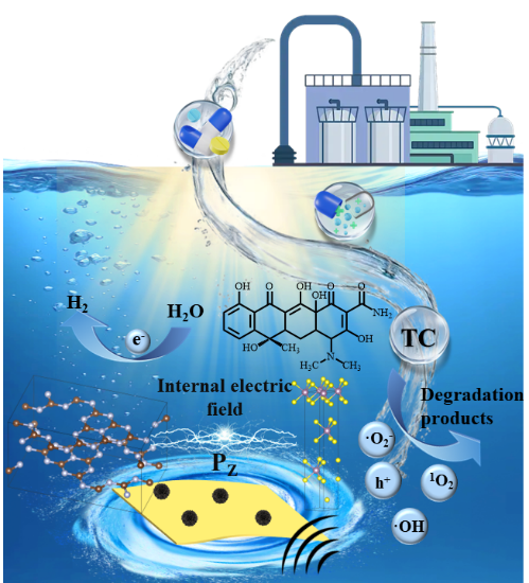
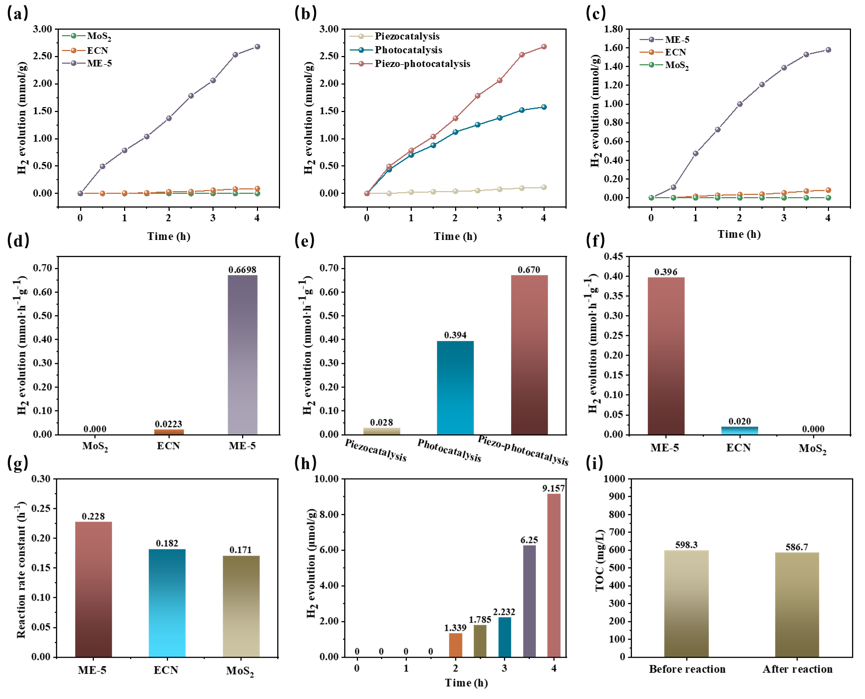
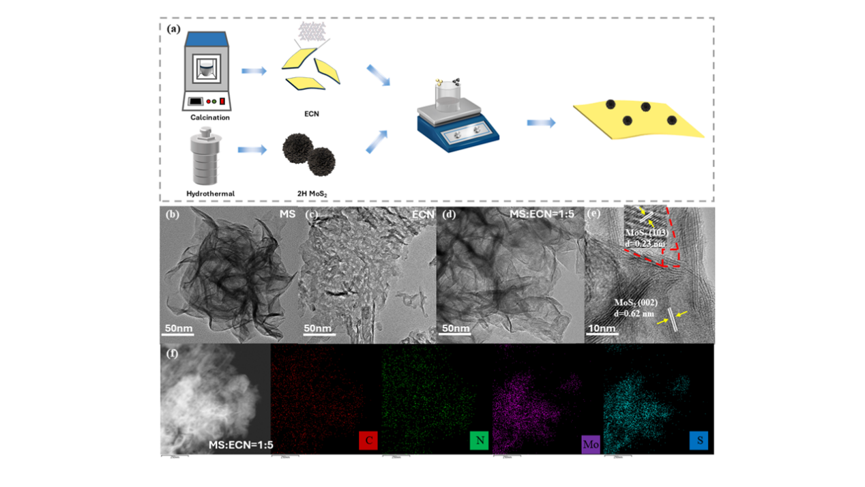
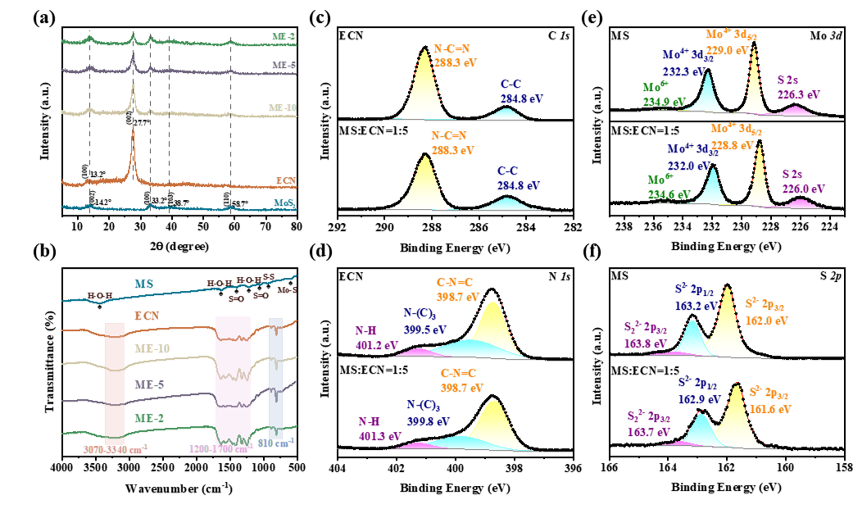
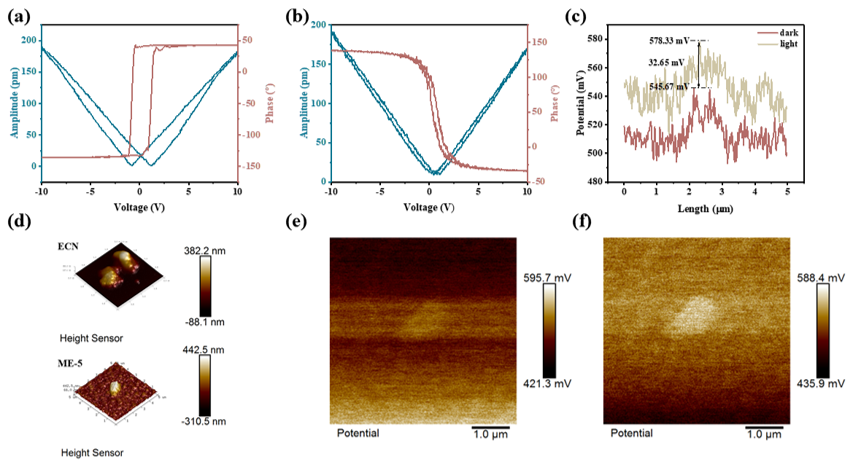
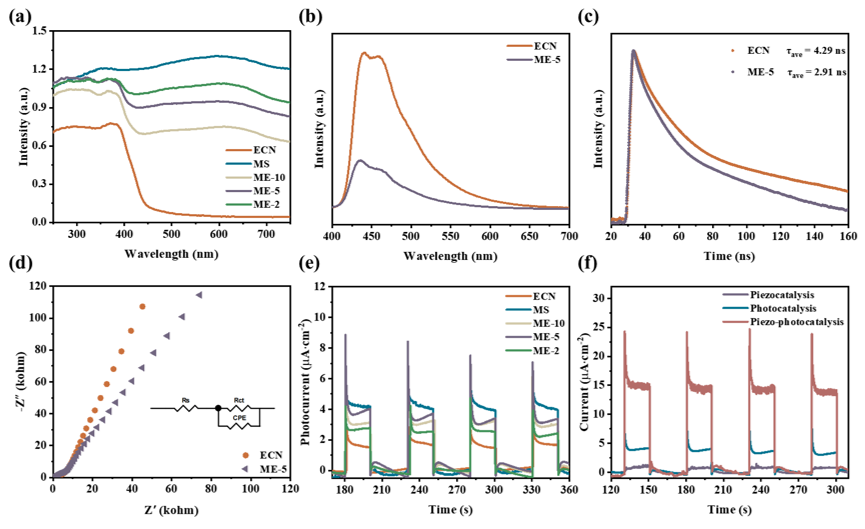
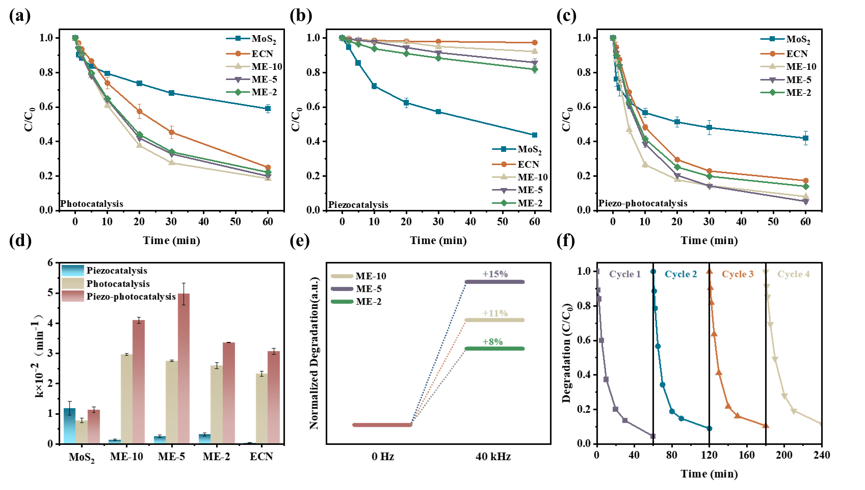
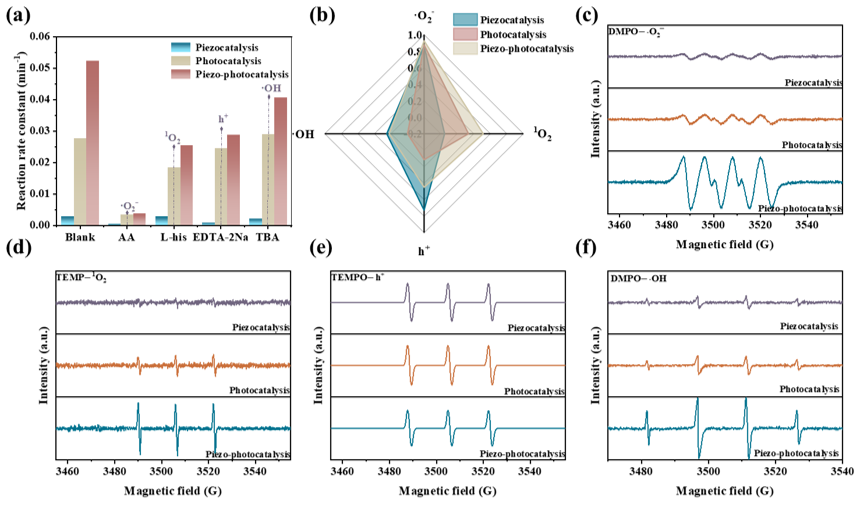
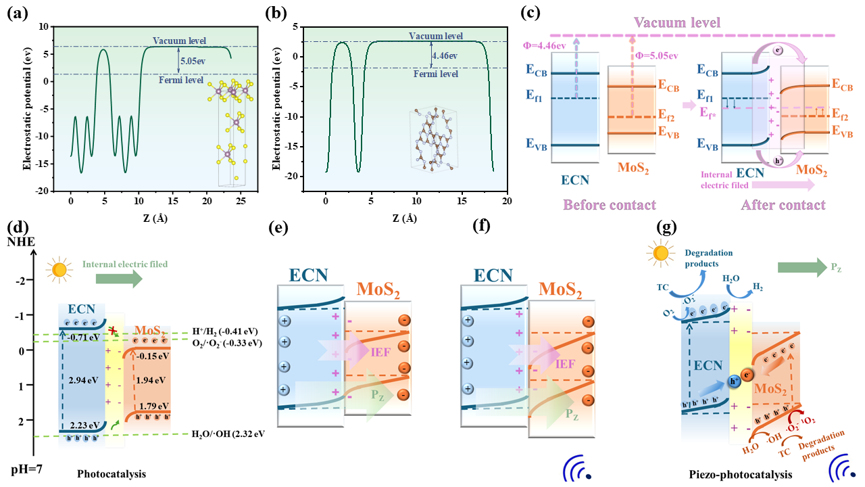
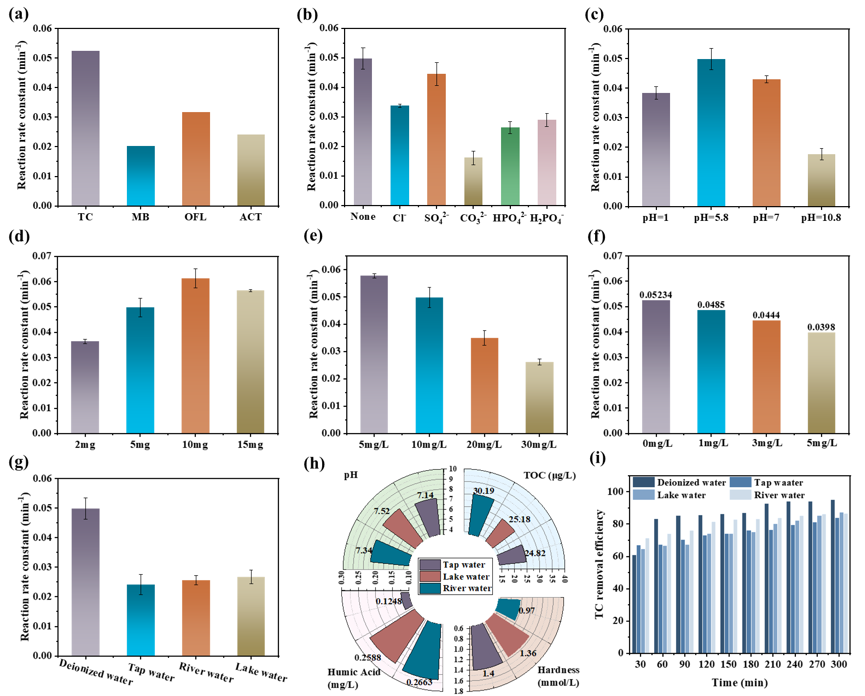
By tuning the internal electric field of the S-scheme heterojunction with piezo-photocatalytic synergy, the system achieves hydrogen production tens of times higher than the pristine material while efficiently degrading tetracycline - coupling pollutant removal with solar fuel generation.
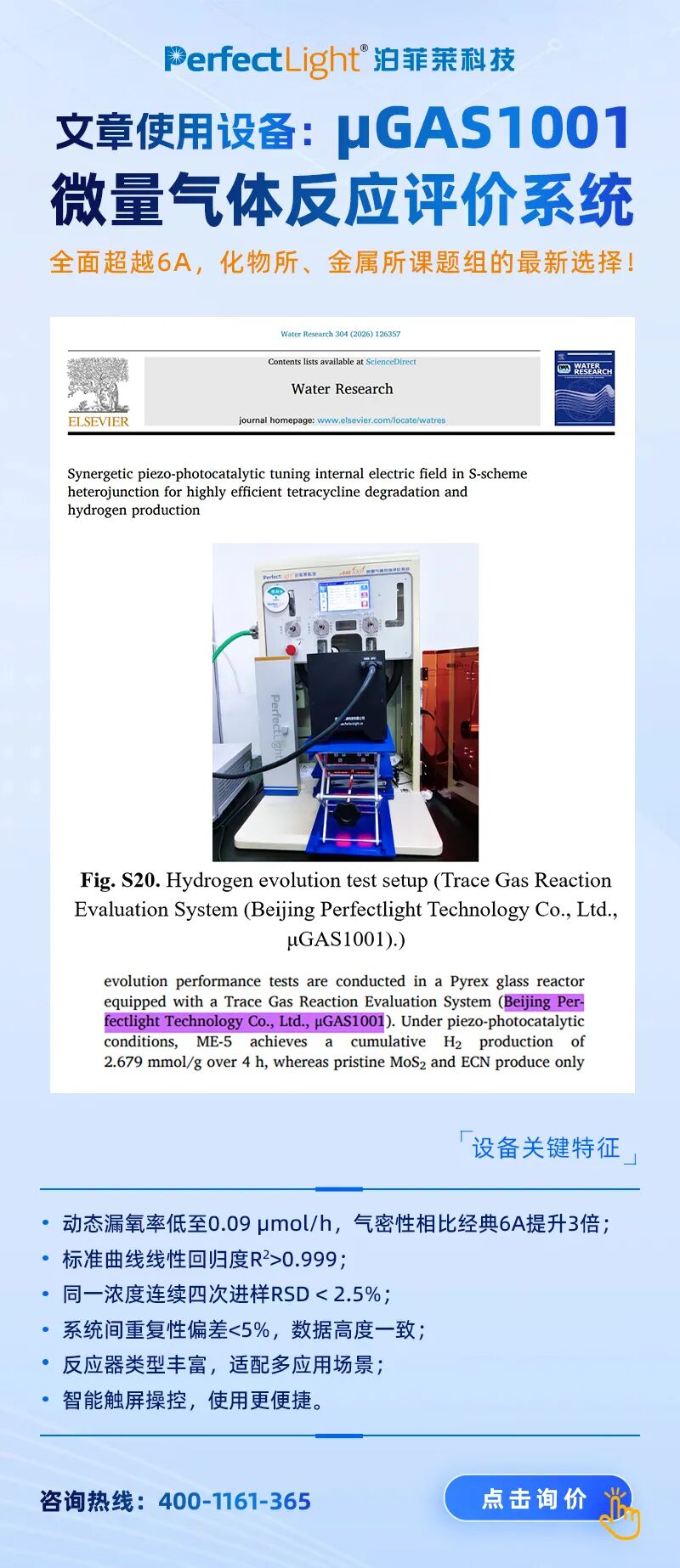
H2 evolution was quantified on the Perfectlight microGAS1001 Micro Gas Reaction Evaluation System: dynamic oxygen leakage as low as 0.09 umol/h (3x better airtightness than the previous generation) and RSD below 2.5% thanks to high-speed magnetic internal circulation with low-resistance, pulse-free sampling - sensitive enough to capture low-yield signals.
Chinese report: 压电-光催化协同,产氢量达纯材料数十倍.