Photoelectrochemical (PEC) photodetectors are attractive for environmental monitoring, machine vision and image sensing because they are simple to fabricate, low-cost, tunable and environmentally friendly. MXene-based materials, however, still suffer from limited light response and fast carrier recombination. A team from Hangzhou Normal University (Prof. Gao Lingfeng and Prof. Huang Youju) with Hans Agren of Uppsala University reports an in-situ oxidation route that addresses both issues (published in Advanced Functional Materials).


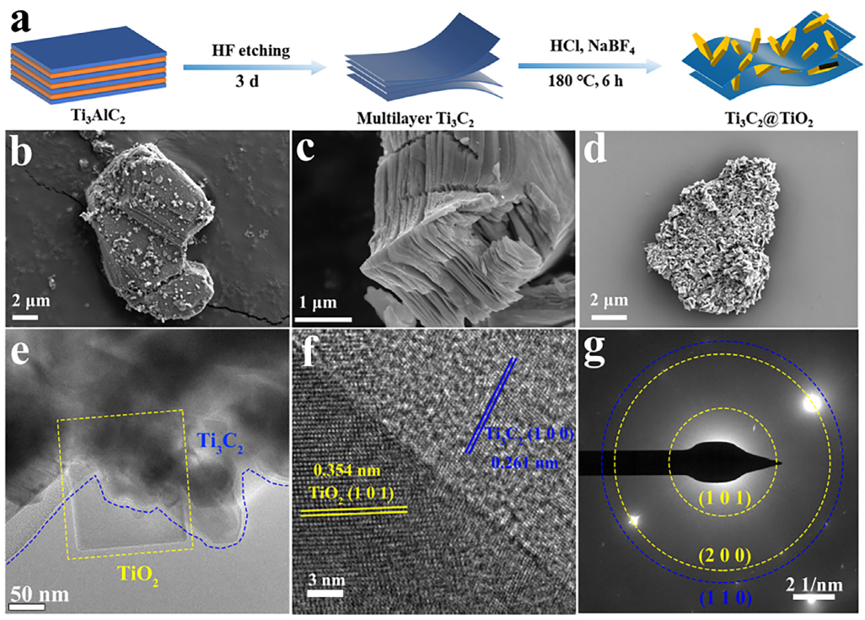
Using Ti3C2 MXene as the substrate, the team grew TiO2 nanosheets through in-situ hydrothermal oxidation, forming a Ti3C2@TiO2 heterojunction linked by interfacial C-Ti-O covalent bonds. Sodium tetrafluoroborate (NaBF4) served as a morphology regulator. The optimized heterojunction shows substantially enhanced photoelectric performance compared with the pristine MXene.
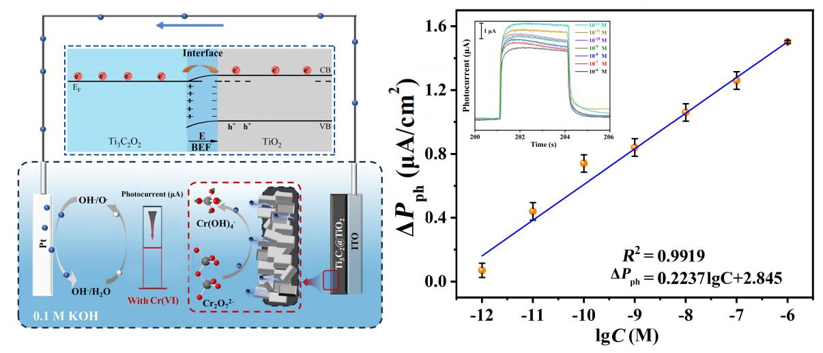
The study systematically examined how alkaline electrolyte concentration, light intensity and external bias affect the detector response, establishing a reproducible operating window for narrowband photodetection and trace Cr(VI) ion sensing.
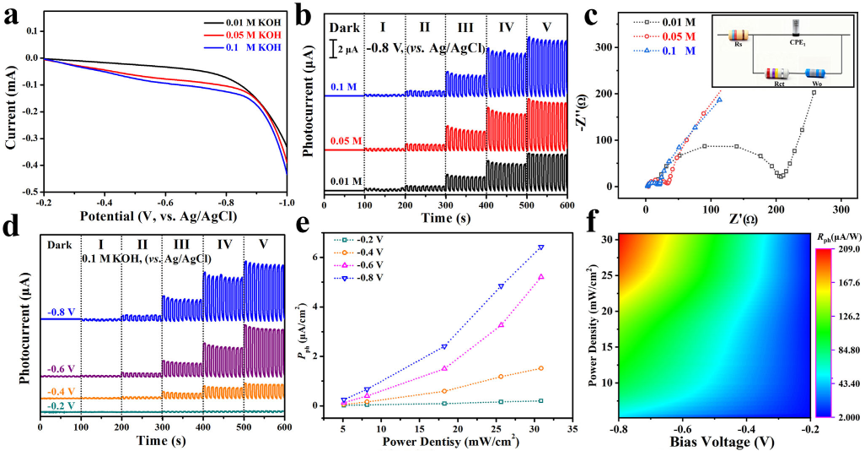
Photoelectrochemical measurements used the Perfectlight PLS-FX300HU High-Homogeneity Integrated Xenon Lamp, which provides a continuously tunable 10x10-50x50 mm2 rectangular uniform spot and reaches Class-A solar-simulator uniformity at up to 20x20 mm2 - matched to photoelectrode size and irradiation requirements.
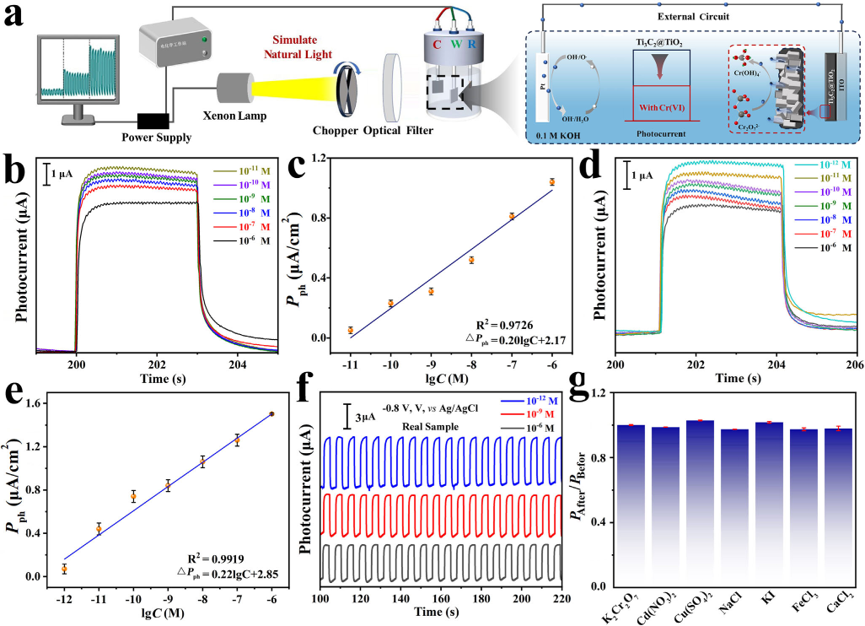
Covalent interfacial bonding between an MXene and its own oxide offers a general route to stable, high-response PEC photodetectors built from a single precursor.
Chinese report: AFM:杭师大高凌锋、黄又举和乌普萨拉大学Hans Ågren等.