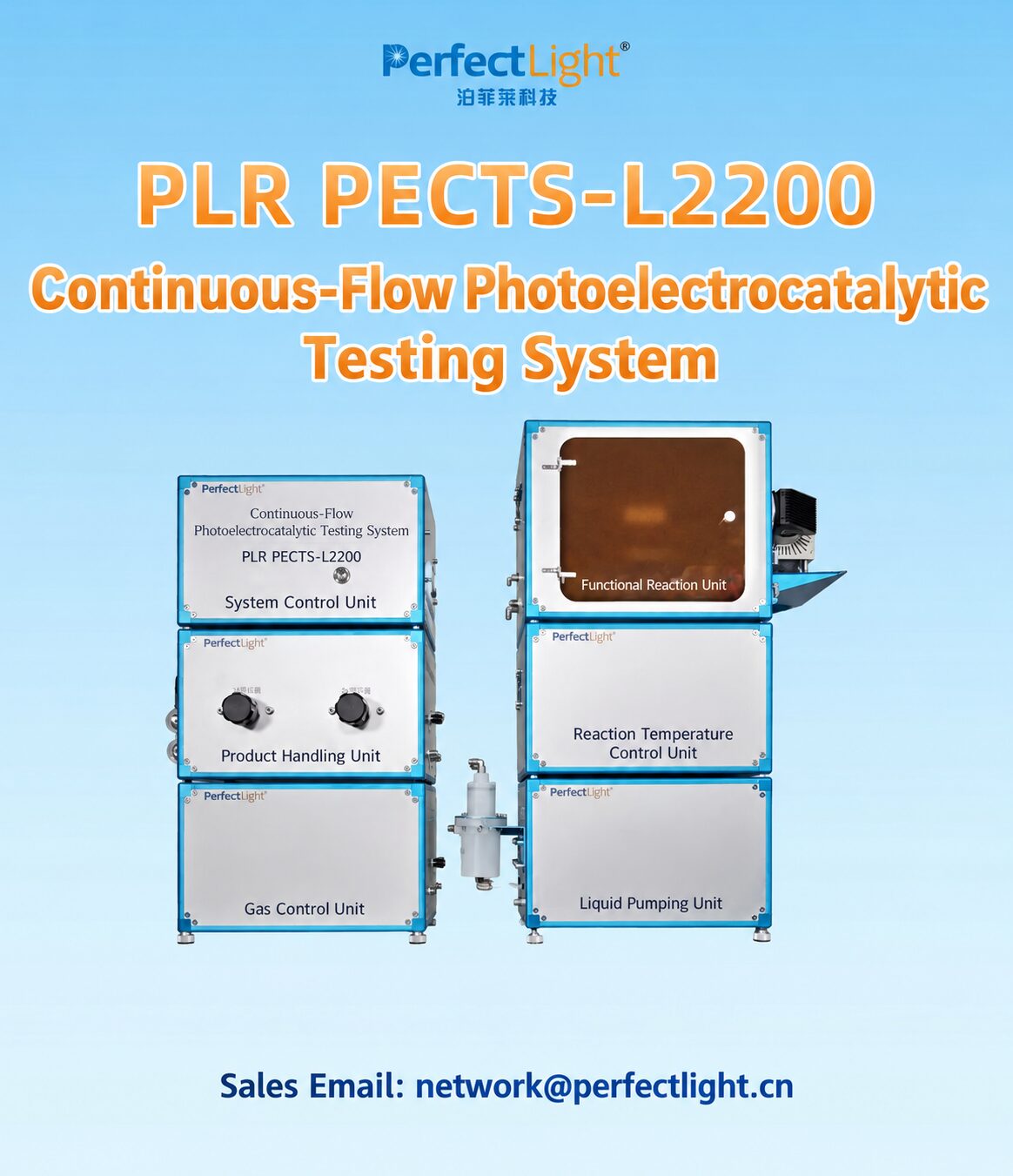
Continuous-flow photoelectrocatalysis can connect laboratory condition screening with longer-duration verification and process-oriented evaluation. The PLR PECTS-L2200 continuous-flow photoelectrocatalytic testing system integrates reaction control, electrochemical operation, gas management, sampling, and data processing in one workflow.
Batch experiments are useful for comparing catalysts and reaction conditions, but scale-up questions often require stable feed delivery, temperature and pressure control, continuous product handling, and traceable data acquisition. A continuous-flow platform helps researchers examine how operating conditions evolve over time and how the system responds to controlled changes.
The PLR PECTS-L2200 is designed for continuous-flow photoelectrocatalytic testing. The system can be configured for controlled electrical input, temperature management, gas or liquid flow, and product-side handling. The English product information is available on the continuous-flow photoelectrocatalysis testing system page.
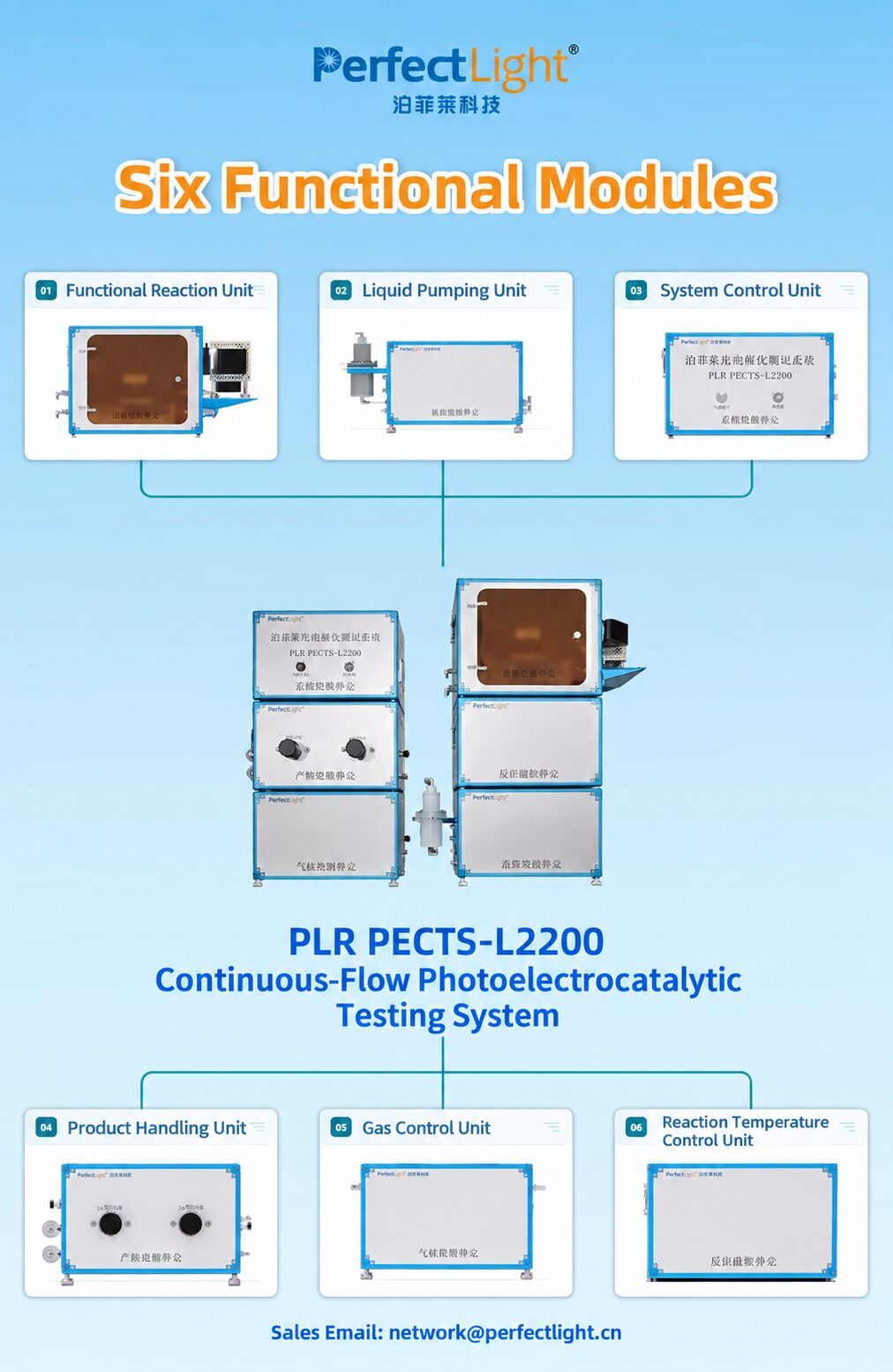
A continuous-flow test should be planned as a complete chain rather than as an isolated reactor. The system architecture can be organized around reaction control, illumination and electrochemical input, feed delivery, temperature and pressure management, product collection, and data acquisition. The exact module configuration should be confirmed against the planned chemistry before ordering.
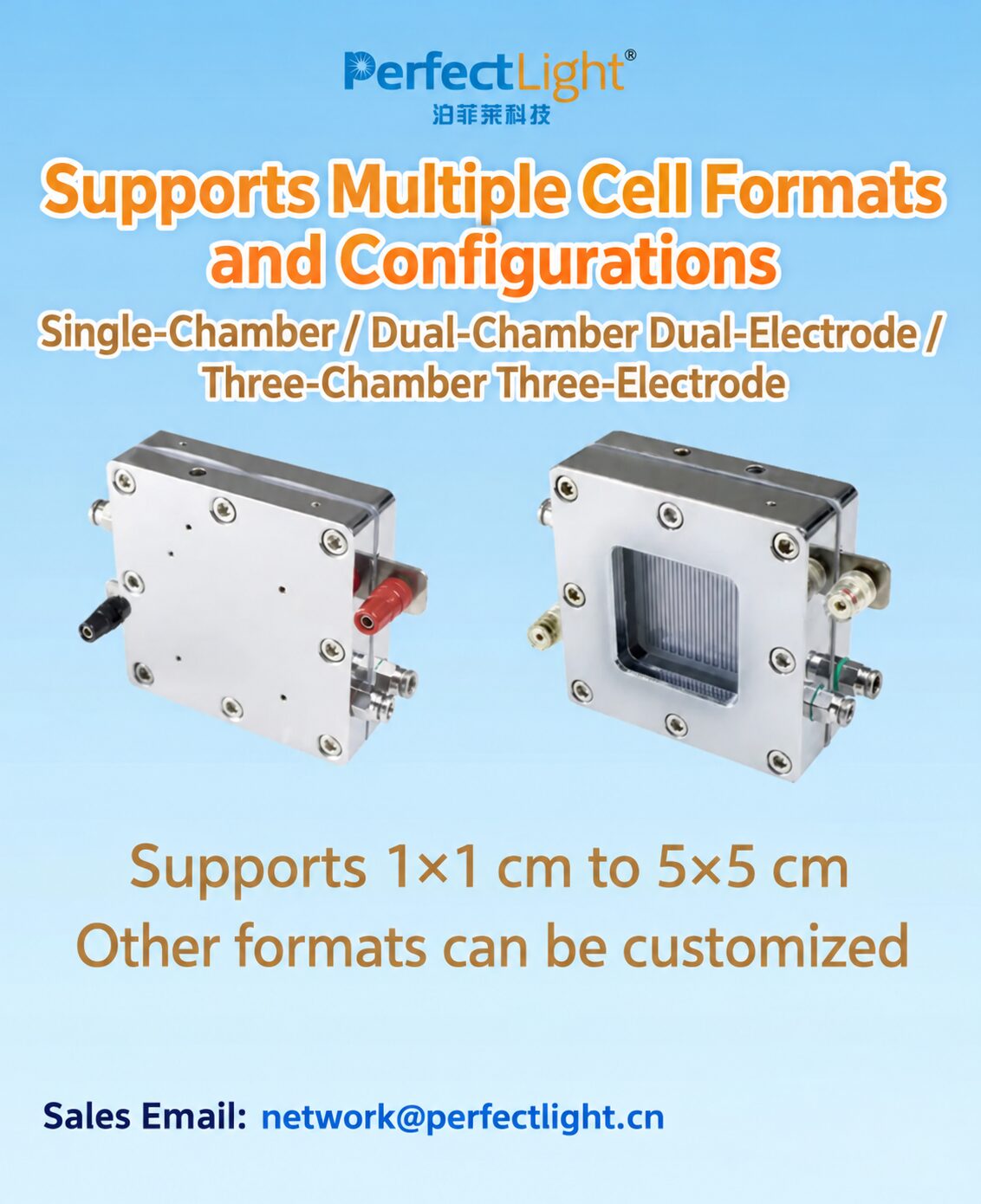
Different research questions may require different cell geometries, electrode arrangements, light windows, or external analytical instruments. Selecting the cell and interface together helps reduce dead volume, avoid unnecessary residence-time changes, and keep the measured signal connected to the actual reaction zone.
Stable flow is important when comparing residence time, gas–liquid contact, or catalyst loading. Researchers should document the feed composition, pump or mass-flow setting, reactor volume, sampling location, and the route used to collect liquid or gas products.
Continuous-flow studies benefit from synchronized records of voltage, current, temperature, pressure, flow, irradiation condition, sampling time, and product concentration. These records can support calculations such as conversion, selectivity, yield rate, faradaic efficiency, or space-time metrics when the corresponding analytical data and definitions are available.
Continuous-flow photoelectrocatalysis provides a practical bridge between condition screening and pilot-scale validation. The PECTS-L2200 workflow emphasizes controllable operating conditions, modular reaction hardware, stable feed and product handling, and traceable data acquisition. The final configuration should be selected according to the target reaction, pressure class, analytical method, and required residence time.
Recommended
news