Steam reforming (CH4+H2O) and dry reforming (CH4+CO2) both convert methane into H2/CO syngas, but both are accompanied by severe catalyst coking. The evaluation device must run stably at high temperature and facilitate coking and regeneration investigation.
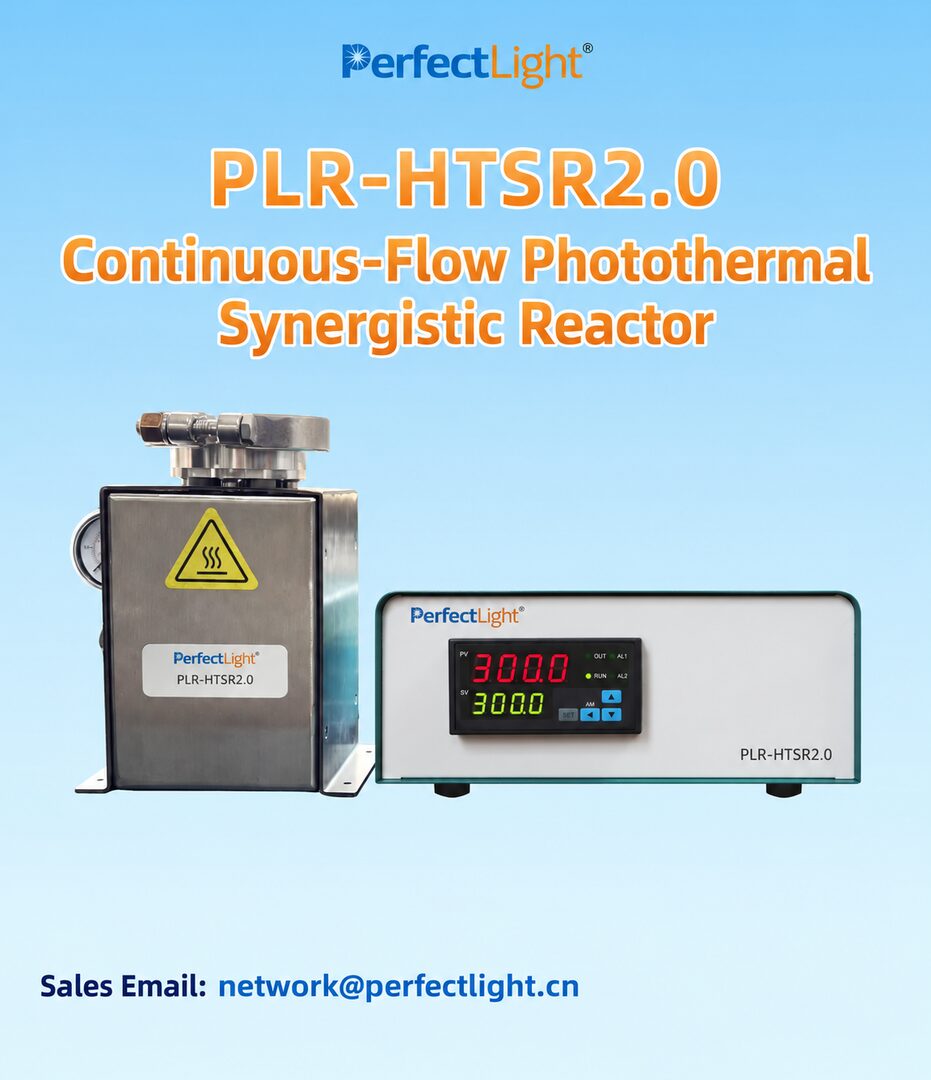
Load nickel-based or noble-metal catalyst into the rapid-heating multi-field fixed-bed reaction device or the PLR-TFT-FFTS Thermal Catalytic Hydrogenation Fixed-Bed Reaction Device; methane and oxidant enter the bed after preheating, and the outlet connects to a chromatograph to analyze H2, CO, and CO2.
Focus on CH4 conversion, H2/CO ratio, and catalyst lifetime. Linking macroscopic activity with the adsorption capacity measured by the PL-CataSorb2000 Fully Automatic Chemisorption Analyzer locates the deactivation mechanism faster.
Free consultation: Methane reforming cokes fast and lives short? Perfectlight's fixed-bed reaction device supports high-temperature long-term and online-regeneration evaluation, helping you build a solid catalyst-lifetime curve.
Tel: 400-1161-365 / 010-62128921 Perfectlight Official Website
Steam reforming (CH4+H2O) and dry reforming (CH4+CO2), both converting methane to H2/CO syngas but both prone to coking.
Higher temperature inhibits coking but worsens sintering; dry reforming needs periodic H2/air regeneration, with TPO and chemisorption to quantify.
CH4 conversion, H2/CO ratio, and catalyst lifetime, linked to chemisorption-measured adsorption to find deactivation causes.
This article does not constitute a performance commitment; specific technical parameters are subject to the actual product documentation and mutual confirmation.
}}]}