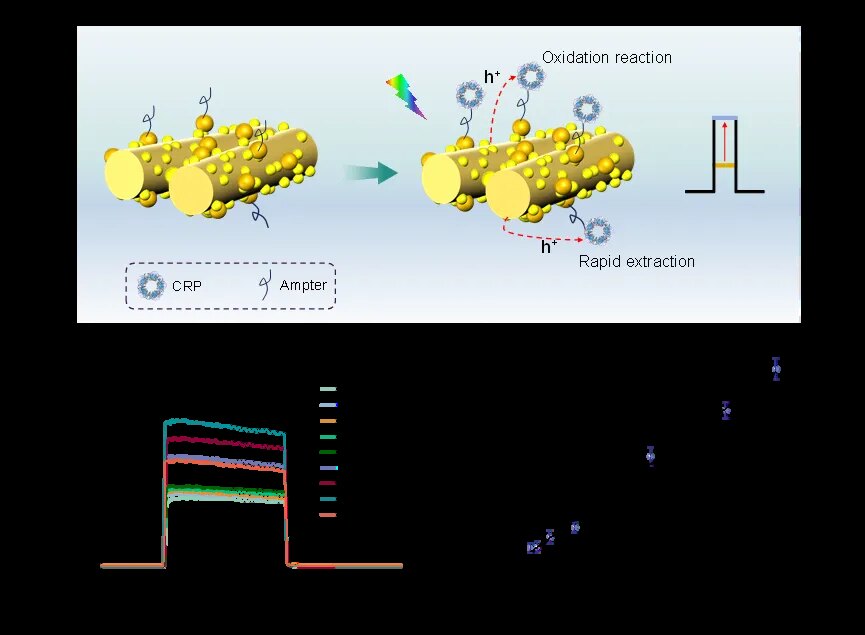
Research highlight. A 2026 Nano Research study reports a ternary Au-CdSQR photoelectrochemical (PEC) architecture that couples a Schottky junction with an S-scheme CdS homojunction. The design enables zero-bias, sacrificial-agent-free detection of C-reactive protein (CRP) in the reported laboratory study.
The material was prepared by growing CdS quantum dots in situ on CdS nanorods, producing a CdS quantum-dot/nanorod homojunction (CdSQR). Because the two CdS components share a matched lattice, the strategy is intended to reduce interfacial mismatch and support charge transfer across the homojunction.
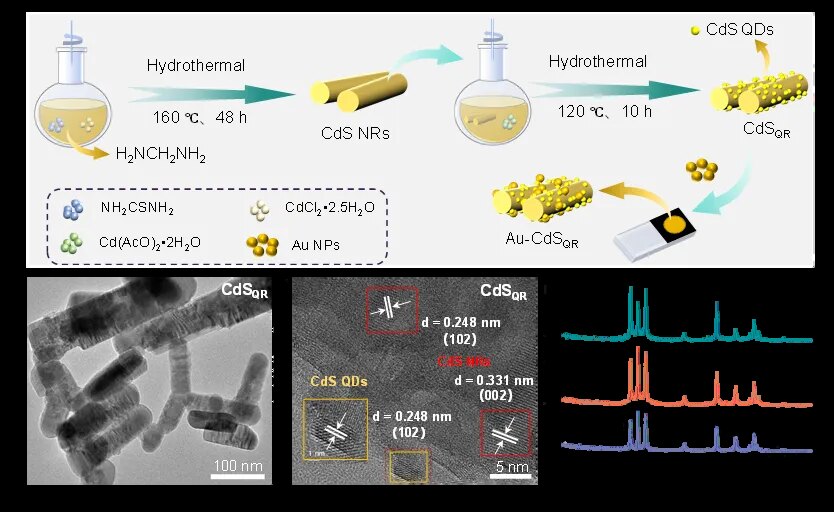
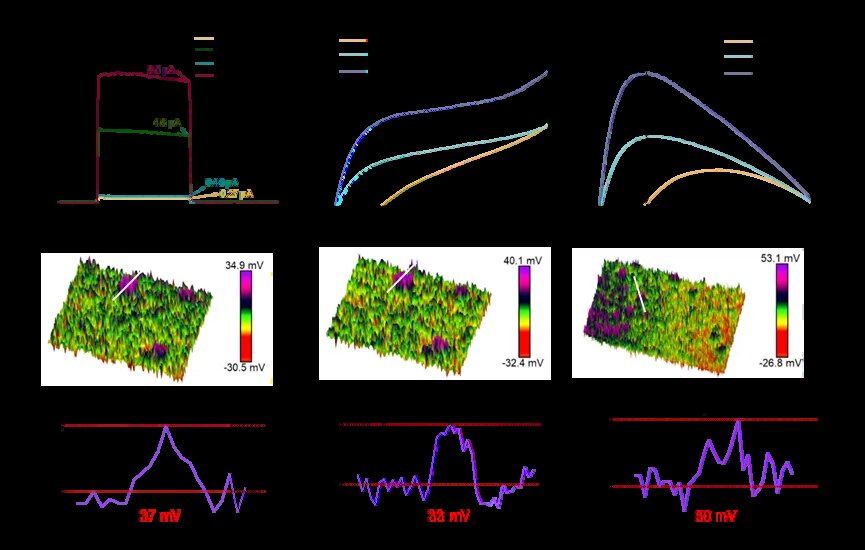
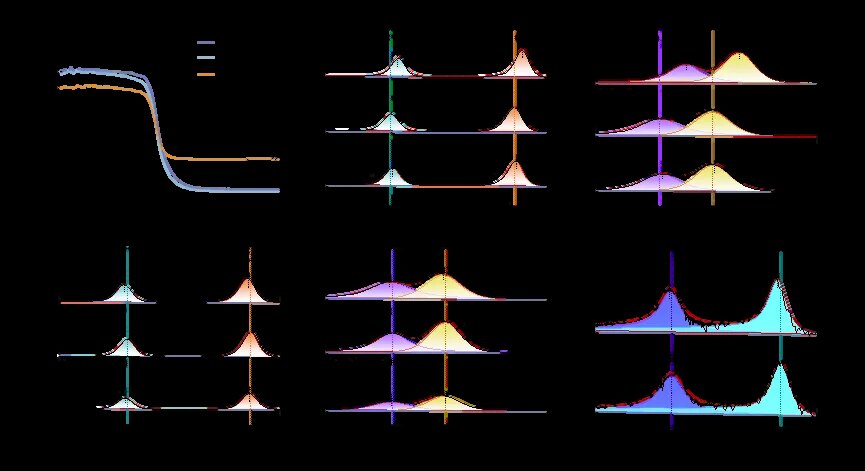
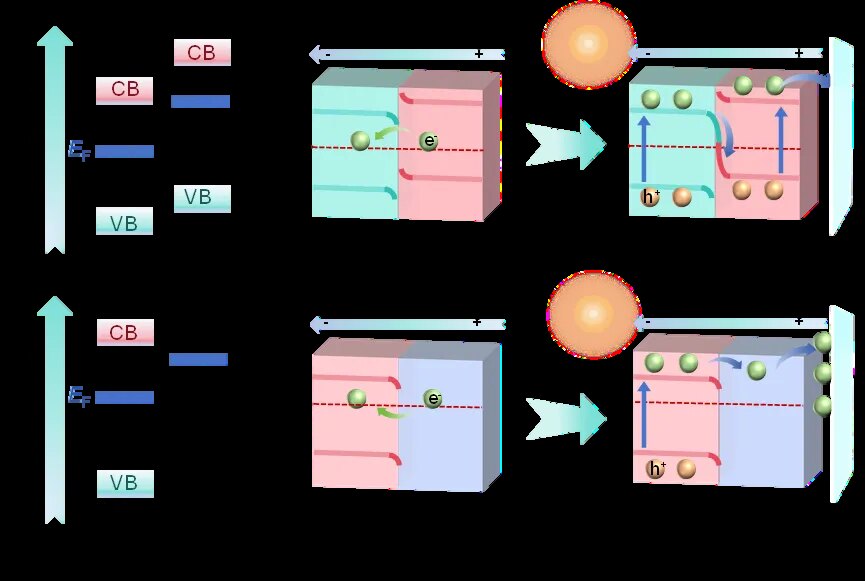
Au nanoparticles were then introduced to form a Schottky contact with CdSQR. The study uses dark/light XPS, surface-potential measurements and other characterisation to support S-scheme charge migration in the CdSQR homojunction and electron extraction at the Au interface.
At 40 wt% quantum-dot loading, the authors report photocurrent increasing from 0.27 µA for CdS nanorods to 4.6 µA for CdSQR and 8.5 µA for Au-CdSQR. The reported applied-bias photon-to-current efficiency was 3.75% for Au-CdSQR, compared with 1.03% for CdS.
In the reported sensing experiment, the device operated at 0 V without an added sacrificial agent. The calibration range was 0.025–1 ng/mL CRP, with the reported relationship I (µA) = 3.40 + 3.79 CCRP, R2 = 0.991 and a detection limit of 5 pg/mL. This is a materials and sensing demonstration, not a clinical diagnostic claim.
The source lists a PLS-FX300HU high-uniformity integrated xenon lamp in the PEC measurement setup. Controlled light geometry, spectral output and intensity are essential when comparing photoelectrode performance across experiments.
C. Zeng, M. Liu, X. Wang, et al. Synergistically enhanced ternary Schottky/S-scheme homojunction for ultrasensitive photoelectrochemical sensing. Nano Research 2026. DOI: 10.26599/NR.2026.94908857.
Sales Email: network@perfectlight.cn