On 17 November 2026, Nature Communications published a study by Prof. Yongfa Zhu's team at Tsinghua University and collaborators on exciton binding regulation for tumor phototheranostics. Co-first authors: Yan Yizhou, Cheng Runing and Zhang Mo; co-corresponding authors: Zhou Qixin and Yongfa Zhu. DOI: 10.1038/s41467-026-79452-2.

Organic semiconductors absorb photons to form excitons - bound electron-hole pairs. Radiative recombination produces photoluminescence for imaging, while dissociation generates carriers for interfacial redox reactions. Exciton binding energy governs how tightly the pair is bound, so tuning it could combine fluorescence imaging and photocatalytic oxidation in one material. This matters because the hypoxic microenvironment of solid tumors limits conventional photodynamic therapy that depends on molecular oxygen.
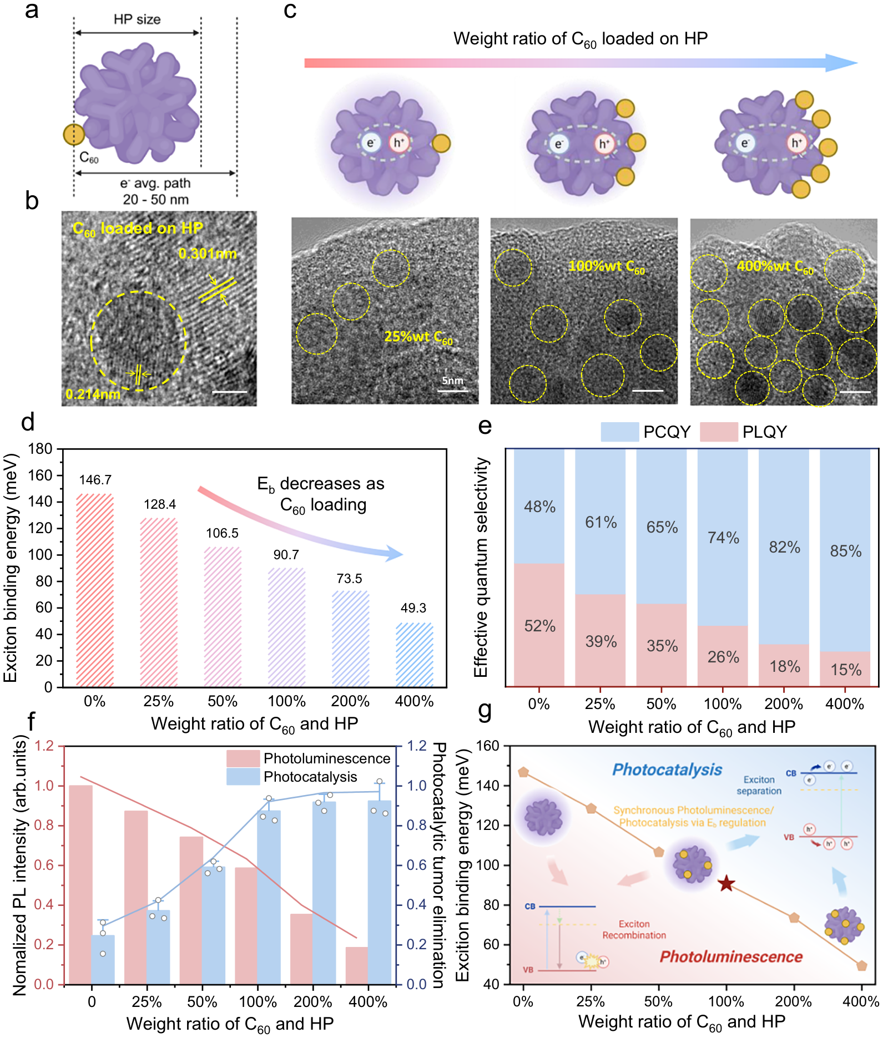
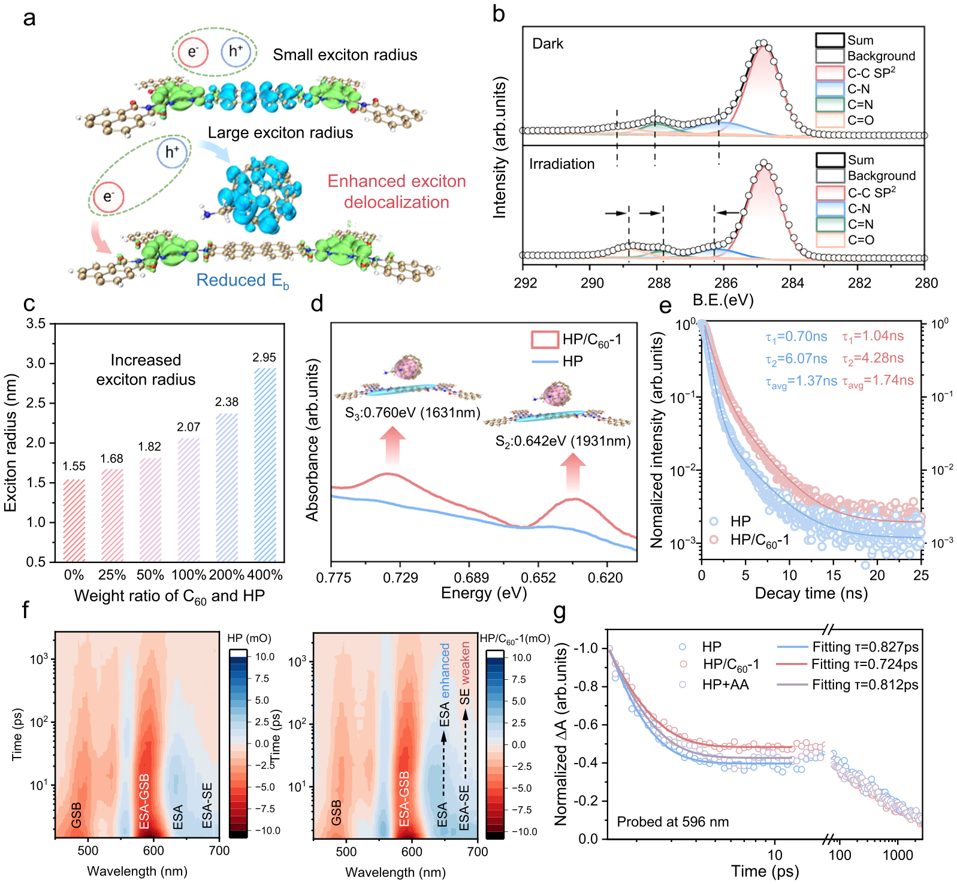
The team used a heptazine-perylene conjugated polymer (HP) with amino-modified fullerene (C60) loaded on the particle surface. C60 clusters of about 3-5 nm formed; as the C60:HP mass ratio rose from 0 to 4:1, exciton binding energy fell from 146.7 to 49.3 meV, and the fraction of photocatalytic quantum yield rose from 48% to 85%. A 1:1 ratio (HP/C60-1) kept strong NIR fluorescence at 90.7 meV while enabling effective oxidation, and was selected for further study.
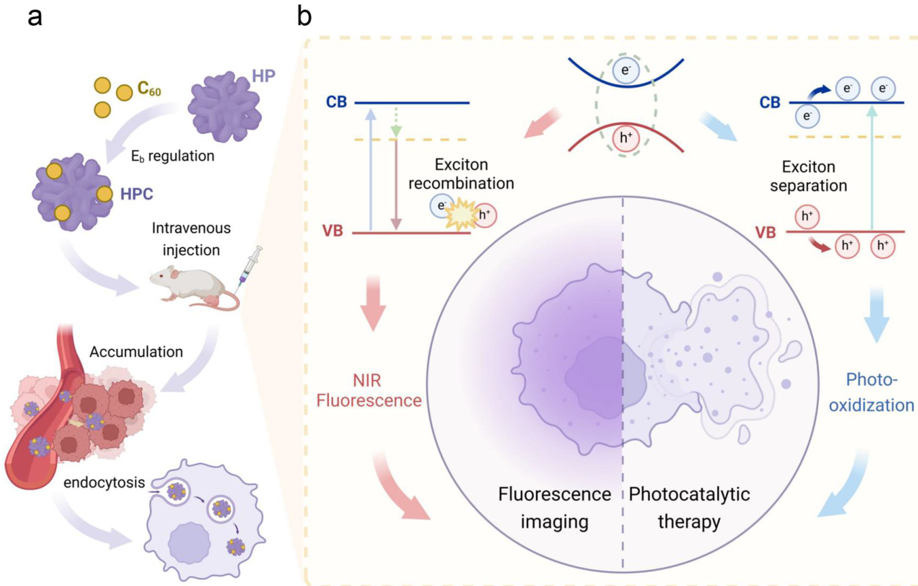
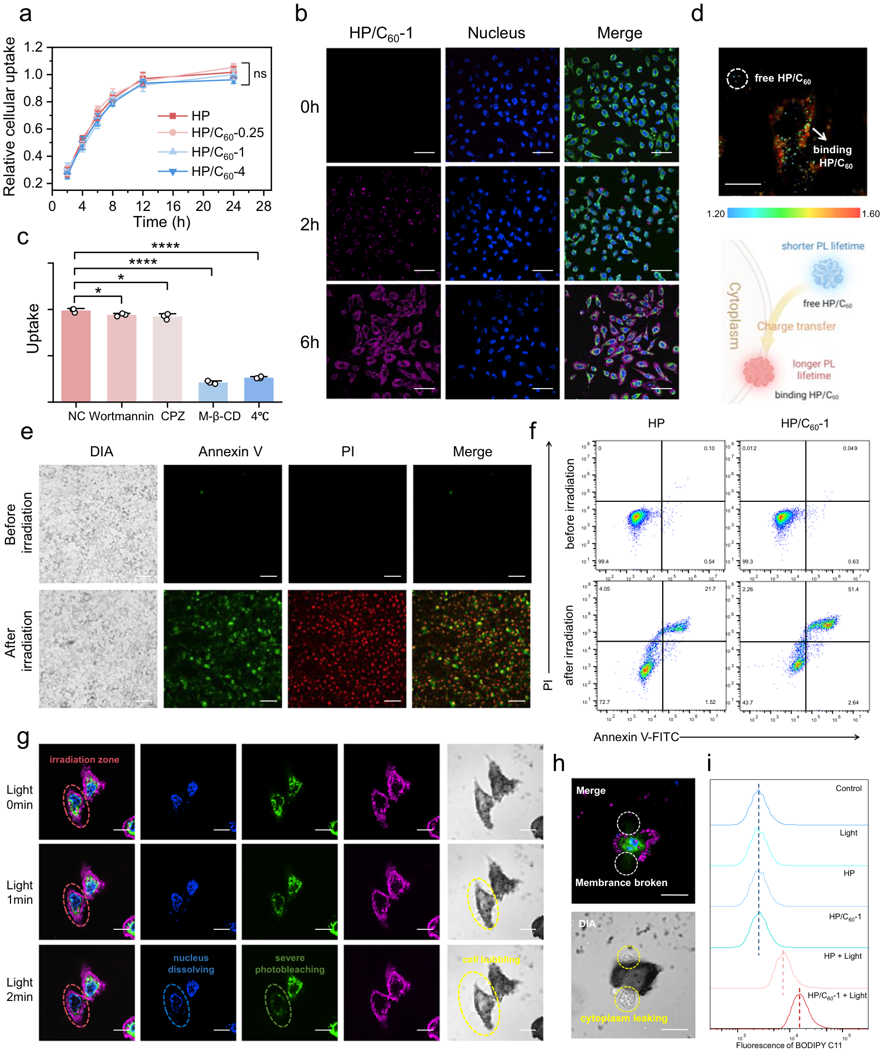
TD-DFT calculations showed photogenerated holes delocalizing from the perylene unit toward C60, increasing electron-hole separation from 0 to 7.64 Angstrom and weakening Coulomb attraction. In-situ XPS confirmed interfacial charge transfer, with exciton Bohr radius growing from 1.55 to 2.95 nm. In HeLa cells, HP/C60-1 localized in the cytoplasm; about one minute of single-cell laser irradiation caused membrane blebbing and nuclear dissolution, with lipid peroxidation detected and damage persisting under low oxygen because holes directly oxidize cellular components.
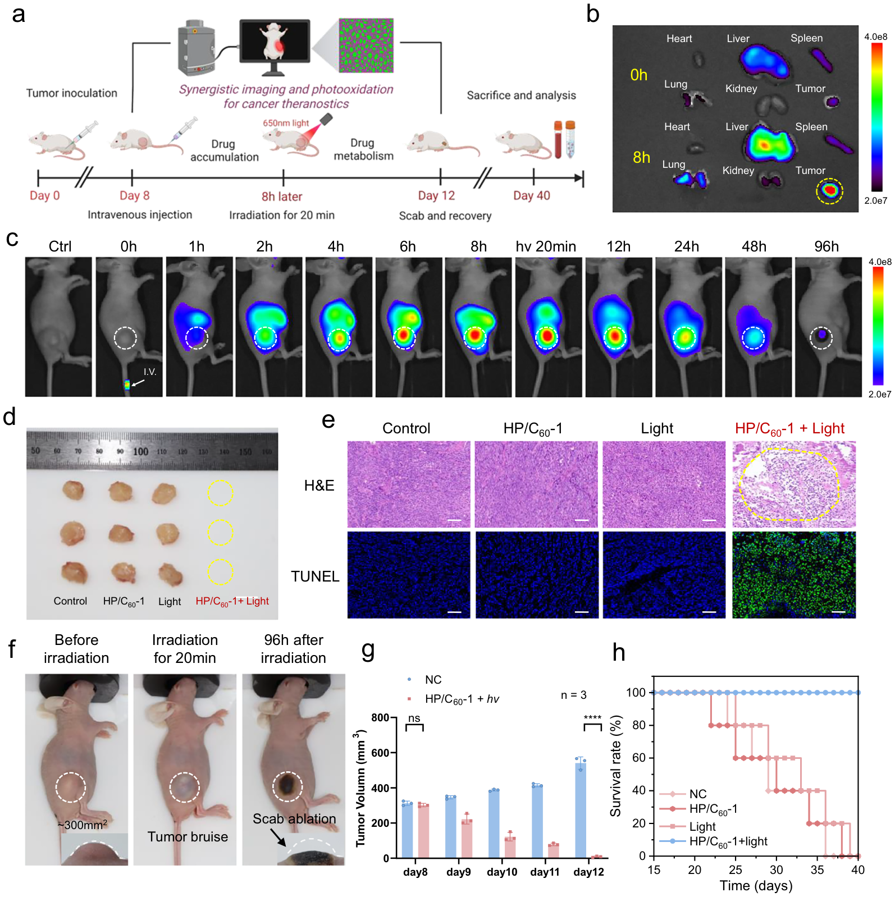
In HeLa tumor-bearing mice, tumor fluorescence peaked 8 hours after intravenous injection, guiding local irradiation. Tumor temperature stayed below 40 C; only the HP/C60-1 plus light group achieved complete tumor ablation, confirmed by histology. Irradiation used the Perfectlight Microsolar300 Xenon Lamp at 650 nm and 80 mW/cm2.
By coordinating exciton radiative recombination and dissociation through interfacial charge delocalization, the study delivers a design route for organic semiconductor phototheranostics that combines NIR imaging with oxygen-independent photooxidation.
Chinese report: Nature Communications:朱永法教授团队调控激子结合能,实现肿瘤非氧依赖光氧化与成像.