Photochemical smog, as a representative phenomenon of modern urban air pollution, does not form directly from factory chimneys or automobile exhausts, but rather emerges from a “secondary chemical game” under sunlight catalysis. When high concentrations of primary pollutants such as nitrogen oxides (NOₓ) and volatile organic compounds (VOCs) accumulate in the atmosphere, exposure to ultraviolet light triggers a series of complex chain photochemical reactions, generating ozone (O₃), peroxyacetyl nitrate (PAN), aldehydes, and other highly oxidative secondary pollutants. This smog not only significantly reduces visibility but also poses serious threats to biological safety and ecological balance due to its content of highly reactive radicals and oxidative species.
From the perspectives of toxicology and environmental medicine, the hazards of photochemical smog primarily manifest as strong irritation to the human respiratory system and eyes. Ozone and aldehydes in the air can penetrate deep into the lung bronchi, causing inflammation and impairing pulmonary function; simultaneously, the smoke strongly irritates the ocular conjunctiva, often leading to tearing and burning sensations. Moreover, its inhibitory effects on plant growth are significant, as strong oxidants damage chlorophyll and reduce crop yields. In materials science, photochemical smog can accelerate rubber aging and fabric fading. Therefore, investigating the degradation mechanisms of these precursor pollutants (such as VOCs and NOₓ) has become a central topic in contemporary environmental catalysis research.
At the laboratory level, accurately simulating the physical environment of photochemical smog formation and evaluating the intrinsic activity of mitigation materials requires constructing a standardized light field environment. Because atmospheric photochemical processes are extremely sensitive to wavelength distribution, the XES-40S3-TT-200 AAA-class solar simulator proves invaluable in such studies. This system provides spectral matching, irradiation uniformity, and temporal stability that meet the highest international AAA-level standards for the AM 1.5G reference spectrum. Using this device, researchers can simulate the conversion kinetics of precursor pollutants under different geographic latitudes or meteorological conditions at a controlled 1.0 sun initial radiation intensity, ensuring highly reproducible and internationally benchmarked experimental data.
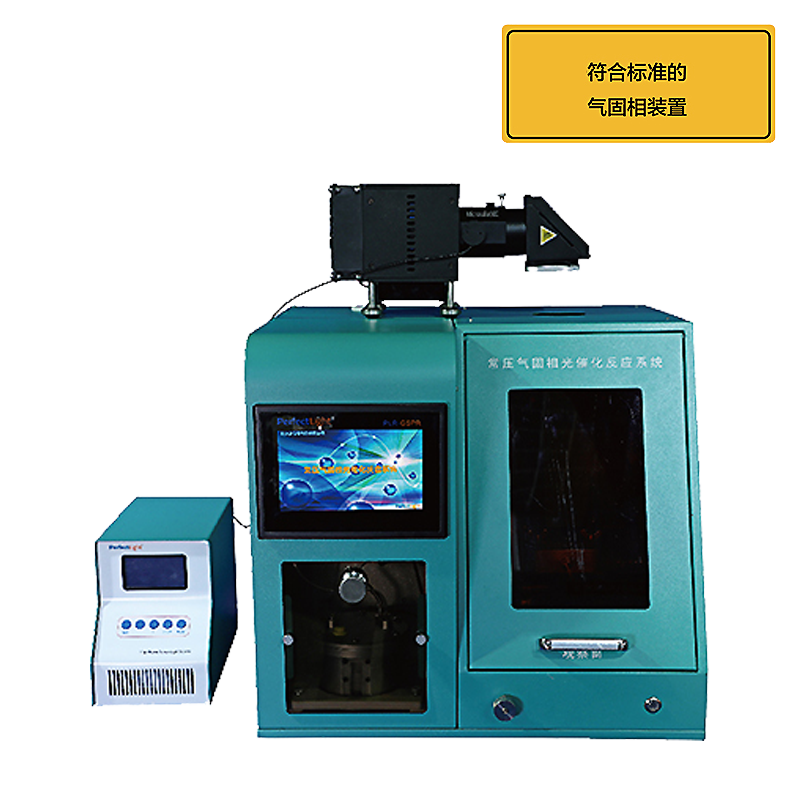
However, bridging the gap from basic material development to performance evaluation under complex environmental conditions also requires consideration of mass transfer efficiency and humidity effects in gas–solid phase reactions. When assessing the actual removal efficiency of photochemical catalysts for atmospheric NOₓ or formaldehyde, the PLR-GSPR ambient-pressure gas–solid phase photocatalytic reaction system provides a professional research platform. This system features an innovative flattened reactor design that greatly shortens the diffusion distance of gas molecules to the catalyst surface, increasing collision probability. Critically, the system integrates an intelligent humidity control module capable of precisely adjusting the feed gas humidity between 5–95% RH. This design enables researchers to investigate the competitive adsorption mechanisms of water vapor during the transformation of photochemical smog precursors, and its exceptional evaluation capabilities have made it a key supporting instrument in the development of the national standard GB/T 39716-2020 “Test Methods for Air Purification Performance of Photocatalytic Materials and Products: Removal of Nitrogen Oxides.”
Thus, the management of photochemical smog is shifting from purely macroscopic monitoring to microinterface control. By combining high-precision solar simulation light sources to construct standardized reaction fields with gas–solid phase evaluation systems equipped with dynamic temperature and humidity control, researchers are gradually elucidating the kinetic characteristics of carrier evolution at interfaces. This not only provides a scientific foundation for developing highly efficient environmental remediation materials but also lays a solid experimental and engineering groundwork for ultimately eliminating this invisible “threat under sunlight” and advancing green atmospheric chemistry.
Recommended
news