In the pursuit of green energy transition and the forefront of "artificial photosynthesis," photochemistry laboratories are no longer the primitive spaces of a few simple flasks and incandescent lamps. For modern researchers, a fully functional photochemistry laboratory resembles a precision "light-to-chemical energy conversion factory," whose core mission is to bridge the energy gap from microscopic photon capture to macroscopic chemical bond cleavage. Here, researchers must not only analyze the kinetic behavior of photogenerated charge carriers but also establish a highly standardized and automated evaluation system, transforming the once sporadic "eureka moments" into scientifically reproducible data suitable for scale-up production.
Upon entering a photochemistry laboratory, the first challenge is ensuring the "determinacy of light." Natural illumination is subject to severe fluctuations due to geography, seasons, and weather, whereas scientific rigor demands that each dataset has a reproducible benchmark. To replicate a constant and precise solar environment indoors, the XES-40S3-TT-200 AAA solar simulator has become the "gold standard" for assessing the intrinsic activity of materials in many laboratories. Through its sophisticated optical design, the system achieves top-tier AAA-level spectral matching, irradiation uniformity, and temporal stability. This standardized light field ensures that every joule of energy received by the material during measurements of photocatalytic quantum efficiency or PEC photoelectrochemical characterization can be quantified as a precise physical coordinate, effectively eliminating experimental bias caused by inconsistent light sources.
However, the complexity of photochemical reactions goes far beyond controlling the light source alone. As research delves deeper into CO₂ reduction, photocatalytic water splitting for H₂ production, and organic photochemical synthesis, researchers face massive material screening tasks and intricate kinetic experiments. Traditional manual operations are not only inefficient, but inevitable sampling errors often obscure the true performance of catalysts. Consequently, photochemistry laboratories are transitioning from a "labor-intensive" to an "intelligent collaborative" paradigm. The introduction of the MCP-WS1000 photochemistry workstation marks a revolution in experimental data production. It is not merely a set of reactors but an integrated closed-loop system with automated sampling and delivery modules. By coordinating physical hardware with control software, this workstation enables fully automated, long-term online monitoring of gaseous or liquid-phase products without human intervention. This research strategy of "maximize the potential of new materials in the shortest time" significantly frees up researchers’ time, allowing them to focus on in-depth exploration of reaction mechanisms rather than repetitive needle sampling.
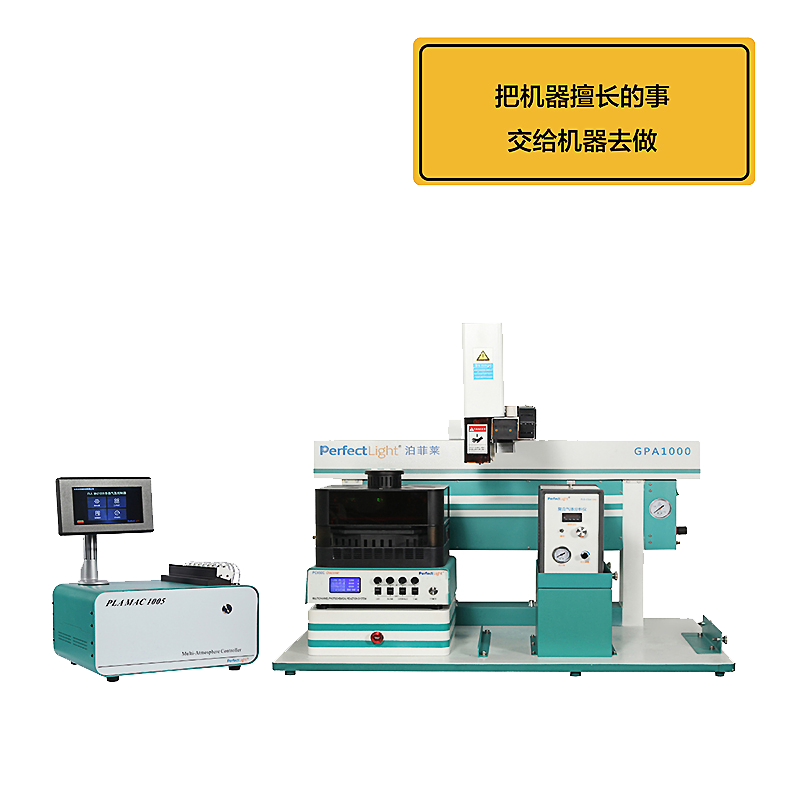
Moreover, modern photochemistry laboratories must address the challenges of scaling up for engineering applications. Transitioning from milliliter-scale laboratory systems to square-meter-scale engineering demonstrations, such as "hydrogen farms," requires solutions for light penetration depth, interfacial mass transfer efficiency, and real-time product collection. By integrating high-gas-tight automated online gas evaluation terminals with highly stable dynamic gas distribution systems, researchers can precisely control the partial pressures of reaction atmospheres, simulating extreme conditions for industrial waste gas purification or energy conversion. This end-to-end capability, from fundamental material development to device integration and optimization, represents the core competitiveness of modern photochemistry laboratories as incubators for green energy.
In conclusion, the future of photochemistry laboratories lies in precise light-field management, high-throughput data production, and multi-field coupled system design. By integrating cutting-edge research equipment such as the XES-40S3-TT-200 and MCP-WS1000, scientists are gradually unraveling the physical mechanisms behind the interplay of light and matter, laying a solid technological foundation for constructing low-carbon, circular green chemical systems.
Recommended
news