As one of the most common volatile organic compounds (VOCs) in indoor decoration and industrial production, formaldehyde poses long-term risks to human respiratory health and represents a challenging target molecule in environmental chemistry research. Among various treatment technologies, photocatalysis stands out for its ability to drive redox reactions using light under ambient temperature and pressure, completely mineralizing formaldehyde molecules into carbon dioxide (CO₂) and water (H₂O). This process is metaphorically described as a microscopic “cold combustion” technique. Being free from additional chemical additives and secondary pollution, it has become a core focus in both research and application within the environmental catalysis field.
From a physicochemical perspective, formaldehyde photocatalytic degradation begins with the capture of photons by semiconductor materials (such as TiO₂, g-C₃N₄, or novel heterojunction materials). When light of matching energy irradiates the catalyst surface, excited electrons transition from the valence band to the conduction band, generating strongly reducing electrons (e⁻) and strongly oxidizing holes (h⁺). Upon migrating to the material surface, these photogenerated carriers induce reactions with oxygen (O₂) and water molecules in the air, producing highly reactive oxygen species (ROS) such as hydroxyl radicals (·OH) and superoxide anion radicals (·O₂⁻). These “nano-scissors” selectively cleave the chemical bonds in formaldehyde molecules, enabling a stepwise oxidation process from formaldehyde to formic acid and ultimately to CO₂.
In laboratory research, obtaining highly reproducible and reliable degradation curves is a primary concern for scientists. The degradation efficiency of formaldehyde is extremely sensitive to fluctuations in light intensity, making a stable, uniform, and spectrally continuous light field the physical benchmark for kinetic studies. The Microsolar 300 Xenon Lamp Light Source plays a critical role in such experiments. Utilizing the core technology of solar simulators (TSCS), it provides high-energy-density continuous illumination. Importantly, its built-in precision optical feedback system continuously monitors and adjusts light output, keeping long-term irradiation instability within ≤±3%. This precise feedback mechanism ensures constant illumination during multi-hour or even multi-day formaldehyde degradation stability tests, allowing researchers to accurately observe the intrinsic activity and lifespan of the catalyst without interference from light fluctuations.
However, moving from mechanistic studies to engineering applications, scientists must address mass transfer efficiency challenges in gas–solid reactions. In practical purification scenarios, formaldehyde emissions typically occur at low concentrations with high flow rates. If experimental setups rely solely on passive diffusion, collisions between reactant molecules and catalytic active sites are significantly reduced, resulting in low macroscopic conversion rates. To simulate and optimize this process, the PLC-GDHC I Gas Diffusion Multi-Phase Continuous Catalytic Reaction Platform offers notable structural advantages. By incorporating a porous hydrophobic gas diffusion layer loaded with catalysts, the platform induces turbulence in the formaldehyde feed gas, achieving highly dispersed contact with the catalyst prior to reaction. This “penetrative” contact mode greatly enhances gas–solid interfacial mass transfer efficiency. Additionally, its built-in gas circulation module provides continuous feed propulsion, ensuring timely product desorption and exposing active sites, thus achieving dynamic equilibrium of adsorption–diffusion–transfer at the microscale.
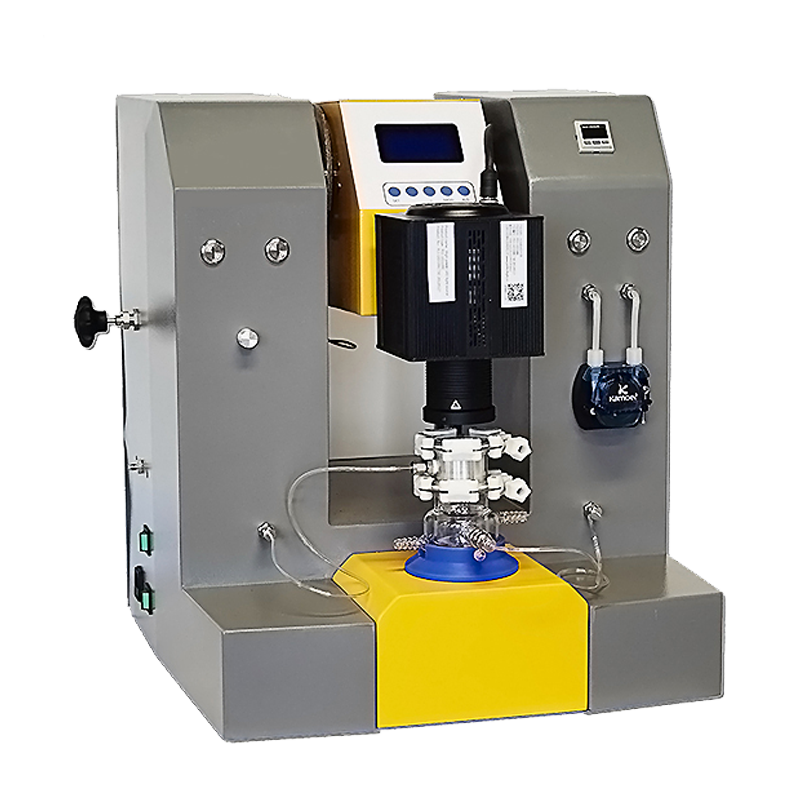
Research on formaldehyde photocatalytic degradation has evolved beyond comparing single-material activities, increasingly focusing on integrated considerations such as light-field management, interfacial kinetics, and reaction system engineering. By combining highly stable irradiation sources like the Microsolar 300 with mass-transfer-enhanced platforms like the PLC-GDHC I, researchers can gain a deeper understanding of formaldehyde evolution under complex conditions. This not only provides theoretical support for developing efficient indoor air purification devices but also drives the steady transition of photocatalytic technology from laboratory “bottles and flasks” to scalable environmental remediation engineering.
Recommended
news