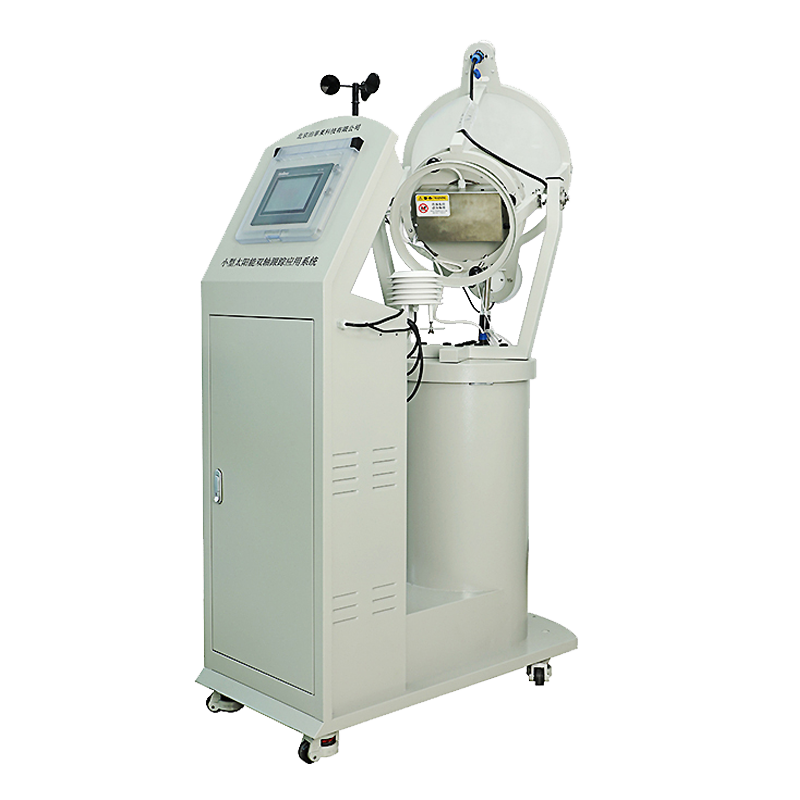
Solar Cell Comprehensive Testing System is an indoor–outdoor universal testing platform designed for scientific research applications, supporting long-term operational testing and multi-parameter data acquisition of solar cells under real natural environments as well as laboratory conditions.
The system can freely switch between stable, controlled conditions and complex outdoor environments, effectively bridging laboratory testing and real-world application evaluation, and helping researchers systematically obtain authentic performance data of solar cells under dynamic illumination, temperature, and spectral conditions.
I–V Scanning + MPPT Control + Capture of “Transient” Variations
The Solar Cell Comprehensive Testing System is not a simple voltage and current logging device. Each testing channel integrates an independent electronic measurement unit and a high-precision data acquisition module, supporting multiple electrical operating modes and enabling researchers to capture subtle device behavior under complex environmental conditions.

The system supports multi-channel parallel operation and allows flexible configuration of “combined testing strategies” according to experimental requirements:
• Periodic I–V Curve Scanning
The Solar Cell Comprehensive Testing System can perform complete I–V curve measurements at predefined intervals (e.g., every 10 minutes).
This not only records basic parameters such as Voc, Isc, and FF, but also reveals the evolution of internal physical mechanisms under specific illumination or temperature conditions through changes in the I–V curve profile.

• Real-Time MPPT Operation Monitoring
The Solar Cell Comprehensive Testing System supports maximum power point tracking (MPPT) mode, ensuring that the solar cell always operates at its optimal working point.
Especially under cloudy conditions or rapidly fluctuating irradiance, the system can accurately record the device’s response speed and recovery behavior to changes in light intensity—critical dynamic data that static testing cannot provide.
Users can even configure a hybrid mode of “continuous daytime MPPT monitoring + scheduled I–V scanning,” enabling the acquisition of cumulative energy output data without losing key characteristic curves.

Providing a “Panoramic” Basis for Performance Variations under Complex Conditions
Under outdoor conditions, solar cell performance variations are often the result of multiple coupled factors. For example, is efficiency degradation caused by intrinsic material aging or reversible thermal losses at elevated temperatures? Is it driven by humidity effects or spectral mismatch? Without precise alignment between electrical and environmental data, these questions cannot be answered.
The Solar Cell Comprehensive Testing System adopts an integrated synchronous acquisition architecture, locking in environmental parameters at the millisecond level simultaneously with electrical data recording:
Real-time irradiance (W/m²)
Solar spectral distribution (340 nm – 1020 nm)
Cell/module surface temperature
Ambient temperature and humidity, wind speed and wind direction, and other meteorological data
This “panoramic” data recording approach completely eliminates time-alignment errors caused by post-processing data from different instruments, providing a solid foundation for subsequent multi-parameter correlation analyses (such as temperature coefficient calculations and spectral response analysis), and significantly enhancing the scientific credibility of the data.
| Function | Specification |
|---|---|
| Electrical Monitoring | Maximum power point monitoring of solar cells |
| Electrical Monitoring | I–V curve measurement and output power recording; sampling interval ≤ 10 minutes |
| Electrical Monitoring | Voltage range: 300 mV – 100 V; Current range: 1 mA – 1 A |
| Mounting Structure | Aluminum alloy frame with manually adjustable tilt angle |
| Environmental Monitoring | Ambient temperature, ambient humidity, irradiance, and solar spectrum |
| Environmental Monitoring | Solar cell surface temperature |
| Operating Mode | Each group of cells operates independently for easy replacement |
| Remote Monitoring | Remote access to system operating status |
| Display & Control Module | Visualized data control with a large-format display |
| Safety Mode | Over-temperature warning, fault alarm, and emergency stop |
| Protection | Aluminum alloy frame + integrated enclosure design for outdoor protection |
| Environmental Conditions | Unshaded outdoor use; Temperature: −20 to +45 °C; Humidity: 10%RH – 75%RH |
High-Throughput Screening + Reference Benchmarking + Easy Sample Replacement
In the research of emerging photovoltaic devices such as perovskite and organic solar cells, long-term stability remains the greatest challenge and a core focus of ISOS protocols.
The Solar Cell Comprehensive Testing System adopts a modular multi-channel design specifically optimized for high-throughput screening:
• Array Configuration: The photovoltaic array can be configured with test samples (e.g., perovskite cells) and reference samples (silicon cells), all of which can be freely replaced as needed.
• Scientifically Rigorous Comparison Logic: This configuration enables novel devices and mature technologies to be evaluated side by side under identical outdoor conditions, ensuring sufficient statistical sample size while establishing reliable benchmarks.
• User-Friendly Hardware Design: All cell units feature an easy-to-replace structure, allowing researchers to quickly mount or remove samples without specialized tools, greatly simplifying multi-round experimental workflows.
This design minimizes environmental errors while significantly lowering the operational threshold for outdoor experiments, effectively shortening material screening cycles that would otherwise take months.
Unattended Operation, Reliable Data
Considering the long duration (often weeks or months) and harsh environmental conditions of outdoor testing, the system is engineered with reliability as a core priority:
• Supports local data storage and centralized management, ensuring data integrity even during network interruptions;
• Visualized monitoring interface with remote access, allowing researchers to view real-time I–V curves and power trends directly from the laboratory without frequent site visits;
• On-demand data export in standardized formats for direct integration with analysis software.
The system is ideal for long-term unattended outdoor monitoring scenarios, truly realizing the concept of “bringing the laboratory outdoors.”
Compatible with Standard Light Sources + Customizable Dimensions
In addition to outdoor validation, the system can seamlessly return to the laboratory as a standard platform for indoor stability testing.
Based on a modular design architecture, the system breaks free from fixed-size constraints:
• Flexible Size and Channel Configuration: For limited indoor laboratory space, users can reduce the number of combined units (e.g., 4–8 channels) as needed.
• Integrated Light Source Support: Perfectlight Technology can also provide matching solar simulators (standard light sources). Regardless of required size or light intensity, complete “light source + monitoring” customized solutions are available, ensuring consistency between indoor and outdoor testing standards.