In the field of photocatalysis research, the photocatalytic reaction instrument has evolved from early simple light-source-plus-flask setups into integrated research platforms that combine precise irradiation, multi-channel parallel screening, accurate temperature control, and automated analysis. For scientific readers, understanding the core logic of these instruments lies in grasping how they transform complex chemical reactions into reproducible and quantifiable scientific data through extreme control of the four key variables: "light, temperature, material, and pressure."
First, high-throughput parallel experiment capability is the core for accelerating catalyst screening. In the early stages of material development, researchers often face a vast number of experimental combinations, including different catalyst ratios, solvent choices, and excitation wavelength adjustments. The PCX-50C Discover multi-channel photocatalytic reaction system provides an ideal solution. This system supports 1 to 9 parallel reaction positions, and its unique bottom-vertical irradiation mode with optical-grade quartz flask bottoms effectively avoids reflection and scattering inconsistencies caused by curved flask surfaces, ensuring high uniformity of optical path length across all reaction positions. Additionally, its modular LED lamp panels support customizable wavelengths covering the ultraviolet to near-infrared range, and can even simulate AM 1.5G solar spectra compliant with international Class A standards via the SLight lamp panel, enabling laboratory research to directly benchmark catalytic performance under real illumination conditions.
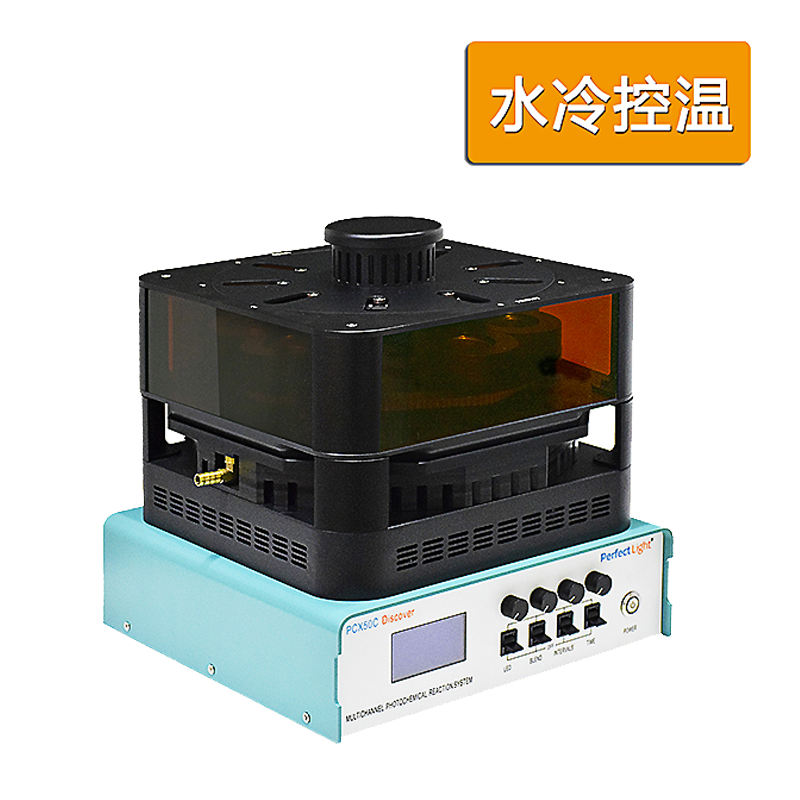
Second, rigorous kinetic control and automated workflows are key to enhancing experimental determinacy. For temperature-sensitive reactions, such as asymmetric catalysis or radical polymerization, temperature control precision directly affects product stereoselectivity. The PCX-50C system employs integrated water-cooled precision temperature control with a range of -10℃ to 80℃, effectively suppressing thermally induced side reactions. When research advances from simple activity evaluation to in-depth kinetic studies, human limitations become apparent. The MCP-WS1000 photochemical workstation was developed in this context. Essentially a "data production tool" based on physical hardware, it achieves fully automated online sampling of gas- and liquid-phase products through mechanical automatic sampling and delivery modules, completely eliminating air interference and human errors caused by manual syringe sampling.
Finally, systematic integration capability determines the depth of mechanistic research. Modern photocatalytic reaction instruments are no longer isolated devices but precise systems that can be coupled with multi-channel atmosphere controllers. For example, by pairing with the PLA-MAC1005 multi-channel atmosphere controller, researchers can precisely regulate the partial pressures of CO₂ or other reactive gases within a sealed system, enabling in-depth studies of gas molecule adsorption and diffusion behaviors on catalyst surfaces under controlled pressure conditions.
Photocatalytic reaction instruments are rapidly iterating toward high throughput, standardization, and intelligence. By introducing professional devices such as the PCX-50C and MCP-WS1000, researchers can free themselves from repetitive tasks and focus on core scientific issues such as photogenerated charge separation and product selectivity control, advancing the engineering processes of frontier technologies from water-splitting H₂ production to carbon dioxide reduction (CO₂RR).
Recommended
news