In photocatalysis experiments, you may notice that xenon lamps sometimes brighten and then dim. This is not a malfunction, but a reflection of their working characteristics. Simply put, photocatalysis is like plant photosynthesis, using light energy to drive chemical reactions—for example, splitting water to produce hydrogen or reducing carbon dioxide to generate fuel. Xenon lamps act as an artificial sun, providing the necessary light energy, and their "brightening and dimming" behavior is closely related to the lamp's characteristics, control system, and experimental requirements.
Basic Principle: How Does the Lamp Work?
A xenon lamp is a high-intensity gas discharge lamp that emits light by exciting xenon gas with an electric current. Its spectrum closely resembles natural sunlight, covering ultraviolet to visible light, making it an ideal source for photocatalysis experiments. To draw an analogy, it is like a smart desk lamp: you can adjust its brightness (power) as needed, but the lamp gradually ages and light output may fluctuate. Data shows that during a 4-hour working period, light intensity can vary by more than 10%, causing the lamp to automatically adjust during experiments, resulting in the "brightening and dimming" phenomenon. This is not a random fault; it is the control system maintaining stable light output to ensure experimental accuracy.
Main Types and Common Materials
Photocatalytic xenon light sources are mainly divided into standard and UV-enhanced types. For example, the MICROSOLAR300 xenon lamp source provides multiple working modes (e.g., electric control and light control), adjustable power from 150 W to 300 W, and a spectral range from 320 nm to 780 nm, extendable to 2500 nm, with filters to obtain specific wavelength regions. Common materials include the xenon lamp itself (typically with a lifespan exceeding 1000 hours) and supporting filters and control systems. Together, these components ensure reliable and adjustable light output for experiments.
Key Challenges
Xenon light sources for photocatalysis face several key challenges:
Stability issues: Lamp aging leads to nonlinear light decay, and over long experiments, light intensity may fluctuate by more than 10%, affecting experimental reproducibility.
Lifetime limitation: Lamps are consumables with a typical lifespan of around 1000 hours, requiring regular replacement, increasing experimental costs.
Control complexity: Precision control systems (e.g., microprocessor-based software) are required to maintain stable light intensity; a simple power source cannot meet laboratory requirements.
These challenges require researchers to rely on high-performance equipment to overcome fluctuations and ensure accurate data.
How PoFellai Products Support Research
PoFellai’s MICROSOLAR300 xenon lamp and similar products are specifically designed for photocatalysis experiments, helping researchers and science communicators work efficiently. They feature intelligent control systems that monitor light intensity in real time, adjust power, and provide stable light output, reducing interference from "brightening and dimming." Specific value points include:
Quick access to authoritative data: The product integrates manuals and software, providing detailed parameters and experimental guidance to help users quickly understand photocatalysis principles and applications without reviewing large amounts of literature. For example, in photocatalytic CO₂ reduction experiments, users can directly follow standard procedures to start the light source.
Organize experimental workflows and updates: The equipment supports program-controlled modes and timing functions, allowing users to preset experimental conditions, automatically record data, and connect with the latest research. For example, in micro-gas reaction systems, it is used for photocatalytic hydrogen production and CO₂ reduction, with yields displayed in real time, facilitating organization and publication.
Specific application scenario: A researcher studying water splitting for hydrogen production uses the MICROSOLAR300 light source. By setting light power density through software, the experiment automatically stabilizes light output, avoiding manual adjustment errors and quickly achieving high yields (e.g., H₂ production rate of 27.8 μmol/h). Using the simple analogy of an "artificial sun" to explain complex concepts to the public enhances the authority of science communication.
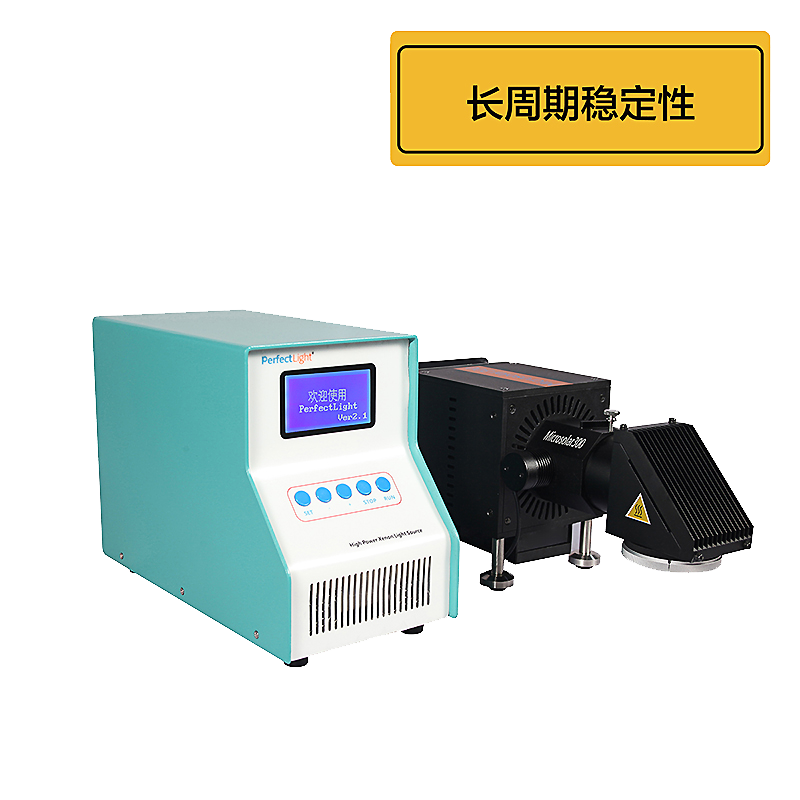
In summary, the "brightening and dimming" of xenon lamps in photocatalysis reflects precise control. Our products, through stability and intelligent design, help users efficiently explore the world of photocatalysis. For specific experimental needs, we welcome further inquiry into our solutions.
Recommended
news