Imagine the process of photosynthesis in plants—sunlight, water, and air being transformed into nutrients and oxygen with the help of chlorophyll. Photocatalytic synthesis is like “artificial photosynthesis” in the chemical world: it uses light energy to drive chemical reactions, creating new substances or converting pollutants. This technology is not only green and environmentally friendly but also holds tremendous potential in energy, environmental protection, and pharmaceuticals. This article provides an easy-to-understand overview of the basic principles, main types, common materials, current challenges of photocatalytic synthesis, and how modern tools accelerate innovation.
I. Basic Principle: How Does Light “Activate” Chemical Reactions?
The core of photocatalytic synthesis is the photocatalyst, a substance that accelerates reactions under light, similar to how chlorophyll promotes plant growth under sunlight. Simply put, when light (such as UV or visible light) shines on the catalyst surface, it excites electrons into a high-energy state. These active electrons and the corresponding “holes” (electron vacancies) act as the “helpers” in chemical reactions, capable of splitting water to produce hydrogen, reducing carbon dioxide, or synthesizing organic compounds. For example, in water splitting, the photocatalyst uses solar energy to decompose water into hydrogen and oxygen, effectively “unlocking” the water molecules with sunlight. The entire process is energy-efficient, environmentally friendly, and does not require high temperature or pressure.
II. Main Types and Applications: From Clean Energy to Drug Development
Photocatalytic synthesis includes multiple types, mainly categorized into environmental remediation and chemical synthesis:
Environmental remediation: Photocatalytic degradation of pollutants, such as breaking down formaldehyde in air or dyes in water, works like a “light-powered detergent” to purify the environment. Water splitting for hydrogen production and CO₂ reduction can convert greenhouse gases into clean fuels (e.g., hydrogen or carbon monoxide), supporting carbon neutrality.
Chemical synthesis: Used for synthesizing and modifying organic compounds, such as rapidly constructing molecular structures in drug development. Multi-channel photocatalytic reaction systems can test multiple reactions simultaneously, greatly improving efficiency, like a “multi-tasking processor.”
These applications reduce dependence on fossil fuels and open new pathways for material development.
III. Common Materials: “Family Members” of Photocatalysts
Photocatalyst materials are diverse, including:
Semiconductors: Such as titanium dioxide (TiO₂), acting as a “light-sensitive switch,” efficiently activating reactions under UV light. They are low-cost, stable, and widely used in pollutant degradation and water splitting.
Advanced composite materials: By doping or combining with other elements, their response to visible light is extended, improving efficiency. For example, Pt-loaded catalysts enhance carbon monoxide yield in photocatalytic CO₂ reduction.
These materials act as “light energy converters”—the more precise the design, the better the reaction performance.
IV. Current Challenges: Efficiency and Practicality “Roadblocks”
Despite promising prospects, photocatalytic synthesis faces three main challenges:
Efficiency: Many catalysts are sensitive only to UV light, while sunlight is mostly visible light, leading to low energy utilization. Reaction rates and product selectivity also need improvement, e.g., hydrogen generation in water splitting still requires optimization.
Stability and cost: Catalysts may deactivate over long-term use, and precious metals (e.g., platinum) are expensive, limiting large-scale applications.
System complexity: Traditional single-channel test devices are inefficient and difficult for data comparison, unable to meet multi-parameter screening needs. Precise control of reaction conditions such as temperature and light source is critical; otherwise, results vary significantly.
V. Technology Assistance: How Intelligent Tools Accelerate Photocatalytic Research
Advanced equipment, such as the PCX50C Discover Multi-Channel Photocatalytic Reaction System, plays a key role. It acts as a “smart assistant” for researchers and science communicators:
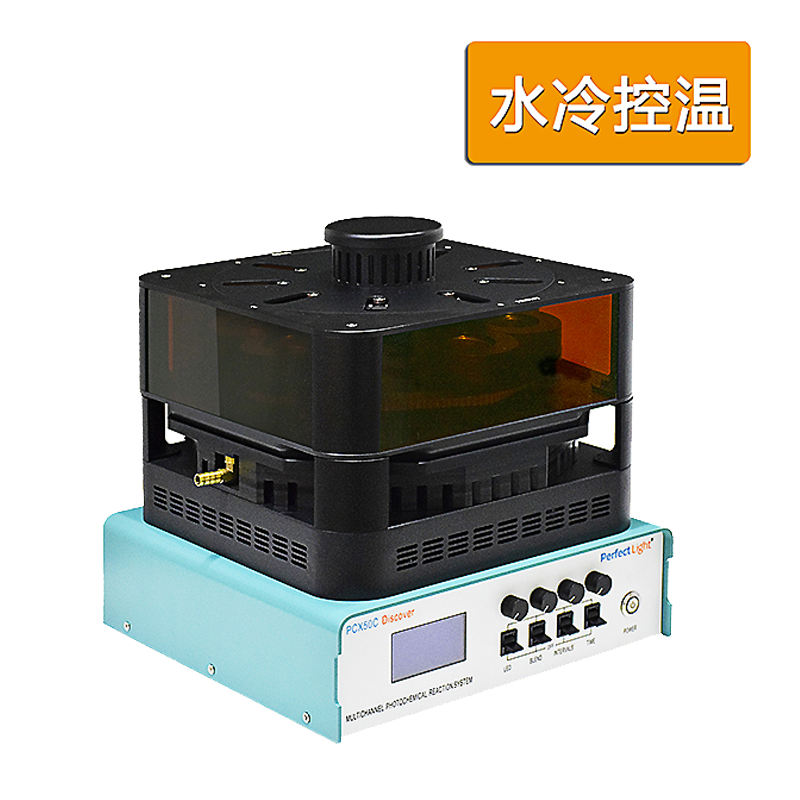
Quick access to authoritative data and process organization: The system integrates multi-channel testing and high-precision control, running multiple experiments simultaneously while automatically recording data, eliminating manual errors. Users can easily compare different conditions (e.g., catalyst type or light intensity) to quickly identify optimal setups, saving time and resources.
Specific applications:
Accelerated material screening: In drug development, the system can parallel-test multiple photocatalysts, quickly identifying highly active compounds and shortening the screening cycle from weeks to days.
Data preservation: Automatically records temperature, gas production, and other parameters, creating a traceable database useful for writing papers or project reviews. For example, in water-splitting experiments, the system monitors hydrogen production in real time to ensure data accuracy.
These features not only improve research efficiency but also allow science communicators to create engaging content based on reliable data, promoting knowledge dissemination.
VI. Future Outlook and How You Can Participate
Photocatalytic synthesis is moving toward a brighter future, and ordinary readers can get involved:
Outlook 1: Personalized energy solutions: In the future, photocatalytic technology may be integrated into home systems, such as small reactors converting CO₂ into fuel, making “every household a micro-energy station.”
Participation: Follow science education activities or online courses to learn the basics; support green technology companies; or participate in crowdsourced projects like community photocatalytic purification trials to experience the technology firsthand.
In summary, photocatalytic synthesis, with its green characteristics, is transforming our lives. With intelligent tools, research becomes more efficient—whether exploring the unknown or telling scientific stories, it lights the way toward sustainable development.
Recommended
news