Behind the scenes of modern industrial production, the management of volatile organic compounds (VOCs) remains a long-term and arduous battle. Whether in spraying, printing, or fine chemicals, these gases, which emit various odors or possess toxicity, not only directly threaten the health of workers but also serve as precursors to ozone and fine particulate matter (PM2.5). Among the various treatment technologies, microbial degradation of VOCs is often referred to as the “green scalpel” in waste gas management due to its low operating costs, environmental friendliness, and ability to completely mineralize organic compounds into CO₂ and H₂O.
From a fundamental scientific perspective, the essence of microbial degradation lies in “utilization.” Researchers select specific strains of microbes, such as Pseudomonas or Bacillus, that can use particular organic compounds as their sole carbon and energy source. In biological trickling filters or biofiltration systems, VOC molecules pass through the gas-liquid interface into the biofilm, where extracellular or intracellular enzymes secreted by the microbes facilitate a series of complex biochemical reactions, including dehydrogenation, oxidation, and decarboxylation. This transformation typically occurs at ambient temperature and pressure, avoiding the secondary pollution risks of NOₓ or dioxins that can result from traditional combustion methods. However, microbes are not “invincible”; they are highly sensitive to environmental conditions such as temperature, humidity, pH, and gas concentration fluctuations.
In the context of real laboratory research, evaluating the degradation potential of a biological material or its coupled system for various VOC components is essential for every researcher. For those with a foundational research background, the reproducibility of experimental data and the precise control of physical conditions are key benchmarks for assessing the value of results. When exploring gas-solid interfacial reaction mechanisms, researchers often require a platform that can accurately regulate feed gases and monitor reaction dynamics in real time. For example, when evaluating new bio-fillers combined with photocatalytic materials, the PLR RVTF-PM miniature gas-solid catalytic reaction evaluation device demonstrates its value as a precision research tool. This device features an integrated, compact desktop design with multi-channel gas flow precision, capable of simulating environments with varying concentrations of typical pollutants such as toluene and formaldehyde. Equipped with a high-pressure photothermal reactor and a PLC intelligent control system, researchers can capture real-time changes in the catalyst’s bulk temperature and analyze how physical energy input assists microbes in overcoming metabolic energy barriers, thereby providing crucial kinetic parameters for subsequent process scaling.
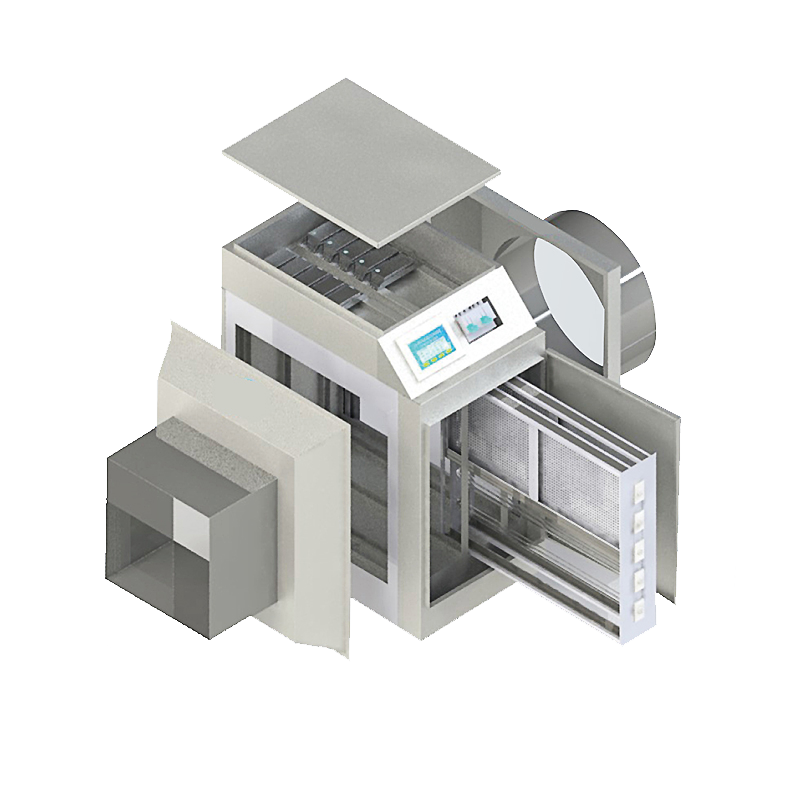
However, transitioning from laboratory-scale milligram samples to industrial-scale high-flow treatment presents significant engineering challenges for microbial technology. When dealing with large volumes and extremely low concentrations of VOCs, purely biological systems may struggle to meet emission requirements and often occupy substantial space. To address this challenge, the scientific community is moving towards a multi-field coupling approach of “adsorption-driven—advanced oxidation—biodegradation.” This concept is already emerging in some advanced waste gas purification equipment. For instance, the ZKRT-D organic waste gas cold incineration purification device cleverly combines adsorption enrichment with UV-Fenton deep oxidation technology, providing a novel “cold incineration” solution for low-concentration, high-risk, or odorous organic waste gases. In practical applications, this device employs in-situ regeneration of adsorbent materials to effectively address the issue of short residence times in high-throughput waste gas treatment. This approach, which first uses physicochemical methods for pretreatment and then utilizes biological or oxidation processes for complete destruction, significantly enhances the system’s resilience in complex industrial environments.
It is worth noting that the physical quantification in experimental design is becoming increasingly refined. To calculate the contribution of different wavelengths of light to the mineralization rate of VOCs, researchers also need to precisely measure the light power density on the illuminated surface to eliminate errors caused by light source aging. In composite treatment systems involving UV-responsive materials such as TiO₂, it is even necessary to consider the incorporation of ozone-prevention technologies to ensure laboratory air quality and the health of researchers. With the cross-disciplinary integration of photoelectrochemistry, thermocatalysis, and biotechnology, domestic precision research equipment is evolving from single-function modules to multi-dimensional, intelligent evaluation terminals.
Looking ahead, the research paradigm of microbial degradation of VOCs is shifting from “single-strain exploration” to “microbial community cooperation and energy field enhancement.” By introducing integrated systems like the PLR RVTF-PM, which offers real-time multi-parameter monitoring, and engineered equipment like the ZKRT-D with in-situ regeneration, scientists can peel away layers of environmental interference and reach the core of molecular bond cleavage and metabolic pathways. In this scientific journey toward fresh air, each rigorous degradation curve represents a steadfast step toward green chemistry and livable environments. It is these precise tools, hidden both in laboratories and industrial workshops, that are helping humanity reshape the harmonious coexistence of energy and environment.
Recommended
news