In the scientific race to address global climate change and achieve the vision of “carbon neutrality,” hydrogen energy—owing to its extremely high energy density and zero-carbon emissions at the point of use—is widely recognized as the ultimate energy carrier in future clean energy systems. Among the many pathways for hydrogen production, photocatalytic water splitting that mimics natural photosynthesis in green plants has been hailed by the scientific community as “liquid sunlight,” as it directly utilizes solar energy to split water into hydrogen and oxygen. However, for the quantum sparks generated by micrometer-scale catalytic particles in the laboratory to be transformed into usable energy in the macroscopic world, they must rely on highly specialized photocatalytic water-splitting hydrogen production equipment. Such equipment serves not only as a vessel for reactions to occur, but also as a critical scientific reference for accurately quantifying photogenerated charge conversion efficiency and elucidating reaction kinetics.
From a fundamental scientific perspective, the photocatalytic water-splitting reaction is a complex physicochemical process spanning multiple temporal and spatial scales. When incident photons are absorbed by a semiconductor catalyst, photogenerated electrons (e⁻) and holes (h⁺) are created within the material. These charge carriers must separate and migrate to the material surface within extremely short, nanosecond timescales, where they drive the hydrogen evolution reaction (HER) and oxygen evolution reaction (OER), respectively. For researchers, the central challenge lies in accurately capturing the macroscopic manifestation of these microscopic reactions. In early exploratory stages, simple flasks and manual sampling devices were often used for preliminary material screening. However, as research has progressed, the shortcomings of such rudimentary setups have become increasingly evident: interference from metal ion adsorption, infiltration of ambient air, non-uniform distribution of product gases in solution, and random errors introduced by manual operation can all strip valuable experimental data of its scientific credibility.
In research contexts that demand highly reliable data, the material properties of evaluation systems have become a primary focus for optimization. Because photocatalytic water splitting involves the generation of extremely small amounts of gas, adsorption effects on the inner walls of the system can severely interfere with quantitative analysis. Against this backdrop, the Labsolar-IIIAG Online Photocatalytic Analysis System demonstrates its professional depth as a classical evaluation platform. The system adopts an all-glass design philosophy, physically eliminating gas adsorption that may arise from metal pipelines or sealing components. This highly chemically inert environment ensures that every molecule of H₂ or O₂ released by the catalyst fully enters the detection cycle, faithfully reflecting the intrinsic activity of the material. This relentless pursuit of “material purity” forms the physical foundation for the transition of modern photocatalytic water-splitting research from qualitative observation to quantitative analysis.
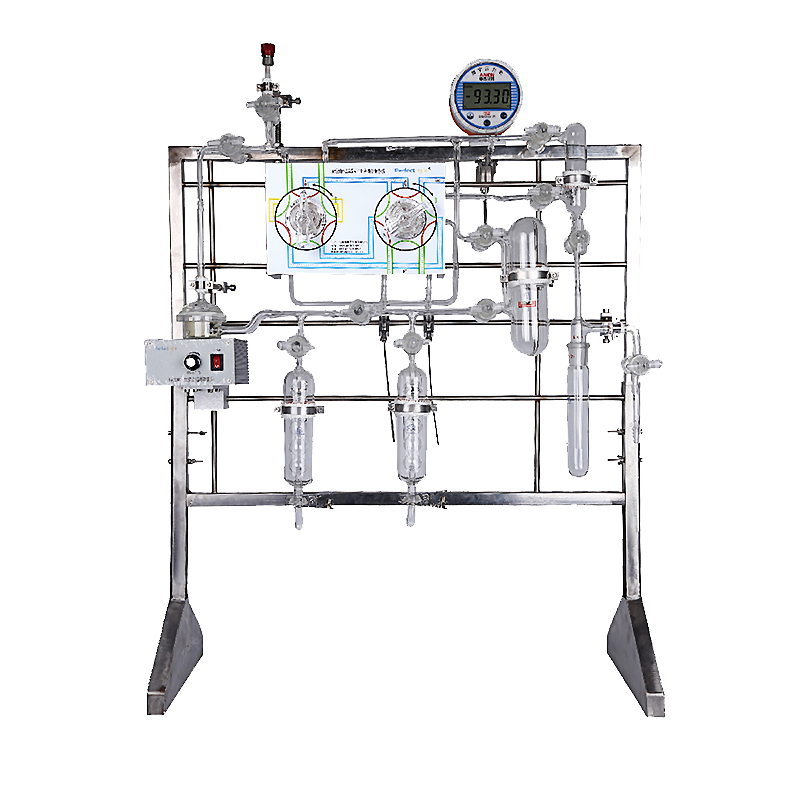
Beyond material inertness, another engineering challenge in artificial photosynthesis evaluation lies in the dynamic uniformity of reaction products. In photocatalytic reactors, product gases are often released as tiny bubbles; without active circulation, significant concentration gradients can develop within the pipelines and liquid phase. To address this issue, the magnetic circulation gas pump has become a core component. In the design of the Labsolar-IIIAG system, this passive magnetic high-speed circulation system can achieve driving speeds exceeding 4000 r/min. Of even greater scientific significance is the fact that, because there are no electrical wires within the pipeline, the risk of hydrogen explosion in high-concentration hydrogen environments is completely eliminated, while false hydrogen evolution caused by electrolytic effects due to current leakage is also avoided. This powerful and safe circulation ensures that gas components within the system reach kinetic uniformity within 10 minutes, thereby guaranteeing that the signals captured by the gas chromatograph are highly representative and that the linear regression coefficient (R²) of the calibration curve remains stably above 0.999.
In practical experimental operation, researchers often need to monitor catalyst stability over extended periods, which requires photocatalytic water-splitting hydrogen production equipment to possess excellent long-term operational capability. Since photocatalytic water-splitting reactions are typically conducted under atmospheric or slightly negative pressure conditions, the system’s gas-tightness requirements are extremely stringent. Labsolar-IIIAG employs precision-ground glass valve plugs and sleeves processed through lapping techniques, combined with high-vacuum lubricants, achieving a relative pressure change of ≤1 kPa over 24 hours. For overall water-splitting experiments that require verification of the 2:1 stoichiometric ratio of hydrogen to oxygen evolution, this stringent sealing performance effectively filters out interference from ambient nitrogen and oxygen. Through manual or automatic online sampling modes, researchers can obtain real-time yield data for trace gases such as H₂, O₂, and CH₄, and subsequently calculate the apparent quantum yield (AQY) and Faradaic efficiency of the system.
Looking ahead, research on photocatalytic water-splitting hydrogen production equipment is advancing toward greater multifunctional integration and engineering-scale validation. From reactor configurations compatible with various photoelectrodes and powder catalysts, to open platforms capable of coupling with in situ spectroscopic and mass spectrometric analyses, scientific instrumentation is becoming increasingly sophisticated. Fundamentally, this increase in precision aims to enable scientists to penetrate complex physical interferences and directly access the essence of energy conversion. By meticulously accounting for how each incident photon drives chemical bond cleavage within a unified physical coordinate system, this paradigm shift—from “material synthesis” to “system energy efficiency evaluation”—will significantly shorten the timeline for green hydrogen technologies to progress from laboratory concepts to square-meter-scale practical applications. Along this long journey of harnessing sunlight and reshaping energy systems, every incremental advancement in precision instrumentation marks a solid step toward a greener future.
Recommended
news