In research on photocatalysis, photoelectrochemistry, and solar cells, light radiation intensity (irradiance) is a core physical parameter that determines reaction rates and energy conversion efficiency. To ensure experimental reproducibility and data accuracy, researchers must perform precise calibration and measurement of the light source using a light power meter before each photochemical experiment. Proper usage involves not only instrument operation, but also a deep understanding of the spatial characteristics of the light field.
The first step is to select an appropriate light power measurement device according to experimental requirements. Different light source intensities and spectral distributions require instruments with corresponding measurement ranges and response characteristics. For example, for conventional visible-light photocatalysis experiments, the FZ-A domestic irradiance meter is an ideal portable testing tool. It adopts a high-precision, low-power digital chip, and its detector undergoes rigorous spectral and angular response calibration. With a wavelength response range covering 400 nm to 1000 nm, it is particularly suitable for measuring visible-light irradiance close to the AM 1.5G standard solar spectrum. For high-intensity experiments involving high-power xenon lamps or concentrating optical systems, the PL-MW2000 high-power light power meter should be selected. This device supports a measurement range of up to 20 W and features a unique detachable optical attenuator: when the optical power is below 5 W, direct measurement is possible; when it exceeds 5 W, the attenuator must be installed to achieve accurate readings under high-power conditions.
The second key point is mastering a scientific measurement procedure, especially for handling non-uniform light spots. Common laboratory xenon light sources (such as the Microsolar 300) often produce light spots with non-uniform power density distributions, where the central region is more intense and the intensity gradually decays toward the edges. Measuring only the central point can lead to overestimated apparent quantum yield (AQY) or incident photon-to-current conversion efficiency (IPCE). Therefore, researchers should follow national standards (such as GB/T 26915-2011) and adopt the recommended “five-point method” for measurement.
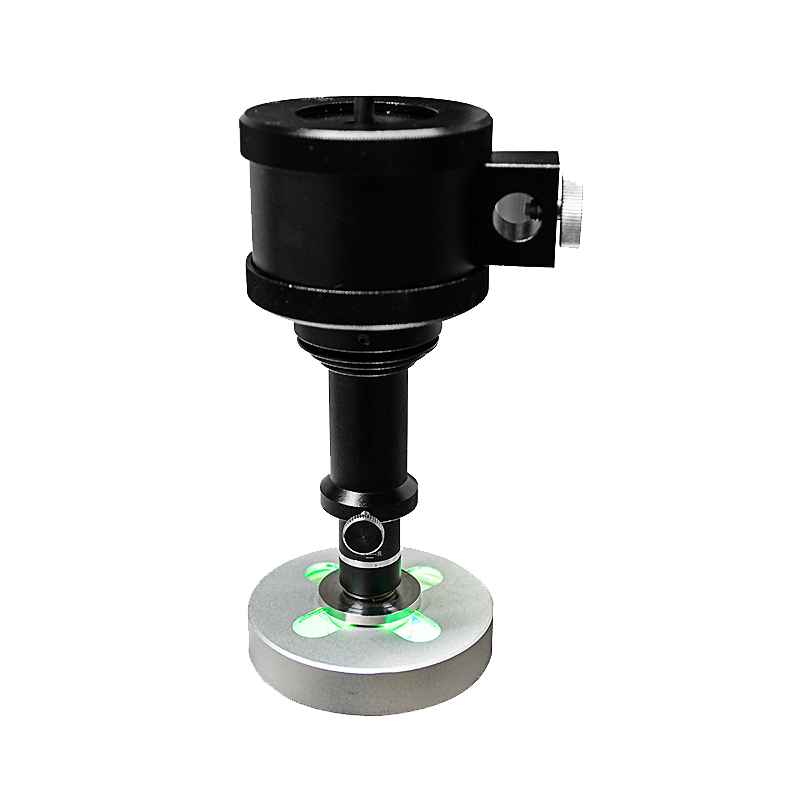
In practical operation, the PLS-FTC five-point method light power density measurement assembly can be used. First, fix the assembly at the light source output or the working surface of the reactor, and measure the irradiance at the center of the light spot (Ecenter). Then, using the sliding slot positioning, sequentially measure the values at four symmetric edge points of the light spot (Eedge1–4). Finally, calculate the average irradiance using a specific formula. This method effectively avoids interference from stray light, ensuring that the obtained data truly reflect the average energy input on the illuminated surface of the catalyst.
Finally, environmental factors and routine maintenance must not be overlooked. During measurement, ensure that the sensor probe is perpendicular to the optical axis to minimize cosine response errors. At the same time, measurements should be carried out in a light-shielded environment or using protective enclosures such as the Lightcube light enclosure to prevent ambient stray light from superimposing on the measurement results. After the experiment, keep the probe’s photosensitive aperture clean to avoid reduced light transmittance caused by dust or contaminants.
The standardized use of power meters serves as a bridge between “laboratory discoveries” and “rigorous scientific conclusions.” Through proper instrument selection, strict implementation of multi-point measurement protocols, and precise control of the measurement environment, researchers can accurately elucidate light energy conversion processes, providing solid data support for breakthroughs in new energy technologies such as efficient hydrogen (H2) production or carbon dioxide reduction.
Recommended
news