In the long quest for alternatives to fossil fuels, hydrogen has consistently been regarded as a key component in the clean energy landscape due to its high energy efficiency and environmental friendliness. Unlike conventional hydrogen production via fossil fuel reforming, “green hydrogen” produced by directly driving water splitting with solar energy outlines an almost perfect carbon-neutral cycle. Among various photocatalytic materials, graphitic carbon nitride (g-C₃N₄) has emerged as a star material in artificial photosynthesis in recent years, thanks to its metal-free composition, chemical stability, and good visible-light absorption. A deep understanding of the microscopic mechanism of g-C₃N₄ in photocatalytic water splitting is not only essential for fundamental research but also serves as a technical cornerstone for advancing this technology from the laboratory to industrial applications.
From a molecular construction perspective, g-C₃N₄ is composed of heptazine units derived from melamine, linked via nitrogen atoms to form a graphite-like two-dimensional layered structure. This unique π-conjugated system gives it a bandgap of approximately 2.7 eV. When sunlight irradiates the material, photons with energy equal to or greater than the bandgap are absorbed, exciting electrons from the filled valence band (VB) to the empty conduction band (CB), leaving behind positively charged holes in situ. These transient charge carriers are collectively referred to as photogenerated carriers. Thermodynamically, the conduction band position of g-C₃N₄ (~ -1.1 V vs. NHE) is significantly more negative than the hydrogen reduction potential, providing a natural advantage for driving proton reduction to H₂.
However, theoretical feasibility does not guarantee a smooth process. In the chain of g-C₃N₄ photocatalytic water splitting, the major kinetic barrier is the ultrafast recombination of carriers—most excited electrons recombine with holes as heat before reaching the catalyst surface to participate in reduction reactions. To overcome this, researchers often introduce cocatalysts or construct heterojunctions (such as S-scheme heterojunctions) to use built-in electric fields to spatially separate charges and extend the effective lifetime of electrons. Furthermore, morphology control to produce ultrathin nanosheets significantly shortens the migration path of carriers to the surface, thereby enhancing the efficiency of electron participation in the hydrogen evolution reaction (HER).
When validating these modification strategies in the laboratory, an extremely stable and reproducible physical environment is a prerequisite for obtaining reliable scientific conclusions. Photocatalytic experiments are highly sensitive to light intensity fluctuations, especially during long-term stability tests, where natural decay of the light source can directly distort kinetic curves. In this research context, the Microsolar 300 xenon lamp source demonstrates its professional depth as a core research instrument. It employs advanced solar simulator core technology (TSCS) and an integrated high-precision optical feedback system. This digital power management mode maintains irradiation stability within ±3% over an 8-hour period. For polymeric materials like g-C₃N₄, which have a broad absorption range, this high light intensity consistency ensures that fluctuations in hydrogen production rates are due to intrinsic material quantum efficiency changes rather than experimental artifacts.
After the photon-driven hydrogen molecules escape from the solution, precisely capturing and quantifying these trace chemical products poses another engineering challenge. Since H₂ production in g-C₃N₄ systems is typically at the micromolar level, internal system consistency and airtightness are critical. To eliminate interference from ambient air on O₂ measurements and H₂/O₂ stoichiometry, researchers prefer chemically inert platforms. The Labsolar-IIIAG online photocatalytic analysis system adopts an all-glass design, structurally preventing physical adsorption or unintended catalytic effects from metal surfaces. Equipped with a passive magnetic circulation pump, it rapidly mixes gases within the system at up to 4000 r/min, achieving kinetic distribution equilibrium within 10 minutes. This rigorous tracking of “every molecule” allows precise calculation of the apparent quantum yield (AQY), providing indisputable data support for publications in top international journals.
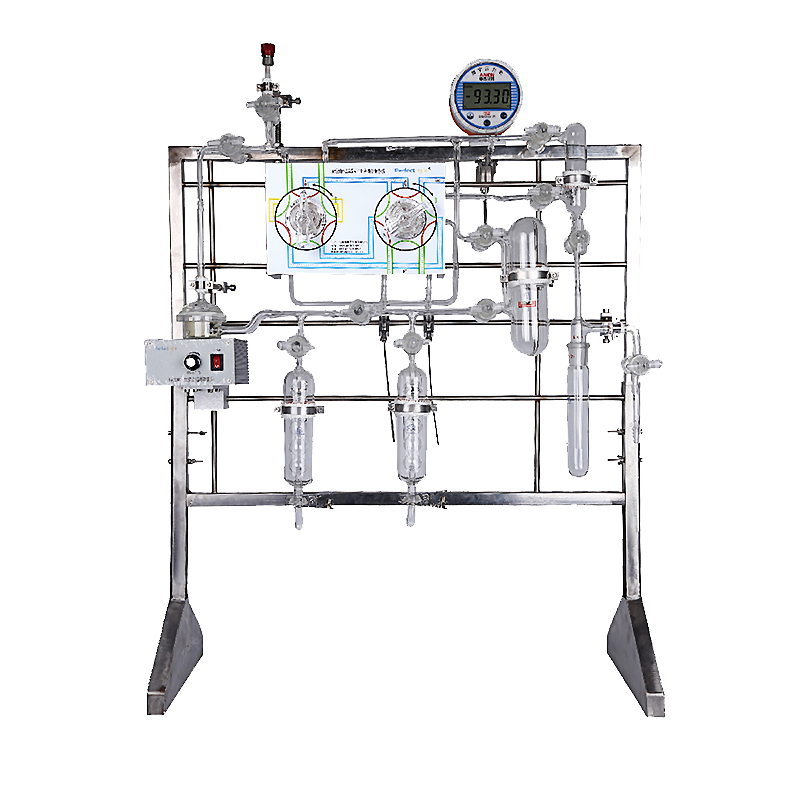
The microscopic mechanism of g-C₃N₄ in photocatalytic water splitting represents a deep interplay between electronic-level control and interfacial kinetics optimization. From precise π-conjugated band design to standardized performance evaluation based on advanced instrumentation, every breakthrough relies on meticulous adherence to physical laws. By integrating evaluation tools such as Microsolar 300 and Labsolar-IIIAG, which provide digital feedback and high airtightness, researchers can filter out experimental noise and access the essence of photochemical conversion. In the pursuit of reshaping the future energy landscape, this extreme focus on quantum efficiency and rigorous experimental paradigms drives green hydrogen technology across the laboratory “valley of death” toward large-scale hydrogen farm implementations.
Recommended
news