Artificial Photosynthesis is widely recognized by the scientific community as a pivotal technological pathway for achieving a “carbon-neutral” vision. Its core principle lies in mimicking the energy conversion processes of natural green plants: using semiconductor catalysts to capture solar energy and drive the splitting of water (H₂O) to produce hydrogen (H₂) or the reduction of carbon dioxide (CO₂) into chemical fuels. For modern researchers, this process not only involves microscopic physical mechanisms such as photon capture, charge separation, and carrier migration, but also represents a systematic engineering challenge encompassing reactor design, standardized energy input, and precise product evaluation.
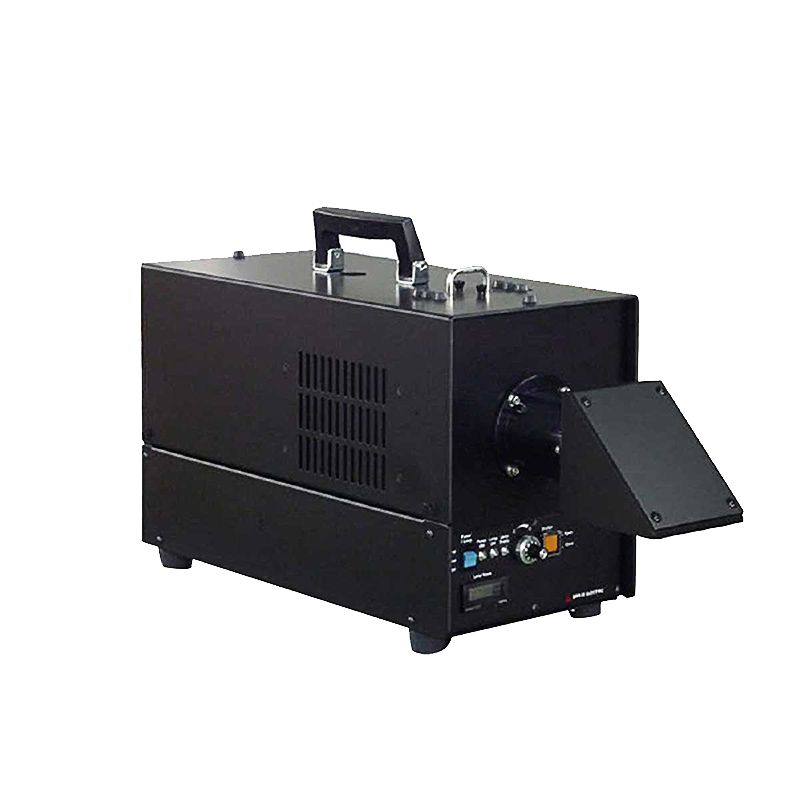
One of the primary challenges in experimental studies of artificial photosynthesis is ensuring deterministic energy input. Natural sunlight is subject to dramatic fluctuations due to geographic location, seasonal variations, and weather conditions, whereas scientific rigor demands that every set of quantum yield data be based on reproducible standards. Because photocatalytic materials are highly selective to specific spectral components, even minor fluctuations in light intensity or spectral composition can directly skew experimental results. To replicate a precise solar light environment in the laboratory, researchers typically rely on the XES-40S3-TT-200 AAA Solar Simulator. This system provides spectral matching, irradiation uniformity, and temporal stability all meeting the highest international AAA-class standards for the AM 1.5G reference spectrum. Its 1.0 sun initial irradiance serves as a standardized “energy scale” for measuring solar-to-chemical conversion efficiency (STC), ensuring data comparability across different laboratories.
Once the reaction stage begins, another major technical bottleneck in artificial photosynthesis is the accurate quantification and evaluation of products. Whether it is H₂ and O₂ from complete water splitting or CO and CH₄ from CO₂ reduction, the products are typically produced at micromolar (µmol) levels in laboratory-scale experiments. Traditional offline syringe sampling methods are not only cumbersome but also prone to errors caused by air leakage or system re-adsorption, compromising the linearity and reliability of the measurements and obscuring the intrinsic activity of the catalysts. To overcome this limitation, the μGAS1001 Trace Gas Reaction Evaluation System has become a critical tool for transitioning the field from qualitative observation to quantitative analysis. The system integrates a patented sampling valve island design to enable fully automated closed-loop sampling from the reactor to the detection terminal, with a dynamic oxygen leakage rate strictly controlled below 0.1 µmol/h. This high degree of airtightness, combined with a passive magnetic-driven fan pump for circulation, ensures that reaction products reach kinetic uniformity within 10 minutes, providing scientific-grade data support for calculating apparent quantum yield (AQY).
From a broader engineering perspective, artificial photosynthesis is gradually moving beyond the confines of “laboratory bottles and flasks.” The “Hydrogen Farm” strategy proposed by Academician Li Can’s team is guiding the technology toward square-meter-scale and even larger arrayed production, spatially decoupling photoreactions from catalytic reactions to efficiently address the challenges of light dilution and product separation. In summary, the future of artificial photosynthesis lies not only in the development of novel high-performance materials but also in the deep integration of precise light-field management and automated evaluation systems. By combining high-precision solar simulators like the XES-40S3-TT-200 with highly sensitive evaluation platforms such as the μGAS1001, humanity is steadily transforming the wisdom of natural energy conversion into scalable, green industrial power.
Recommended
news