Artificial photosynthesis, as a highly promising technological pathway for achieving the “carbon-neutral” vision, fundamentally aims to emulate the photosynthetic processes of green plants, using solar energy to drive water (H₂O) splitting for hydrogen (H₂) production or carbon dioxide (CO₂) reduction into chemical fuels. Within this complex energy conversion chain, a photosynthesis reactor is not merely the “stage” for catalyst performance; it is an integrated chemical factory combining photon capture, charge carrier transport, and fluid mass transfer. For researchers, the physical configuration and engineering design of the reactor often determine the success of scaling laboratory-scale experiments to industrial applications.
At the laboratory scale, overcoming the common “light-shielding effect” in conventional stirred reactors is a primary challenge for enhancing reaction rates. Due to the severe scattering of light by catalyst suspensions, incident photons often penetrate only a few microns into the reaction liquid, leaving active sites in the reactor core largely dormant. To address this, the concept of flow chemistry has been introduced into photocatalysis. The PLR PMCD-G20 Plate Microchannel Photoreactor employs precisely engineered microchannels to compress the liquid film thickness to sub-millimeter dimensions. This design not only matches the photon penetration depth with the reaction medium, significantly increasing the proportion of effectively irradiated area, but also leverages the 3D channel-induced mixing effect to enhance mass and heat transfer by several folds. Such high photon utilization and mass transfer efficiency provide clear scientific advantages for exploring expensive intermediate syntheses or optimizing continuous-flow reaction conditions.
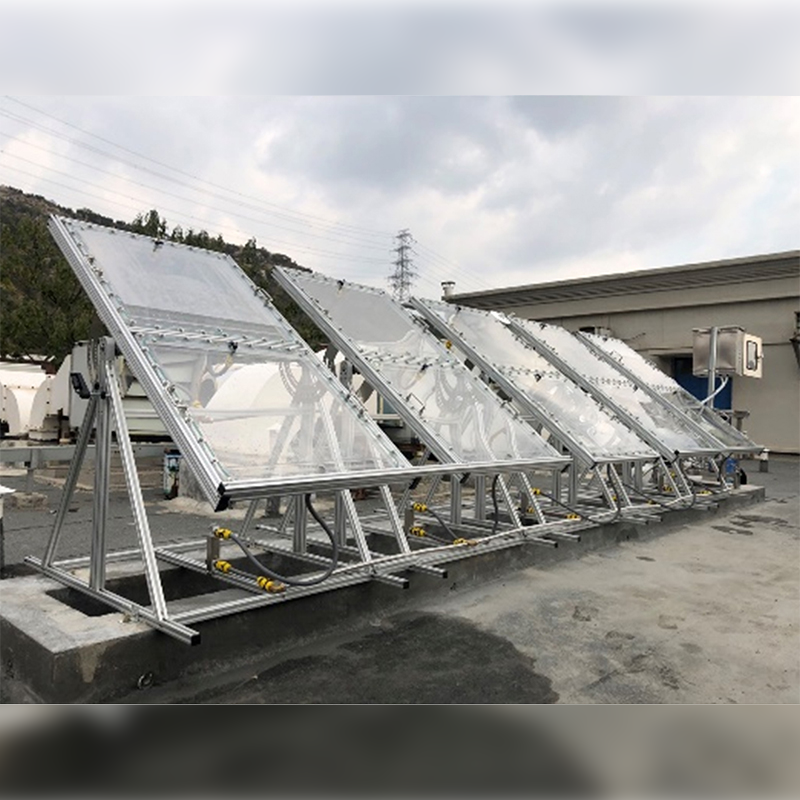
When the research focus shifts from small-scale laboratory studies to large-area industrial validation, reactor design logic emphasizes light uniformity and system stability under scale-up conditions. In recent years, the “Hydrogen Farm” strategy proposed by Academician Li Can’s team at the Chinese Academy of Sciences has offered a new paradigm for scaled photosynthesis production. Under this strategy, photocatalytic reactors evolve into flat, plate-like structures to maximize the efficient utilization of direct sunlight. The PLR-SPR Series Flat-Plate Photochemical Reactor embodies this engineering concept. Compared to conventional cylindrical vessels, flat-plate reactors use thin liquid layers and built-in turbulence-enhancing layers, greatly improving the contact probability between reactants and catalysts, while ensuring that catalysts receive highly uniform irradiation across square-meter-scale light-exposed surfaces. This configuration effectively mitigates side reactions caused by localized overheating and exhibits low scale-up effects, laying the engineering foundation for smooth scaling from centimeter-scale laboratory experiments to square-meter arrays.
However, an efficient reaction system must be supported by rigorous evaluation. In photosynthesis reactions, products such as H₂, O₂, or low-carbon hydrocarbons typically exist in trace gas forms, and their detection precision directly affects the reliability of apparent quantum yield (AQY) calculations. Modern photocatalysis evaluation terminals, such as the μGAS1001 Trace Gas Reaction Evaluation System, employ a patented sampling valve island design to achieve fully automated closed-loop sampling from the reactor to the analytical terminal, with dynamic oxygen leakage controlled below 0.1 μmol/h. This highly gas-tight closed-loop system not only effectively prevents air interference from manual operations but also ensures that experimental data faithfully reflect the intrinsic activity resulting from catalyst–reactor synergy.
In summary, the evolution of artificial photosynthesis reactors reflects a profound shift in photocatalysis research from a material-centric to a system-engineering-centric approach. By integrating high-throughput microchannel terminals like the PLR PMCD-G20 with large-area engineering demonstration devices such as the PLR-SPR series, researchers are progressively elucidating photon–matter interactions across different scales. This not only provides theoretical support for developing highly efficient and stable photosynthesis devices but also drives green energy technologies from laboratory concepts toward scalable industrial implementation.
Recommended
news