Among various analytical techniques, gas chromatography is frequently employed in photothermal catalytic research due to its high sensitivity to volatile components and strong separation capabilities. Whether it’s CO₂ reduction, methane dry reforming, or ammonia decomposition, researchers often need to quickly determine whether a reaction has started and whether selectivity has changed, with these insights often hidden in subtle differences in gas products. Gas chromatography provides a relatively straightforward and mature approach to transforming complex reaction outcomes into comparable data.
From a research perspective, early photochemical experiments focused more on liquid or solid-phase products, but as reaction temperatures and energy inputs increased, the importance of gaseous products gradually became more prominent. Photothermal catalysis does not rely solely on photons or heat, but rather on their synergistic effects, leading to more diverse reaction pathways and higher demands on detection methods. In this process, gas chromatography plays the role of a “referee,” distinguishing whether the catalytic contribution comes from light effects, thermal effects, or their combination.
In practical experimental design, researchers often integrate gas chromatography systems with reaction setups. For instance, in building a photothermal reaction platform, the exhaust gases are directly introduced into a laboratory gas chromatography system equipped with a thermal conductivity detector, allowing continuous monitoring of small-molecule products such as H₂, CO, and CH₄. This configuration does not prioritize complex automation but emphasizes data stability and reproducibility, facilitating horizontal comparisons across different catalytic materials or illumination conditions.
As research shifts from asking “whether the reaction occurs” to “what the reaction mechanism is,” the requirements for gas-phase analysis also increase. In photothermal studies involving multi-carbon products or trace by-products, researchers may incorporate gas chromatography modules with flame ionization detectors to enhance the resolution of hydrocarbon products. Such configurations are often used to evaluate changes in catalyst selectivity over long-term operation, providing clues about material deactivation mechanisms.
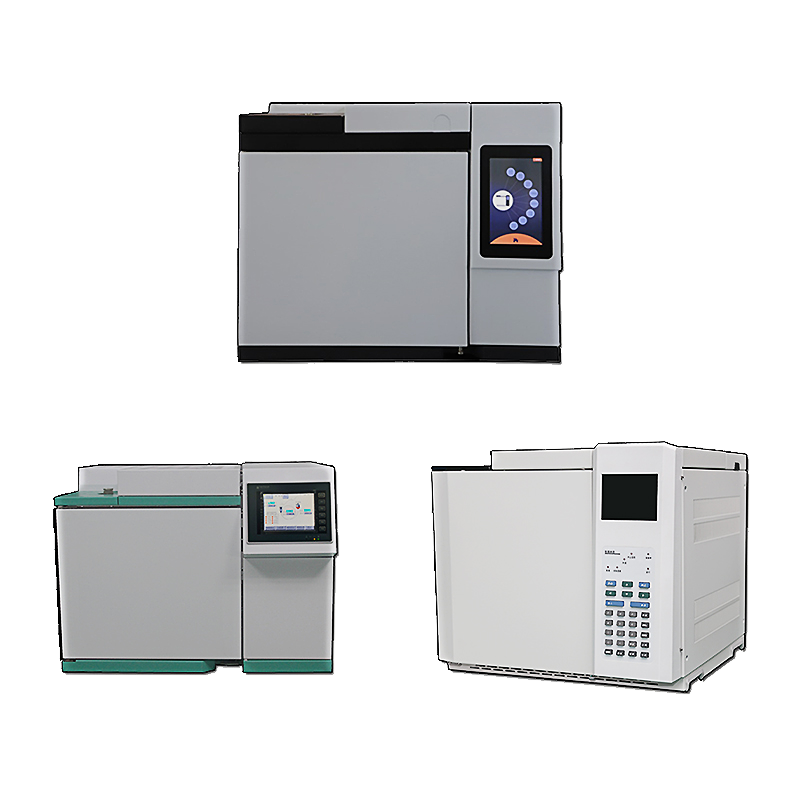
As experiments scale up or become continuous, the role of gas chromatography also evolves. In pilot-scale photothermal reaction studies, online gas chromatography systems begin to be used for real-time monitoring of reaction conditions. Compared to offline sampling and analysis, online detection can more rapidly reflect the impact of light intensity fluctuations and feed ratio changes on reaction outcomes, which is particularly important for assessing the controllability of the reaction process. Through continuous data accumulation, researchers can more intuitively judge whether a photothermal system has engineering potential.
Of course, gas chromatography is not a panacea. In photothermal catalytic research, high temperatures, high humidity, or corrosive gases can pose challenges to the stable operation of chromatography systems. Balancing analytical precision with minimizing the impact of samples on the chromatographic column and detectors is a recurring consideration in experimental design. This also encourages researchers to incorporate analytical methods into the overall experimental plan from the outset, rather than as an afterthought.
From a longer-term perspective, gas chromatography remains valued in the field of photothermal catalysis not merely because it is “useful,” but because it provides a pathway to quantify and visualize complex reaction processes. As photothermal catalysis progresses from concept validation to application exploration, this reliable gas analysis capability will continue to support researchers in understanding the reaction’s nature and assessing its engineering feasibility.
Recommended
news