At the forefront of contemporary energy chemistry, photothermal synergistic catalysis is emerging as a focal point for reshaping the zero-carbon chemical landscape through its enhancement effects that go beyond single energy fields. This technology integrates the quantum excitation of photons with the thermal effects of infrared radiation, significantly lowering the energy barriers of high-energy reactions such as CO₂ reduction or methane reforming. However, for researchers, designing an efficient catalyst is only the first step; the real challenge lies in accurately characterizing the material’s true physical state under illumination and heating. This brings to the fore the crucial role of physical characterization. It is not merely a matter of listing parameters, but rather a “scientific eye” for deeply understanding how chemical bonds break and reform on the catalyst surface.
From a fundamental scientific perspective, the efficiency of photothermal catalytic reactions heavily relies on the catalyst’s ability to adsorb reactant molecules and the transport properties of photogenerated charges. In traditional characterization systems, researchers often only observe materials statically before and after the reaction, which can obscure transient information during the reaction. To capture the active sites on the catalyst surface in real time, in-situ characterization techniques have emerged. When exploring the distribution of acidic sites on the catalyst surface or the chemisorption behavior of small molecules (such as CO, NO, CH₃OH, etc.), the PL-HV in-situ high-vacuum infrared spectroscopy system demonstrates its depth as a professional characterization tool. By using all-glass materials, it completely eliminates interference from metal adsorption, allowing researchers to clearly observe interactions between probe molecules and the catalyst surface in medium to high vacuum conditions. This precise characterization of surface states provides irrefutable physical evidence for optimizing material loading processes and elucidating reaction pathways.
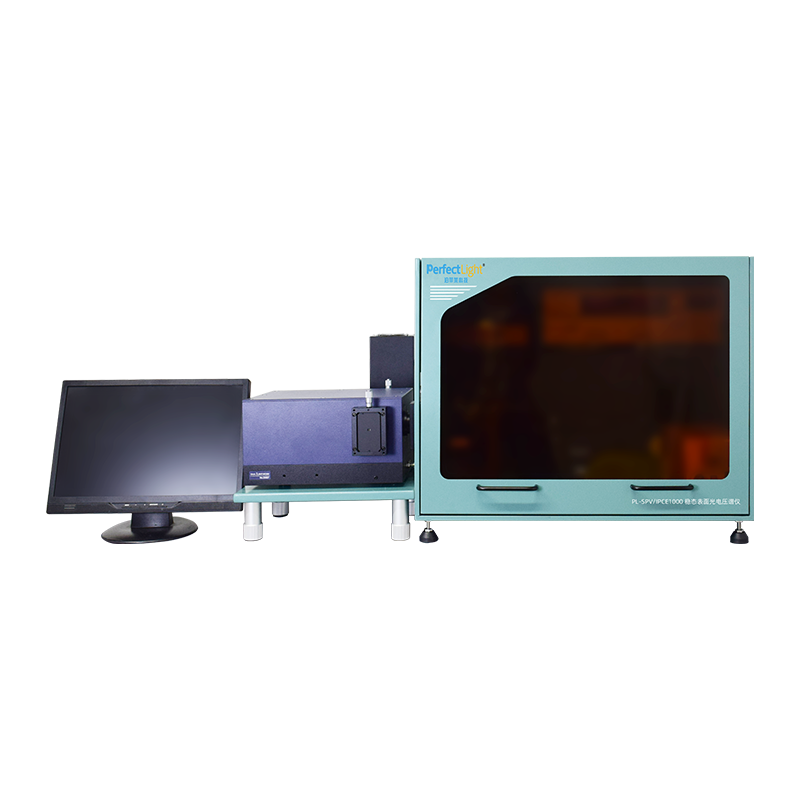
Beyond surface chemistry, the internal photogenerated charge dynamics of semiconductor materials are the “soul” of quantum efficiency. Under photothermal synergy, thermal energy not only promotes molecular vibrations but also helps charge carriers overcome barriers, reducing electron-hole recombination. To quantify this process, surface photovoltage (SPV) technology, known for its non-contact, non-destructive, and high sensitivity, has become a standard in modern photoelectric material research. Using the PL-SPV/IPCE1000 steady-state surface photovoltage spectrometer, researchers can identify the semiconductor’s conductivity type and distinguish subtle differences between band-to-band transitions and sub-bandgap transitions. This technology provides key information on carrier diffusion length, direction, and heterojunction charge transfer, helping researchers understand the separation and recombination patterns of photogenerated charges on a nanosecond scale. Through the accumulation of such precise data, scientists can peel away the noise from the physical environment and directly probe the microscopic nature of charge transport within the semiconductor’s bulk and interface.
As research paradigms progress toward pilot-scale expansion and engineering demonstration, the objects of characterization shift from milligram-scale powdered materials to square-meter-scale flat reactors. During this process, the challenges of scaling effects become increasingly prominent: catalysts that perform excellently in laboratory glassware may experience significant performance drops in scaled-up systems made of stainless steel or high-pressure reactors due to uneven heat transfer, reduced mass transfer efficiency, or material interference. At this point, precise characterization plays a vital role in providing fundamental kinetic data for process design. For example, in stability validation for large-area illuminated surfaces, multi-dimensional system evaluations of material responses under varying light power, temperature, and pressure can effectively guide the optimization of reactor materials and catalyst loading processes. This transition from “microscopic analysis” to “macroscopic adaptation” is an essential pathway for photothermal technology to move from the laboratory to industrial-scale applications.
In conclusion, precise characterization is driving catalytic science from qualitative exploration to multi-dimensional precision control. Whether using high-chemical-inertness in-situ cells like the PL-HV to investigate molecular adsorption or employing SPV technology for accurate measurement of charge dynamics, each iteration of high-performance characterization equipment strengthens the experimental foundation of clean energy research. It is these hidden tools behind the lab bench that help scientists peel away experimental noise and guide them in the symphony of light, heat, and matter, ultimately seeking the scientific truths that pave the way to a zero-carbon future. With the deep integration of digital feedback technology and intelligent evaluation terminals, we have every reason to believe that humanity’s pursuit of energy conversion efficiency will transcend microscopic limitations and achieve scientific breakthroughs on a broader engineering scale.
Recommended
news