In humanity’s quest for energy independence and the reconstruction of a low-carbon civilization, utilizing solar energy to drive water splitting or greenhouse gas conversion is regarded as a core pathway toward the future vision of carbon neutrality. For researchers at the forefront of science, achieving breakthroughs in this game of mimicking natural artificial photosynthesis requires not only the development of efficient catalytic materials but also the establishment of a standardized, stable, and precise physical field environment. Within this evaluation paradigm, large-area photocatalytic xenon light sources play an irreplaceable role. They are not only the energy source for the reactions but also a crucial bridge for translating laboratory results into practical applications.
From the perspective of fundamental physics, the starting point of a photocatalytic reaction lies in the semiconductor material’s capture of photons. When the energy of incident photons exceeds the material’s bandgap, the excited electrons jump from the valence band to the conduction band, leaving behind positively charged holes and forming photo-generated charge carriers. These charges subsequently migrate to the catalyst surface to drive redox reactions. Xenon lamps have become the preferred choice for research due to their continuous spectrum generated by high-pressure xenon gas discharge, which closely matches the natural solar spectrum from 300 nm to 2500 nm. This near-perfect “artificial sun” characteristic allows researchers to observe the intrinsic response of materials across the entire spectral range.
However, as research scales from centimeter-sized small samples to larger catalytic films and integrated reactors, illumination uniformity becomes a critical engineering challenge. Traditional xenon lamps often output a Gaussian light distribution, with higher intensity at the center and rapid decay at the edges. Uneven light intensity can introduce significant statistical errors when calculating apparent quantum yield (AQY), potentially leading researchers to misinterpret the kinetics of the catalyst. To address this challenge, the CHF-XM series xenon light sources demonstrate technical sophistication as precision research tools. The system adopts a modular design, allowing free switching between point-source and collimated light output modes. In collimated mode, specialized optical components shape the beam to provide a uniform light spot approaching that of a solar simulator, with minimal divergence, effectively solving the experimental reproducibility issues caused by uneven irradiance. For teams working on large-area thin-film photocatalysis or PEC photoelectrochemical studies, this uniform light field ensures that every inch of the catalytic surface undergoes charge exchange under a consistent energy scale.
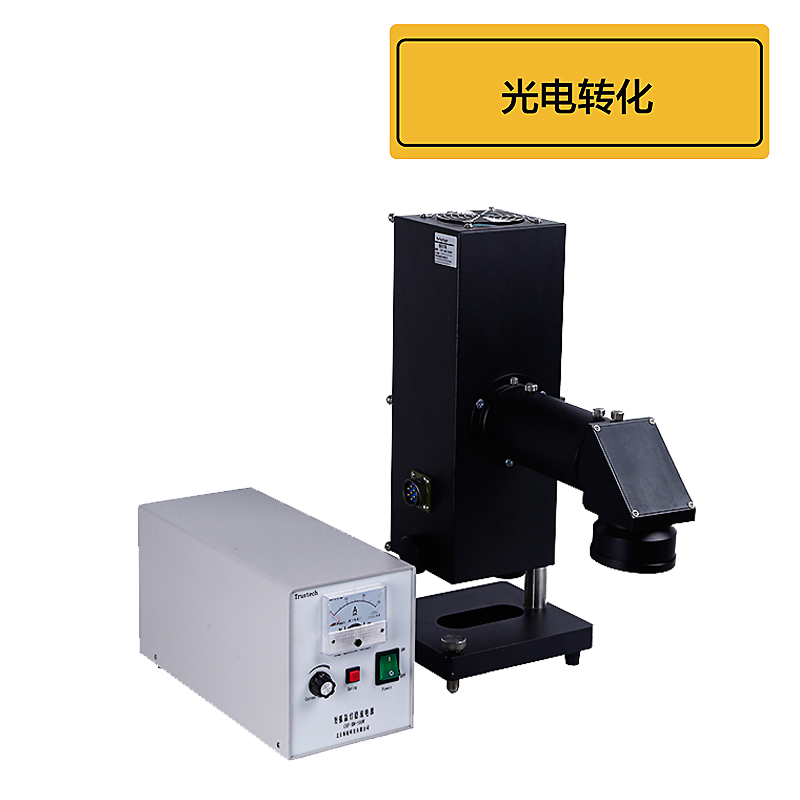
Beyond spatial uniformity, temporal stability is equally critical for the credibility of experimental data. During long-term water splitting or CO₂ reduction stability tests, minor fluctuations in the light source can directly contaminate kinetic curves. To ensure traceable data in line with international standards, advanced laboratories often introduce higher-level evaluation equipment. The XES-40S3-TT-200 AAA-class solar simulator stands out in this regard. With a 40×40 mm² irradiation area, its spectral matching, illumination uniformity, and temporal instability all strictly comply with AAA-class international standards. Temporal instability is less than 1%, meaning even during hours or days of continuous experiments, deviations in input energy are minimized. Additionally, the dual-shutter timer function allows researchers to precisely control the illumination duration down to 0.1 seconds, providing critical value for studying material transient responses or accelerated aging experiments.
In practical research, constructing a standardized reference environment is essential for inter-laboratory comparability. The AM 1.5G solar spectrum is widely recognized in the photovoltaic and photocatalysis fields, specifying an irradiance of 1000 W/m². By installing solar spectrum correction filters in the xenon light path, excessive high-energy peaks in the infrared region can be filtered out, producing an output spectrum closer to real atmospheric conditions. This meticulous tuning of light, combined with evaluation platforms like the XES-40S3-TT-200 featuring digital feedback and high precision, allows scientists to eliminate physical interference and accurately calculate solar-to-hydrogen conversion efficiency (STH) within a stable physical coordinate system.
Engineering challenges also extend to thermal management and safety. Xenon lamps generate substantial thermal radiation during operation. Without proper heat dissipation, localized high temperatures can shorten lamp life, trigger thermal degradation of catalysts, or cause evaporation of the reaction solution. Advanced devices typically employ patented axial airflow cooling structures along with delayed shutdown fans and other protective features to ensure long-term reliability under high-power output. Additionally, for researchers studying wide-bandgap semiconductors such as TiO₂, using UV-enhanced bulbs with specific bandpass filters can significantly improve the photo-generated current response in targeted spectral bands without increasing thermal load, allowing more precise quantification of catalyst behavior at the UV edge.
In summary, the research paradigm for large-area photocatalytic xenon light sources is evolving from simply “simulating brightness” to achieving “full-dimensional precise control.” From the collimated beam shaping technology of the CHF-XM series to the AAA-class international standard certification of the XES-40S3 series, each iteration of precision research equipment strengthens the experimental foundation for green hydrogen technology and artificial photosynthesis. These behind-the-scenes tools that provide stable light and shadow are guiding researchers through experimental noise, enabling the exploration of the scientific truths of light–matter interactions and paving a clear path toward a zero-carbon future. In this challenging energy game, every set of rigorous spectral response data represents a steadfast footprint of human ingenuity reshaping the global energy landscape.
Recommended
news