In humanity’s grand pursuit of energy independence and the reconstruction of a low-carbon energy system, harnessing solar energy to drive water splitting or greenhouse gas conversion is widely recognized as a core pathway toward the future goal of carbon neutrality. For researchers on the front lines of science, making breakthroughs in this simulation of natural artificial photosynthesis requires not only the development of highly efficient catalytic materials but also the establishment of a standardized, stable, and precise physical field environment. At the heart of this environment lies the laboratory xenon lamp light source photochemical reactor. This system not only provides the energy source required for reactions but also enables comprehensive kinetic monitoring from molecular-level quantum excitation to macroscopic product quantification, making it a true “energy conversion hub” within the laboratory.
From a fundamental physics perspective, photocatalytic reactions begin with the capture of photons by semiconductor materials. When the energy of incident photons exceeds the material’s bandgap, excited electrons jump from the valence band to the conduction band, leaving positively charged holes behind, thereby forming photo-generated charge carriers. These charges must escape recombination traps within nanoseconds and migrate to the catalyst surface to drive redox reactions. The xenon lamp’s prominence in laboratories stems from its ultra-high-pressure xenon gas discharge, which produces a continuous spectrum that closely matches the natural solar spectrum from 300 nm to 2500 nm. This near-perfect “artificial sun” characteristic allows researchers to observe the intrinsic responses of materials across the full spectral range rather than being limited to excitation at a single wavelength.
However, in real experimental contexts, ensuring “absolute stability” of photon output is critical for the credibility of experimental data. During long-term stability tests of water splitting or carbon dioxide reduction, even minor fluctuations in light output can contaminate kinetic curves, leading researchers to misinterpret catalyst deactivation mechanisms. To address this challenge, the Microsolar 300 xenon lamp light source demonstrates profound engineering sophistication. This system incorporates advanced solar simulator core technology (TSCS) and a high-precision optical light feedback module. Through digital power management, long-term irradiation instability can be strictly controlled within ±3%. For teams seeking precise calculation of apparent quantum yield (AQY), this stability ensures that every observed fluctuation in hydrogen production rate originates from the intrinsic activity evolution of the material rather than background physical noise. Furthermore, with the integration of AM 1.5G filters, it provides a standard light intensity benchmark, enabling scientific comparability between different laboratories.
With a stable artificial sun in place, the next challenge is how to efficiently “collide” energy with matter, which relates to the structural design of the photochemical reactor. Depending on the spatial relationship between the light source and the reactor, systems are generally categorized as either internal-illumination or external-illumination reactors. Internal-illumination reactors place the lamp tube at the center of the liquid phase using a cold trap, achieving nearly 360° light exposure and significantly improving light energy utilization. External-illumination reactors rely on high-transmittance optical windows, such as high-borosilicate glass or quartz, to ensure that ultraviolet and visible light enters the reaction system in its “original form.” In both cases, engineering challenges focus on mass transfer efficiency at the reaction interface and temperature control. Since xenon lamps generate substantial thermal radiation during operation, inadequate heat dissipation can cause local overheating of the reaction solution, triggering side reactions or accelerating thermal degradation of the catalyst. Consequently, reactors equipped with efficient condensation-reflux systems and precise temperature-controlled circulation have become the standard in modern photochemical research.
Once trace gas molecules generated by photon-driven reactions escape from the solution, accurately capturing them and confirming their compliance with theoretical stoichiometry is another critical requirement for the evaluation system. Photocatalytic products such as H₂, O₂, or CO typically exist at micromolar levels, making physical consistency and airtightness within the system essential. To eliminate potential adsorption on metal pipelines or oxygen ingress from the environment, the Labsolar-IIIAG online photocatalytic analysis system adopts an all-glass design. This structural choice prevents catalytic interference from metal surfaces on hydrogen molecules and is equipped with a patented passive magnetic high-speed circulation pump. Operating at speeds no less than 4000 r/min, it drives the system’s internal gases to achieve kinetic distribution equilibrium within 10 minutes. This meticulous tracking of “every molecule” allows researchers to obtain standard curve regressions with R² > 0.999, providing solid underlying data for calculating Faradaic efficiency and effectively removing systematic errors introduced by the experimental apparatus.
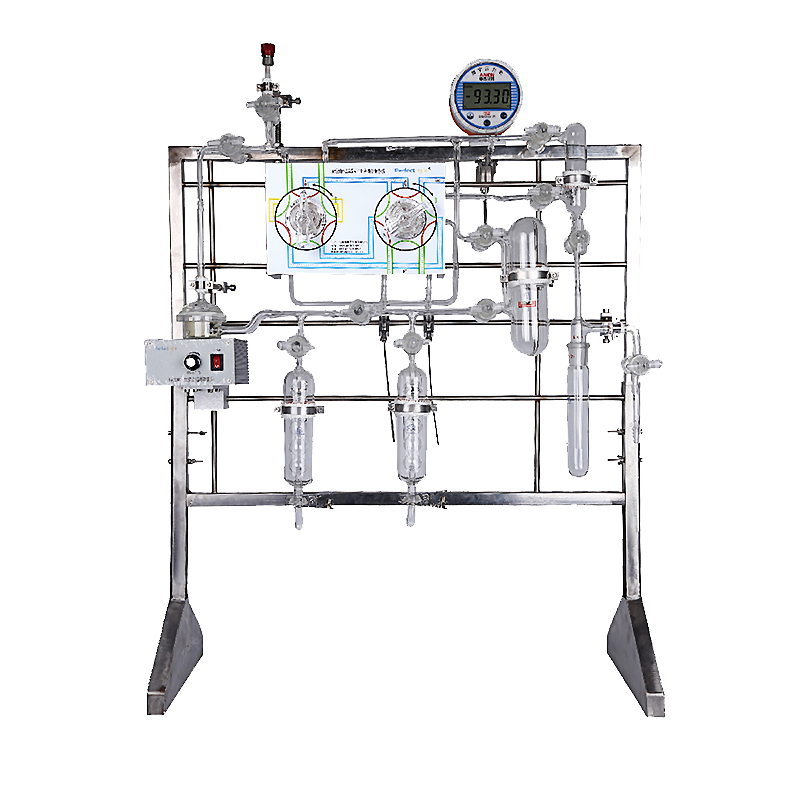
Looking ahead, the research paradigm of laboratory xenon lamp light source photochemical reactors is evolving from a single “light-field coupling” approach toward multi-energy field synergy. By introducing magnetic, electric, or thermal fields into the reaction vessel, researchers aim to break the limitations of a single energy source and explore synergistic catalytic mechanisms where “1+1>2.” As the academic exploration of hydrogen farms scales up, precise laboratory evaluation gradually translates into outdoor engineering demonstrations under natural sunlight. Until this transition is complete, laboratory precision remains the compass for scientific discovery. By integrating digital-managed light sources like Microsolar 300 with highly inert evaluation terminals such as Labsolar-IIIAG, scientists can penetrate layers of physical interference to reach the essence of photochemical conversion. This relentless pursuit of quantum efficiency and rigorous adherence to experimental paradigms is the driving force propelling green hydrogen technologies to reshape the future energy landscape.
Recommended
news