In the context of semiconductor physics, the energy conversion efficiency of solar cells is a core parameter that governs the application of photovoltaic technology. However, macroscopic efficiency across the full spectrum often masks the material’s dynamic shortcomings at specific energy levels. To truly understand the performance boundaries of a device, researchers must introduce the IPCE testing for solar cells to characterize the coupling relationship between the material’s photoelectrochemical response efficiency and light power, wavelength, and potential. This process is essentially a comprehensive measurement of photon capture, the excitation of photo-generated charge carriers (electrons and holes), bulk separation, and interfacial migration. When the energy of incident photons exceeds the material’s bandgap, whether the excited charges successfully escape recombination traps and are collected as current is directly reflected in the spectral response curve obtained from the test.
Conducting rigorous IPCE testing faces extremely high technical barriers, with the primary challenge being the weakness of the signals. In the laboratory, the power density of monochromatic light after dispersion is far lower than that of natural sunlight, and the resulting photocurrent is often in the microampere (μA) or even picoampere (pA) range. At these levels, environmental electromagnetic noise, stray indoor lighting, and even slight thermal drift of the current can easily drown out genuine quantum signals. To extract pure photoelectric signals from this noisy physical background, the PL-IPCE solar cell testing system demonstrates its professional depth as a precision research tool. This system innovatively integrates the Stanford SR830 lock-in amplifier and SR540 chopper, utilizing the strong temporal correlation between the photocurrent and modulated light signal to efficiently filter out incoherent background noise through frequency-locking. This high signal-to-noise ratio detection environment enables the system to accurately characterize the intrinsic optical responses of catalytic materials across a dynamic range from 1 pA to 1 μA, ensuring that even materials with extremely low quantum yields can have their spectral response features precisely calibrated.
In addition to the sensitivity of signal capture, the accuracy and continuity of monochromatic light are also vital for experimental research. The traditional “light source + filter” approach, while simple, often cannot achieve continuous scanning across the entire wavelength range and suffers from broader bandwidths that are insufficient for deep analysis of complex band structures, such as sub-bandgap transitions or defect-induced responses. Modern testing systems, such as the PL-IPCE, employ a precise triple-grating monochromator design, ensuring that the output monochromatic light has an accuracy of ±0.2 nm and is continuously tunable from 200 nm to 1000 nm. This near-precise spectral accuracy allows researchers to finely measure the subtle adjustments in quantum yield of materials before and after modification, providing irrefutable data to support the construction of efficient heterojunctions or the tuning of interfacial dipole moments. Additionally, the system is equipped with a standard UV-enhanced silicon detector certified by the Chinese Academy of Metrology, ensuring that measurement data is traceable to ISO9000 standards, greatly enhancing the scientific credibility of the research.
In practical research contexts, building a standardized irradiation environment is crucial for ensuring comparability of experimental results. AM 1.5G, as the standard reference spectrum for solar energy conversion systems in the photovoltaic field, stipulates an irradiance of 1000 W/m². To simulate this real natural condition, the XES-40S3-TT-200 AAA-grade solar simulator becomes a core auxiliary equipment in the laboratory. This simulator meets the stringent AAA-level international standards for spectral matching, irradiation uniformity, and temporal stability, with time instability less than 1%. Before or concurrently with IPCE testing and I-V characteristic analysis, using such a high-grade simulator to provide stable background bias light effectively simulates the charge carrier filling state in a real operating environment, thereby obtaining more engineering-relevant apparent quantum yield (AQY) data.
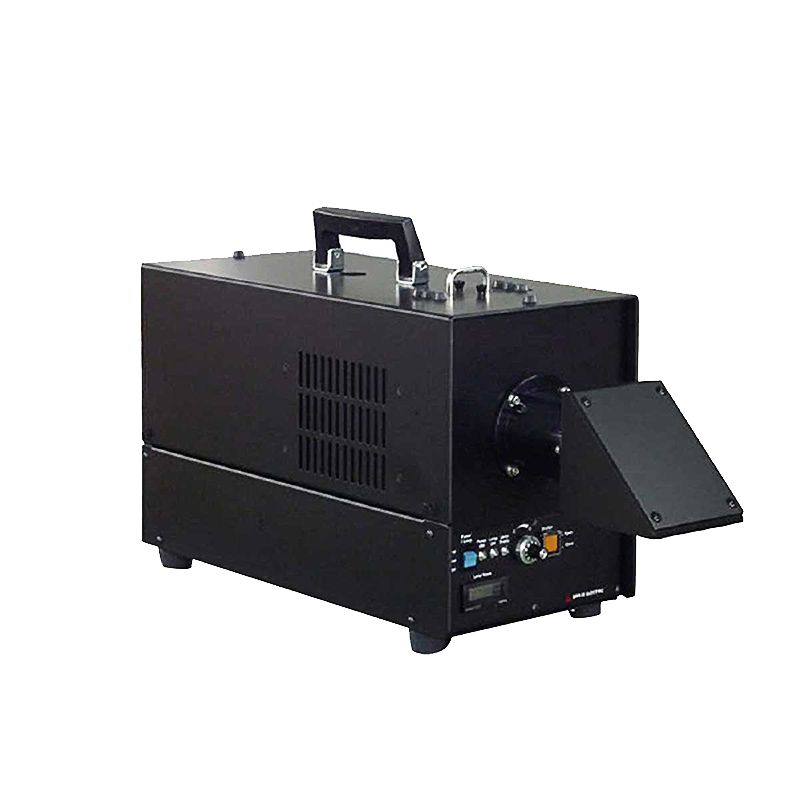
In summary, IPCE testing for solar cells is not only a “measuring tape” for material activity but also a “microscope” for revealing the essence of energy conversion. From frequency-locked capture of weak signals to precise spectral calibration of continuous light, each evolution of precision research equipment continuously expands our understanding of the physical world. By leveraging evaluation platforms such as PL-IPCE and XES-40S3-TT-200, which offer digital feedback and high-precision characteristics, scientists can peel away the veil of physical interference and uncover the scientific truths leading to an efficient energy future. On the long journey toward a zero-carbon future, each rigorously generated curve by precision systems represents a solid footprint of human wisdom reshaping the energy landscape.
Recommended
news